Join us on a literary world trip!
Add this book to bookshelf
Grey
Write a new comment Default profile 50px
Grey
Subscribe to read the full book or read the first pages for free!
All characters reduced
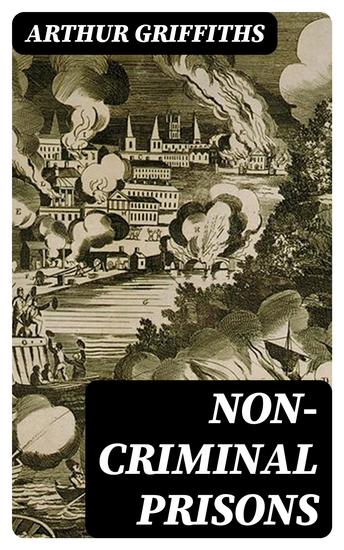
Non-Criminal Prisons - Enriched edition English Debtor's Prisons and Prisons of War; French War Prisons; American War Prisons with References to Those of Other Lands - cover

Non-Criminal Prisons - Enriched edition English Debtor's Prisons and Prisons of War; French War Prisons; American War Prisons with References to Those of Other Lands

Arthur Griffiths

Publisher: DigiCat

  • 0
  • 0
  • 0

Summary

In "Non-Criminal Prisons," Arthur Griffiths presents a thought-provoking examination of the penal system, challenging conventional perceptions of justice and rehabilitation. Griffiths employs a richly descriptive literary style that combines narrative insight with scholarly analysis, engaging readers through vivid illustrations of prison life. Set against the backdrop of late 19th-century England, the book provides an intricate portrait of reformative justice, arguing for the humane treatment of inmates and the potential for personal transformation within prison walls. By situating his work within contemporary debates on punishment and rehabilitation, Griffiths contributes a critical voice to the dialogue around penal reform. Arthur Griffiths, an influential figure in the field of criminology and prison reform, draws upon his extensive experience in the justice system to shape his arguments in this pivotal work. His background as a journalist and a prison governor gave him unique insights into the lives of inmates and the conditions of incarceration. Throughout his career, Griffiths championed the notion that prisons should serve as rehabilitative environments rather than mere punitive spaces, an ideology that is palpably echoed in "Non-Criminal Prisons." This compelling book is highly recommended for readers interested in criminology, social justice, and prison reform. Griffiths' articulate prose and profound understanding of the complexities surrounding incarceration make this a must-read for scholars, policymakers, and anyone eager to engage with the ongoing discourse on the merits and pitfalls of the penal system.

In this enriched edition, we have carefully created added value for your reading experience:
- Hand‐picked Memorable Quotes shine a spotlight on moments of literary brilliance.
- Interactive footnotes clarify unusual references, historical allusions, and archaic phrases for an effortless, more informed read.
Available since: 06/03/2022.
Print length: 186 pages.

Other books that might interest you

  • Philosophy of Language - Words Meaning and Reality - cover

    Philosophy of Language - Words...

    Hector Davidson

    • 0
    • 0
    • 0
    Language plays a fundamental role in human life, functioning not only as a means of communication but as a structure that shapes the way we think, perceive, and understand the world. The philosophy of language seeks to unravel the complex relationships between words, meanings, and reality, exploring how language functions, how it conveys meaning, and how it relates to the world and our experiences. This chapter serves as an introduction to these foundational issues and provides an overview of the central questions and debates within the philosophy of language. 
    At its core, language is a system of symbols—words, phrases, and sentences—that represent concepts, objects, and actions. Understanding language, however, requires more than just examining its structure. It involves questioning how words acquire meaning, how those meanings change in different contexts, and how language can both represent and distort reality. This inquiry into meaning is not limited to how words correspond to things in the world, but also explores how they function in communication, how they shape thought, and how they reflect the underlying structures of human experience. 
    The structure of language itself is another crucial aspect. Language is governed by rules—such as syntax, grammar, and semantics—that allow words to be combined in meaningful ways. Syntax provides the framework for sentence structure, while grammar dictates how words should be used within that structure. Semantics, on the other hand, deals with the meaning of words and how they combine to form meaning within a sentence. Each of these aspects must be understood in relation to each other to grasp how language functions at a deeper level.
    Show book
  • Mussolini in Myth and Memory - The First Totalitarian Dictator - cover

    Mussolini in Myth and Memory -...

    Paul Corner

    • 0
    • 0
    • 0
    Mussolini has rarely been taken seriously as a totalitarian dictator; Hitler and Stalin have always cast too long a shadow. But what was a negative judgement on the Duce, considered innocuous and ineffective, has begun to work to his advantage. As has occurred with many other European dictators, present-day popular memory of Mussolini is increasingly indulgent; in Italy and elsewhere he is remembered as a strong, decisive leader. Mussolini in Myth and Memory argues against this rehabilitation, documenting the inefficiencies, corruption, and violence of a highly repressive regime and exploding the myths of fascist good government. But this short study does not limit itself to setting the record straight; it seeks also to answer the question of why there is nostalgia for dictatorial rule. Linking past history and present memory, Corner's analysis constructs a picture of the realities of the Italian regime and examines the more general problem of why, in a moment of evident crisis of western democracy, people look for strong leadership and take refuge in the memory of past dictatorships. If, in this book, Fascism is placed in its totalitarian context and Mussolini emerges firmly in the company of his fellow dictators, the study also shows how a memory of the past, formed through reliance on illusion and myth, can affect the politics of the present.
    Show book
  • How to Tell a Story: 7 Easy Steps to Master Storytelling Story Boarding Writing Stories Storyteller & Story Structure - cover

    How to Tell a Story: 7 Easy...

    Jaiden Pemton

    • 0
    • 0
    • 0
    Are you ready to dive into the world of storytelling, but don’t know where to start?  
    Do you feel unclear about how to distinguish and use the elements of the storytelling process? 
    Are you still on the search to tell stories that will stick out to your audience, and have a lasting impact that will be passed on for years to come? 
      
    How to Tell a Story is the guide you need! We will teach you how to tell a story in 7 easy steps. This guide is designed to provide you with all the tools you need in a concise, easy to understand format that will answer all your burning questions and get you on your way to successful storytelling. 
      
    To be a successful storyteller, you have to draw your audience in immediately and keep them engaged throughout the entirety of the story. As the story reaches its end and the conflict has been resolved, you must provide a sense of satisfaction for your audience, as well as a message they can hold onto going forward. 
      
    YOU’LL LEARN:Logistics of each element of storytelling (character development, plot development, setting, point of view, theme, conflict)Common storytelling mistakes to avoidBrainstorming exercises to help you choose a story angleHow to create an emotional experience How to develop a positive story outcomeHow to create a shining moment which will stick with your audienceAnd so much more!  
      
    Whether you're just starting on the journey of storytelling and need to develop a clearer understanding of the elements, or have been at it for a while and are looking for fresh perspectives and tips for further develop how you tell stories, this guide is the companion you need. Let’s get started! 
     
    Show book
  • The Big Lie About Race in America's Schools - cover

    The Big Lie About Race in...

    Shaun R. Harper, Royel M. Johnson

    • 0
    • 0
    • 0
    Royel M. Johnson and Shaun R. Harper's book, The Big Lie About Race in America's Schools, delivers a collective response to the challenge of racially charged misinformation, disinformation, and censorship that increasingly permeates and weakens not only US education but also our democracy. Royel Johnson and Shaun Harper bring together leading education scholars and educators to confront the weaponized distortions that are undermining both public education and racial justice. The experts gathered in this work offer strategies to counter these dangerous trends.The contributors examine efforts both broad and specific, from restrictive education legislation, to book bans, to twisting terminology like Critical Race Theory (CRT) and diversity, equity, and inclusion (DEI), that are obscuring truth in public education. They demonstrate how this narrowing of ideas does a disservice to all students and especially to those who are underrepresented in curricula.Ultimately, the book offers clear, actionable insights for educators, policymakers, and advocates who seek solutions that will counter recent trends and transform educational contexts within K–12 and higher education. This volume advocates strengthening educational alliances through shared leadership, organized collaboration, and parental involvement. It also presents innovative countermeasures to help defend public education.
    Show book
  • Gay Witchcraft - cover

    Gay Witchcraft

    Christopher Penczak, Storm...

    • 0
    • 0
    • 0
    Combining the wisdom of Witchcraft with perspectives on gay theory to make the path accessible to all. 


    When Christopher Penczak was introduced to Witchcraft, he found a spiritual path through which he could honor and embrace his homosexuality. In Gay Witchcraft, Penczak's clearheaded theory and practice combine to create a classic book of Witchcraft focused on the perspective of the gay community. 


    Penczak's writing has made it much easier for gay, lesbian, bisexual, transgender, and queer people interested in practicing any form of Witchcraft. His willingness to share his own personal journey and the foundations that made the Craft accessible allows listeners to find their own ways of practice. This book explores the history of Paganism and offers a compendium of spells, meditations, ceremonies, and affirmations that will enrich both the novice and the experienced practitioner seeking out new views of myth, ritual, and healing.
    Show book
  • Religious Equality Refuted - cover

    Religious Equality Refuted

    Gregory Heary

    • 0
    • 0
    • 0
    Feeling overwhelmed by the multitude of religious doctrines and societal values? Discover how true humility and understanding can lead you to spiritual clarity.As society increasingly worships the material—money, fame, and power—many find themselves estranged from true spiritual fulfillment. This book challenges the superficial allure of these false idols, advocating for a life centered around spiritual truths and divine teachings. It provokes thought on the essence of true religion, critiquing the common dismissal of religious beliefs as outdated or false. This book refutes the concept of Religious Equality from many aspects. For the agnostic or secular or irreligious or anti-religious this book proves how everyone is upon a religious faith even if they don't know it and that it is impossible to not have a religion. Also the importance of choosing a religion is established as the most important decision one can make and the concept that all religions are equal is a extremist false faith.This masterpiece offers a deep dive into the essence of true religion, providing clarity and guidance. It is a must-read for anyone seeking to understand the true path to spiritual enlightenment.
    Show book