Join us on a literary world trip!
Add this book to bookshelf
Grey
Write a new comment Default profile 50px
Grey
Subscribe to read the full book or read the first pages for free!
All characters reduced
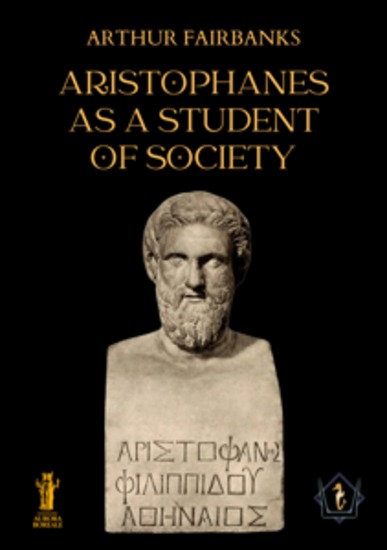
Aristophanes as a Student of Society - cover

Aristophanes as a Student of Society

Arthur Fairbanks

Publisher: Edizioni Aurora Boreale

  • 0
  • 0
  • 0

Summary

Arthur Fairbanks (1864-1944) was an American art historian, archaeologist and a great scholar of classical literature and mythology. From 1908 to 1925, he was director of the Museum of Fine Arts in Boston.
Fairbanks was born November 13, 1864, in Hanover, New Hampshire. He graduated from Dartmouth College in 1886 and attended the Yale Divinity School and the Union Theological Seminary. He also studied in Germany, receiving a Ph.D. from the University of Freiburg in 1890. He was on the faculty of Dartmouth College and Yale and Cornell Universities until 1900, when he became professor of Greek literature and Archaeology at the University of Iowa. In 1906, he was appointed professor of Greek and Greek Archaeology in the University of Michigan. He was appointed curator of Classical Art at the Boston Museum of Fine Arts in 1907, and in 1908 became director there. He supervised the museum's move to its current Fenway location. He retired in 1925. He was a member of many classical and learned societies. He died January 13, 1944, in Cambridge, Massachusetts.
Fairbanks was the author of important essays, including Introduction to Sociology (1896), The Mythology of Greece and Rome (1907), Handbook of Greek Religion (1910), and Greek Gods and Heroes (1915).
The Fairbanks’ essay Aristophanes as a Student of Society, which today we propose to modern readers, was published in 1903 in The American Journal of Sociology. It is, undoubtedly, one of the best studies that have been written on the figure of Aristophanes, his personality and his works.
Available since: 01/24/2025.
Other books that might interest you

  • Theory of Moral Sentiments The: Book Summary & Analysis - cover

    Theory of Moral Sentiments The:...

    Briefly Summaries

    • 0
    • 0
    • 0
    This is a concise summary and analysis of The Theory of Moral Sentiments, by Adam Smith.
     
    It is not the original book and is not affiliated with or endorsed by Adam Smith.
     
    Ideal those seeking a quick and insightful overview.
     
    The Theory of Moral Sentiments explores the foundations of human morality, empathy, and social behavior. This groundbreaking work examines how individuals form ethical judgments, emphasizing the role of sympathy in understanding the emotions and actions of others. By analyzing the interplay between self-interest and societal norms, it provides profound insights into human psychology and the principles that govern harmonious living. A timeless exploration of ethics and philosophy, this book remains a cornerstone in understanding moral philosophy and its implications for human connection and society.
    Show book
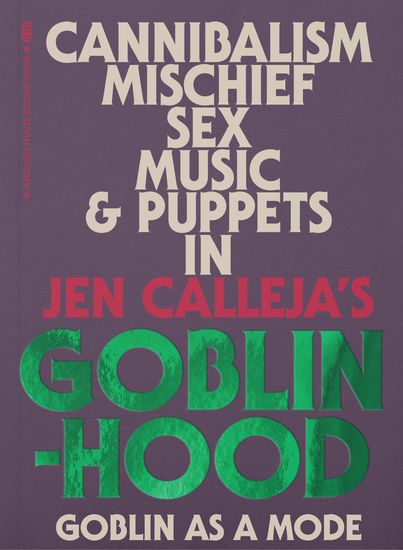
  • Goblinhood - Goblin as a Mode - cover

    Goblinhood - Goblin as a Mode

    Jen Calleja

    • 0
    • 0
    • 0
    As formally inventive as readers have come to expect from one of the most daring writers around, and as wild and tricky as its subject matter requires, Goblinhood: Goblin as a Mode  presents us with a series of essays and poems that playfully, artfully propound Jen Calleja's theory of 'goblinhood'——a theory that takes in all aspects of pop culture from film, tv, literature and art as well as the author's personal and original examinations of grief, lust, family histories and the physical fact of living in the world as it is.
    
    Goblinhood  is a perpetually and variously curious, visceral addition to Calleja's remarkable oeuvre.
    Show book
  • Race Rights and Rifles - The Origins of the NRA and Contemporary Gun Culture - cover

    Race Rights and Rifles - The...

    Alexandra Filindra

    • 0
    • 0
    • 0
    An eye-opening examination of the ties between American gun culture and white male supremacy from the American Revolution to today. 


    One-third of American adults—approximately 86 million people—own firearms. This is not just for protection or hunting. Although many associate gun-centric ideology with individualist and libertarian traditions in American political culture, Race, Rights, and Rifles shows that it rests on an equally old but different foundation. Instead, Alexandra Frilindra shows that American gun culture can be traced back to the American Revolution when republican notions of civic duty were fused with a belief in white male supremacy and a commitment to maintaining racial and gender hierarchies. 


    Drawing on wide-ranging historical and contemporary evidence, Race, Rights, and Rifles traces how this ideology emerged during the Revolution and became embedded in America's institutions, from state militias to the National Rifle Association (NRA). Utilizing original survey data, Filindra reveals how many white Americans—including those outside of the NRA's direct orbit—embrace these beliefs, and as a result, they are more likely than other Americans to value gun rights over voting rights, embrace antidemocratic norms, and justify political violence.
    Show book
  • The Ten Principal Upanishads - cover

    The Ten Principal Upanishads

    W.B Yeats

    • 0
    • 0
    • 0
    The Ten Principal Upanishads is a version of the Upanishads translated by Irish poet W. B. Yeats and the Indian-born mendicant-teacher Shri Purohit Swami. The translation process occurred between the two authors throughout the 1930s and the book was published in 1938; it is one of the final works of W. B. Yeats.
    Show book
  • You are what you eat - cover

    You are what you eat

    Brittany Forrester

    • 0
    • 0
    • 0
    For decades, the medical profession has advocated for nutritional management as a treatment strategy for various illnesses, including diabetes, heart disease, high blood pressure, and excessive cholesterol. There are currently no such recommendations for brain aging and dementia.Nutrition was only recently accorded scientific-field status. Eating is a valid technique for defending oneself against brain aging and disorders such as Alzheimer's. Scientists have gradually realized the vital link between the foods we eat and our mental health. This insight has spawned a rapidly rising body of studies indicating that we may be eating our way to dementia.What has gone unreported until now is that, of all the organs in our bodies, the brain is the one most easily harmed by a poor diet. Everything in the brain, from its architecture to its ability to perform, begs for optimal nutrition. Many of us are ignorant that the only way to fuel the brain is through our food. The meals we eat are broken down into nutrients, absorbed into the bloodstream, and transported to the brain to replenish depleted stores, stimulate cellular responses, and, most critically, be incorporated into brain tissue.We are what we eat!
    Show book
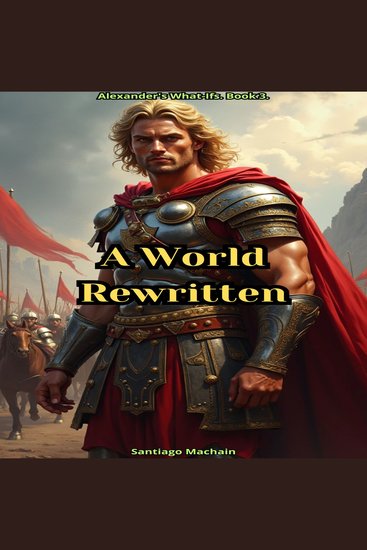
  • A World Rewritten - cover

    A World Rewritten

    Santiago Machain

    • 0
    • 0
    • 0
    In the aftermath of ideological collapse and technological overreach, humanity stands at a critical crossroads. The old empires have fallen, the myths of progress lie shattered, and yet a new vision begins to rise from the ashes. In this sweeping narrative of political reinvention, cultural restoration, and cognitive evolution, Book Three: A World Rewritten explores a world where history is rewritten, myth and memory merge, and a new civilization struggles to define itself. 
    Through alternate histories, radical diplomacy, decentralized knowledge systems, and deeply human questions, this book challenges readers to confront what it means to belong in a world unmoored from its past—but alive with possibility. 
    From the fall of Athens to the simulated mind of Alexander the Great, from a world without Columbus to the emergence of unified languages and fractured technologies, this book is both a cautionary tale and a hopeful blueprint. Could a better future still be possible? The answer lives in the stories we choose to tell.
    Show book