Join us on a literary world trip!
Add this book to bookshelf
Grey
Write a new comment Default profile 50px
Grey
Subscribe to read the full book or read the first pages for free!
All characters reduced
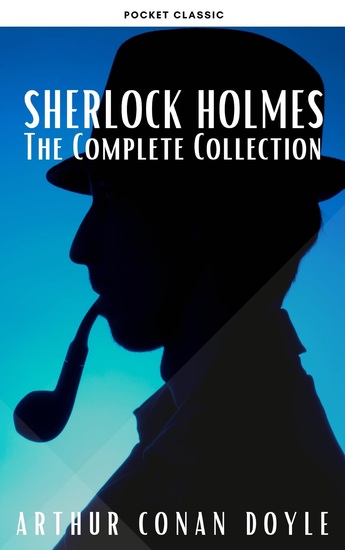
Sherlock Holmes: The Complete Collection - cover

Sherlock Holmes: The Complete Collection

Arthur Conan Doyle, Pocket Classic

Publisher: Pocket Classic

  • 0
  • 0
  • 0

Summary

Sherlock Holmes is a fictional detective of the late 19th and early 20th centuries, who first appeared in publication in 1887. He is the creation of Scottish born author and physician Sir Arthur Conan Doyle. A brilliant London-based detective, Holmes is famous for his intellectual prowess, and is renowned for his skillful use of deductive reasoning (somewhat mistakenly - see inductive reasoning) and astute observation to solve difficult cases. He is arguably the most famous fictional detective ever created, and is one of the best known and most universally recognizable literary characters in any genre.

Conan Doyle wrote four novels and fifty-six short stories that featured Holmes. All but four stories were narrated by Holmes' friend and biographer, Dr. John H. Watson, two having been narrated by Holmes himself, and two others written in the third person. The first two stories, short novels, appeared in Beeton's Christmas Annual for 1887 and Lippincott's Monthly Magazine in 1890. The character grew tremendously in popularity with the beginning of the first series of short stories in The Strand Magazine in 1891; further series of short stories and two serialized novels appeared almost right up to Conan Doyle's death in 1930. The stories cover a period from around 1878 up to 1903, with a final case in 1914.
Available since: 08/29/2022.
Print length: 1662 pages.

Other books that might interest you

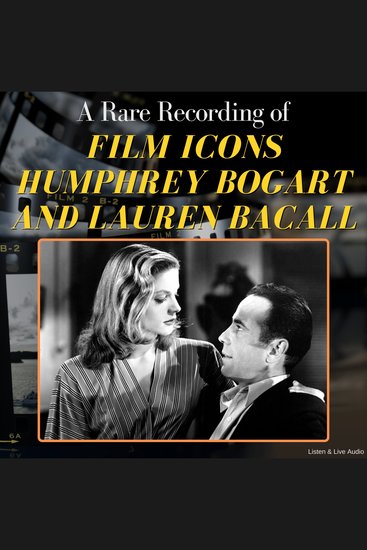
  • A Rare Recording of Film Icons Humphrey Bogart and Lauren Bacall - cover

    A Rare Recording of Film Icons...

    Humphrey Bogart, Lauren Bacall

    • 0
    • 0
    • 0
    Humphrey DeForest Bogart (December 25, 1899 - January 14, 1957), nicknamed Bogie, was an American actor. His performances in classic Hollywood cinema films like The Maltese Falcon, Casablanca, and The Caine Mutiny, made him an American cultural icon. In 1999, the American Film Institute selected Bogart as the greatest male star of classic American cinema. Lauren Bacall, born Betty Joan Perske (September 16, 1924 - August 12, 2014), was one of the greatest female stars of classic Hollywood cinema and an award-winning Broadway stage actress. She was known for her alluring, sultry presence and her distinctive, husky voice. In the following September 1954 recording, Bogart and then-wife Bacall are interviewed at their Los Angeles, CA by Edward R. Murrow.
    Show book
  • Shanghai Gone - Domicide and Defiance in a Chinese Megacity - cover

    Shanghai Gone - Domicide and...

    Qin Shao

    • 0
    • 0
    • 0
    “One of the best accounts of the reality of gentrification and urban development in China . . . grounded with solid historical, ethnographic and legal evidence” (Urban Studies). In recent decades, the centuries-old city of Shanghai has been demolished and rebuilt into a gleaming megacity. With its world famous skyscrapers, it now ranks with New York and London as a hub of global finance. But that transformation has come at a grave human cost. In Shanghai Gone, Qin Shao applies the concept of domicide—the eradication of a home against the will of its dwellers—to the sweeping destruction of neighborhoods, families, and life patterns that made way for the new Shanghai.   Shao gives voice to the holdouts and protesters who resisted domicide and demanded justice. She follows, among others, a reticent kindergarten teacher turned diehard petitioner; a descendant of gangsters and squatters who has become an amateur lawyer for evictees; and a Chinese Muslim who has struggled to recover his ancestral home in Xintiandi, an infamous site of gentrification dominated by a well-connected Hong Kong real estate tycoon.   Highlighting the wrenching changes spawned by China’s reform era, Shao vividly portrays the corrupt and rapacious pursuit of growth and profit, the personal wreckage it has left behind, and the enduring human spirit it has unleashed.
    Show book
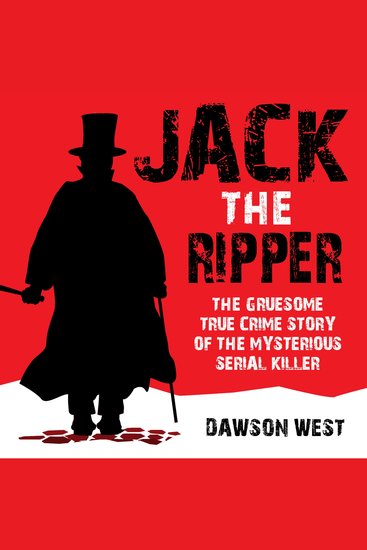
  • Jack the Ripper: The Gruesome True Crime Story of the Mysterious Serial Killer - cover

    Jack the Ripper: The Gruesome...

    Dawson West

    • 0
    • 0
    • 0
    Step back in time and explore the grisly real-life mystery behind Victorian England’s most terrifying killer. 
    Infamous as one of London’s most puzzling and fascinating criminal mysteries, the story of the shadowy serial killer known as Jack the Ripper has captured the imaginations of detectives, writers, artists, and pop culture to this very day. Stalking the streets of 19th-century London, Jack the Ripper left a gruesome trail of terror in his wake—and then slipped away to never be seen again. 
    Now, this riveting true-crime book peels back the myths and mysteries behind Jack the Ripper, providing a gritty and detailed exploration of the clues and theories that have plagued this long-dead criminal investigation. Retracing the Ripper’s most infamous murders, this book will take listeners on a thrilling journey back in time, drawing on the real accounts of eyewitnesses, reporters, and detectives to paint a compelling picture of the monster who hunted in the shadows of Victorian London. 
    As a must-listen for amateur sleuths, true-crime fans, and anybody curious about the story behind Jack the Ripper, this chilling book takes a glimpse into the past. It sparks your imagination and recounts all the most popular theories, letting you make up your own mind about an age-old mystery: Who was Jack the Ripper?
    Show book
  • Bloody Verrières - The I SS-Panzerkorps Defence of the Verrières-Bourguebus Ridges: Volume 2: The Defeat of Operation Spring and the Battles of Tilly-La-Campagne 23 July – 5 August 1944 - cover

    Bloody Verrières - The I...

    Arthur W. Gullachsen, Douglas E....

    • 0
    • 0
    • 0
    South of the Norman city of Caen, Verrières Ridge was seen a key stepping-stone for the British Second Army if it was to break out of the Normandy bridgehead in late July 1944. Imposing in height and containing perfect terrain for armored operations, the Germans viewed it as the lynchpin to their defenses south of the city of Caen and east of the Orne river. 


    Following the failure of British Operation Goodwood on 18–20 July and the containment of the Canadian Operation Atlantic, further Allied attacks to seize the ridge would have to defeat arguably the strongest German armored formation in Normandy: The I. SS-Panzerkorps 'Leibstandarte.' The fighting of 23 July–3 August is chronicled in detail, specifically the premier Anglo-Canadian operation to capture Verrières Ridge, Operation Spring on 25 July. Designed as an attack to seize the ridge and exploit south with armor, this battle saw the 2nd Canadian Corps attack savaged again by German armored reserves brought in specifically to defeat another Goodwood. 


    Not satisfied with this defensive victory, German armored forces would then seek to restore an earlier defensive line further north, attacking to destroy the 2nd Canadian Infantry Division. Largely unknown, these were some of the strongest and most successful German armored operations to take place in the Normandy campaign.
    Show book
  • No Place Like Murder - True Crime in the Midwest - cover

    No Place Like Murder - True...

    Janis Thornton

    • 0
    • 1
    • 0
    “This engrossing collection of historical Midwest murders reads like a thriller. True crime at its best. I couldn’t put it down.” —Susan Furlong, author of the Bone Gap Travellers novels 
     
    A modern retelling of 20 sensational true crimes, No Place Like Murder reveals the inside details behind nefarious acts that shocked the Midwest between 1869 and 1950. The stories chronicle the misdeeds, examining the perpetrators’ mindsets, motives, lives, apprehensions, and trials, as well as what became of them long after. 
     
    True crime author Janis Thornton profiles notorious murderers such as Frankie Miller, who was fed up when her fiancé stood her up for another woman. As fans of the song “Frankie and Johnny” already know, Frankie met her former lover at the door with a shotgun. 
     
    Thornton’s tales reveal the darker side of life in the Midwest, including the account of Isabelle Messmer, a plucky young woman who dreamed of escaping her quiet farm-town life. After she nearly took down two tough Pittsburgh policemen in 1933, she was dubbed “Gun Girl” and went on to make headlines from coast to coast. In 1942, however, after a murder conviction in Texas, she vowed to do her time and go straight. Full of intrigue and revelations, No Place Like Murder also features such folks as Chirka and Rasico, the first two Hoosier men to die in the electric chair after they brutally murdered their wives in 1913. The two didn’t meet until their fateful last night. 
     
    An enthralling and chilling collection, No Place Like Murder is sure to thrill true crime lovers. 
     
    “Thornton wittily describes heretofore unheralded true crime stories from Indiana’s small towns.” —Keven McQueen, author of Horror in the Heartland
    Show book
  • Tell Me about Your Bad Guys - Fathering in Anxious Times - cover

    Tell Me about Your Bad Guys -...

    Michael Dowdy

    • 0
    • 0
    • 0
    Michael Dowdy perceives the world as a poet, one with an anxiety disorder. As a result he has rarely experienced fathering or his relationship with his daughter, A, as a linear narrative. Rather, his impressions of fathering coalesce in encounters with the conditions of our time, producing intense flashes of awareness and emotion. Critiquing his own fathering practices, Dowdy's essays move between simplicity—being present for his daughter—and complexity—considering the harrowing present of entrenched misogyny, school shootings, climate change, and other threats to childing and fathering with love, optimism, and joy. 


    The essays in Tell Me about Your Bad Guys do not provide easy answers. They follow instead an interrogative mode, guided by A's unruly questions and Dowdy's desire to avoid fatherhood literature's traps: false modesty, antic ineptitude, and defensive clowning. This means understanding fathering not as an ironclad identity or a cohesive story but as a process of trial and error, self-reflection, and radical openness. With measures of dark humor, the essays take seriously the literary, material, and political stakes of fathering and in doing so challenge patriarchal norms and one-dimensional accounts of fatherhood.
    Show book