¡Acompáñanos a viajar por el mundo de los libros!
Añadir este libro a la estantería
Grey
Escribe un nuevo comentario Default profile 50px
Grey
Suscríbete para leer el libro completo o lee las primeras páginas gratis.
All characters reduced
His Last Bow - cover

His Last Bow

Arthur Conan Doyle

Editorial: Morlune Press

  • 0
  • 0
  • 0

Sinopsis

His Last Bow: Some Reminiscences of Sherlock Holmes is the fourth collection of Sherlock Holmes stories published by Arthur Conan Doyle . It begins with a preface by Dr. John Watson, supposedly written in 1917, assuring the reader that Holmes is still alive but living in quiet retirement in Sussex. This collection contains the well-known stories "The Adventure of the Bruce-Partington Plans," in which Holmes has to track down stolen plans for a new kind of submarine; and "The Adventure of the Devil's Foot" in which a Cornish family is found one morning driven mad or dead, with expressions of horror on their faces. The titular story "His Last Bow" is set on the very eve of the outbreak of the First World War, and involves Holmes and Watson coming out of retirement to defeat a German spy. Arthur Conan Doyle was a significant literary figure whose work has stood the test of time. This public domain edition preserves the original text in its entirety, making it accessible to modern readers and scholars alike. As a work of classic literary fiction, His Last Bow exemplifies the narrative craft and social insight that defined great storytelling of its era. Literary fiction of this period was characterized by careful attention to character psychology, social milieu, and the moral questions that animated public discourse.
Disponible desde: 19/05/2026.
Longitud de impresión: 229 páginas.
Otros libros que te pueden interesar

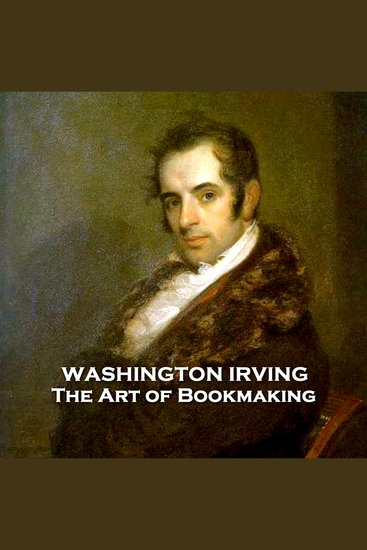
  • The Art of Bookmaking - From their pens to your ears genius in every story - cover

    The Art of Bookmaking - From...

    Ambrose Bierce

    • 0
    • 0
    • 0
    Washington Irving was born on 3rd April, 1783, the youngest of 11, in New York.  
    Irving found his real interests away from school in literature and the theatre.  An outbreak of yellow fever at 15 moved him away from Manhattan and into the surrounding countryside providing valuable settings for later works such as ‘The Legend of Sleepy Hollow’. 
    By 19 Irving was writing regularly to the New York Morning Chronicle, commenting on the theatrical and social scenes.  When his health began to fail, he was sent on the Grand Tour of Europe.  Bizarrely he ignored most of the great sights on offer to concentrate on developing his social and conversational powers.  His health, though, did improve.  
    In 1806, back in New York to study law, he scraped a pass at the bar and then founded with several others the literary magazine Salmagundi. Irving nicknamed the city ‘Gotham City’, a name still in use today.  Moderately successful, the magazine spread Irving’s reputation beyond New York. 
    In 1809 while mourning the death of his teenage fiancée Irving finished his first significant book, ‘A History of New-York from the Beginning of the World to the End of the Dutch Dynsasty, by Diedrich Knickerbocker’.  It satirised local history, local historians and politics.  It received great critical acclaim. 
    Unfortunately his family’s established trading company was now facing great upheavals and Irving was dispatched to England to try to sort it out.  After two years he could see no way out but bankruptcy.  This left him in England with no real employment prospects, and so he returned to writing.  
    He sent some short stories back to New York to be published as ‘The Sketch Book of Geoffrey Crayon, Gent’.  The first part included ‘Rip Van Winkle’ and was extremely successful.  The sixth part contained ‘The Legend of Sleepy Hollow’.  
    Beset by literary piracy, with no copyright law at the time, he set about publishing legitimate copies in England to outwit the bootleggers.  From now on Irving published concurrently in America and England in order to render piracy obsolete.  
    In August 1824, he published ‘Tales of a Traveller’, which included the famed ‘The Devil and Tom Walker’.  
    In 1826, the American Minister to Spain, invited him to Madrid where he could examine the many historical documents that he had access to.  Irving reveled in both the size of the libraries he was granted access to and their rich quality.  Historical works flowed from his pen further enhancing his reputation and fortune.   
    Following the completion of ‘Tales of the Alhambra’ in 1832, Irving returned to America after 17 years abroad. He was now a figurehead of American literature and dispensed advice to Edgar Allan Poe amongst others.  Irving also became an advocate for American copyright legislation.  
    A later appointment as Minister to Spain in 1842 left him disheartened at the antics of the various political factions he encountered.  It also afforded him no time to write as he had hoped.  
    On his return home he began an ‘Author’s Revised Edition’ of his works agreeing an unprecedented deal for 12 per cent of the retail profits.  
    Washington Irving died of a heart attack at his ‘Sunnyside’ home on the 28th November 1859 at the age of 76, a few months after completing his five volume George Washington biography, in whose honour he had been named.
    Ver libro
  • Dombey and Son - cover

    Dombey and Son

    Charles Dickens

    • 0
    • 0
    • 0
    A rich man’s obsessive search for an heir blinds him to his own child in this classic Victorian novel of greed, pride, and family ties.  For shipping magnate Paul Dombey, business is the essence of life. He runs his firm and his family with the same calculating efficiency. Showering attention on his sickly son, who is destined to take over the family business, Mr. Dombey diligently ignores his daughter, Florence. In his unloving eyes, she is nothing more than a “base coin that couldn’t be invested.”  In time, despite her father’s neglect, Florence grows into a capable and strong-willed woman. Dombey’s callousness, meanwhile, sets in motion his own eventual downfall. In this classic tale of ambition, pride, and redemption, Charles Dickens presents a rich and sprawling portrait of a man, his dysfunctional family, and the complex times in which they lived.
    Ver libro
  • Vanity Fair - cover

    Vanity Fair

    William Makepeace Thackeray

    • 0
    • 0
    • 0
    Vanity Fair is perhaps Thackeray's most famous novel. First serialized over the course of 19 volumes in Punch Magazine and first printed as a single volume in 1849, the novel cemented Thackeray's literary fame and kept him busy with frequent revisions and even lecture circuits. The story is framed as a puppet play, narrated by an unreliable narrator, that presents the story of Becky Sharp and Emmy Sedley and the people in their lives as they struggle through the Napoleonic Wars. The story itself, like many other Thackeray novels, is a satire of the lives of the Victorian English of a certain class. Thackeray packed the novel with allusions, many of which were difficult even for his contemporary readers; part of the heavy revisions he later made were making the allusions more accessible to his evolving audience. As part of his satirical bent, Thackeray made a point to make each character flawed, so that there are no "heroes" in the book—hence the subtitle "A Novel Without a Hero." Thackeray's goal was not only to entertain, but to instruct; to that end, he wanted the reader to look within themselves after finishing the unhappy conclusion, in which there's no hint as to how society might be able to improve on the evils shadowed in the events of the novel. Vanity Fair received glowing praise by its critical contemporaries, and remains a popular book well into modern times, having been adapted repeatedly for film, radio, and television. William Makepeace Thackeray (died 1863) was one of the most distinguished authors of the Victorian age. Their work has endured across generations and continues to be read and studied worldwide. As a work of classic literary fiction, Vanity Fair exemplifies the narrative craft and social insight that defined great storytelling of its era. Literary fiction of this period was characterized by careful attention to character psychology, social milieu, and the moral questions that animated public discourse.
    Ver libro
  • The Mutineers of the "Bounty" - cover

    The Mutineers of the "Bounty"

    Jules Verne

    • 0
    • 0
    • 0
    The Mutineers of the "Bounty" is Jules Verne's compelling retelling of one of the most famous episodes in maritime history—the dramatic mutiny aboard HMS Bounty. Drawing on historical accounts while infusing the narrative with his trademark clarity and sense of adventure, Verne brings new depth and perspective to this legendary tale of authority, rebellion, and survival at sea.
    
    The novel chronicles the ill-fated voyage of the Bounty, sent to the South Pacific to transport breadfruit plants to the West Indies. Under the rigid command of Captain William Bligh, tensions steadily rise among the crew, culminating in a dramatic act of mutiny led by Fletcher Christian. What follows is a gripping account of divided loyalties, perilous ocean journeys, and the struggle to endure in some of the world's most remote and unforgiving regions.
    
    Beyond the excitement of seafaring adventure, The Mutineers of the "Bounty" explores complex moral questions about leadership, justice, and human endurance. Verne presents the mutiny not merely as an act of defiance, but as a human drama shaped by harsh conditions, clashing personalities, and the limits of authority.
    
    Rich in historical detail and maritime atmosphere, this classic work stands as a powerful blend of history and storytelling. The Mutineers of the "Bounty" remains a timeless narrative of rebellion and survival, captivating readers who appreciate nautical adventures and true stories brought vividly to life.
    Ver libro
  • A Child of the Jago - cover

    A Child of the Jago

    Arthur Morrison

    • 0
    • 0
    • 0
    Published in 1896, A Child of the Jago is a gritty and realistic portrayal of life in the slums of London’s East End during the late 19th century. The novel is set in an area known as the Old Jago (based on a real-life slum called the Old Nichol) and vividly describes the poverty, crime and squalor that characterised the impoverished neighbourhood.
    The story revolves around Dicky Perrott, a young boy growing up in the Jago, and his struggle for survival in a world of gangs, violence and despair.
    A Child of the Jago is considered a significant work of social realism, depicting the harshness of urban poverty and offering a stark critique of the societal structures that perpetuate it.
    Ver libro
  • Frederick Cowles - Six of the Best - Their legacy in 6 classic stories - cover

    Frederick Cowles - Six of the...

    Frederick Cowles

    • 0
    • 0
    • 0
    Six has always been a number we group things around – Six of the best, six of one half a dozen of another, six feet under, six pack, six degrees of separation and a sixth sense are but a few of the ways we use this number. 
     
    Such is its popularity that we thought it is also a very good way of challenging and investigating an author’s work to give width, brevity, humour and depth across six of their very best. 
     
    In this series we gather together authors whose short stories both rivet the attention and inspire the imagination to visit their gems in a series of six, to roam across an author’s legacy in a few short hours and gain a greater understanding of their writing and, of course, to be lavishly entertained by their ideas, their narrative and their way with words. 
     
    These stories can be surprising and sometimes at a tangent to what we expected, but each is fully formed and a marvellous adventure into the world and words of a literary master.
    Ver libro