Unisciti a noi in un viaggio nel mondo dei libri!
Aggiungi questo libro allo scaffale
Grey
Scrivi un nuovo commento Default profile 50px
Grey
Iscriviti per leggere l'intero libro o leggi le prime pagine gratuitamente!
All characters reduced
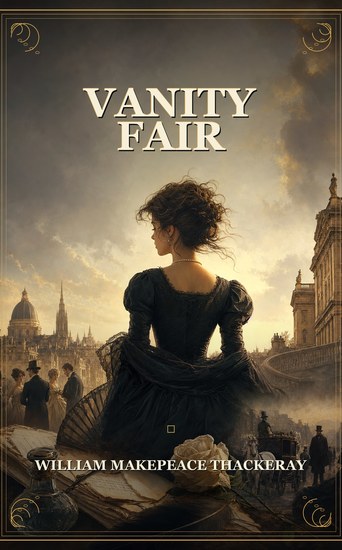
Vanity Fair - cover

Vanity Fair

William Makepeace Thackeray

Casa editrice: Caelwick Press

  • 0
  • 0
  • 0

Sinossi

Vanity Fair is perhaps Thackeray's most famous novel. First serialized over the course of 19 volumes in Punch Magazine and first printed as a single volume in 1849, the novel cemented Thackeray's literary fame and kept him busy with frequent revisions and even lecture circuits. The story is framed as a puppet play, narrated by an unreliable narrator, that presents the story of Becky Sharp and Emmy Sedley and the people in their lives as they struggle through the Napoleonic Wars. The story itself, like many other Thackeray novels, is a satire of the lives of the Victorian English of a certain class. Thackeray packed the novel with allusions, many of which were difficult even for his contemporary readers; part of the heavy revisions he later made were making the allusions more accessible to his evolving audience. As part of his satirical bent, Thackeray made a point to make each character flawed, so that there are no "heroes" in the book—hence the subtitle "A Novel Without a Hero." Thackeray's goal was not only to entertain, but to instruct; to that end, he wanted the reader to look within themselves after finishing the unhappy conclusion, in which there's no hint as to how society might be able to improve on the evils shadowed in the events of the novel. Vanity Fair received glowing praise by its critical contemporaries, and remains a popular book well into modern times, having been adapted repeatedly for film, radio, and television. William Makepeace Thackeray (died 1863) was one of the most distinguished authors of the Victorian age. Their work has endured across generations and continues to be read and studied worldwide. As a work of classic literary fiction, Vanity Fair exemplifies the narrative craft and social insight that defined great storytelling of its era. Literary fiction of this period was characterized by careful attention to character psychology, social milieu, and the moral questions that animated public discourse.
Disponibile da: 19/05/2026.
Lunghezza di stampa: 1062 pagine.

Altri libri che potrebbero interessarti

  • The Hound of the Baskervilles - cover

    The Hound of the Baskervilles

    Arthur Conan Doyle

    • 0
    • 0
    • 0
    The Hound of the Baskervilles is the third of the four crime novels written by Sir Arthur Conan Doyle featuring the detective Sherlock Holmes. Originally serialised in The Strand Magazine from August 1901 to April 1902, it is set largely on Dartmoor in Devon in England's West Country and tells the story of an attempted murder inspired by the legend of a fearsome, diabolical hound of supernatural origin. Sherlock Holmes and his companion Dr. Watson investigate the case. This was the first appearance of Holmes since his apparent death in "The Final Problem", and the success of The Hound of the Baskervilles led to the character's eventual revival.According to an old legend, a curse runs in the Baskerville family since the time of the English Civil War, when a Sir Hugo Baskerville abducted and murdered a woman in the mires of Dartmoor, only to be killed in turn by a huge demonic hound. Allegedly the same creature has been haunting the place ever since, causing the premature death of many Baskerville heirs. Sir Charles believed in the plague of the hound and so does Mortimer, who now fears for the next in line, Sir Henry Baskerville.Even though he dismisses the whole curse story as nonsense, Holmes agrees to meet Sir Henry in London as soon as Sir Henry arrives from Canada, where his branch of the family had moved in the past. He is a young and jovial good-looking fellow, sceptical toward the grim legend and eager to take possession of Baskerville Hall, even though he has just found an anonymous note in the mail, warning him to stay away from the moor. When someone tries to shoot Sir Henry while he is walking down a street, however, Holmes asks Watson to go with the young man and Mortimer to Dartmoor, in order to protect Sir Henry and search for any clue about who is menacing his life.Among the most significant works Arthur Conan Doyle: A Study in Scarlet, The Sign of the Four, The Hound of the Baskervilles, The Valley of Fear, The Adventures of Sherlock Holmes, The Memoirs of Sherlock Holmes, The Return of Sherlock Holmes, His Last Bow, The Case-Book of Sherlock Holmes, The Field Bazaar, The Story of the Lost Special, How Watson Learned the Trick and many more.
    Mostra libro
  • A Cullenden of Virginia - From their pens to your ears genius in every story - cover

    A Cullenden of Virginia - From...

    Thomas Wolf

    • 0
    • 0
    • 0
    Thomas Clayton Wolfe was born at the family home, 92 Woodfin Street, in Asheville, North Carolina on October 3rd, 1900.  
    Aged 15, Wolfe began his studies at the University of North Carolina at Chapel Hill (UNC) where he enrolled in a playwriting course. Wolfe graduated in 1920 and enrolled at the Graduate School for Arts and Sciences at Harvard. Here he studied playwriting under the tutelage of George Pierce Baker. In 1922 he received his master's degree from Harvard.  
    Wolfe now began the transition from studying to commercial playwright. He went to New York in November, 1923 trying to sell his plays to Broadway.  The Theatre Guild came close to producing Welcome to Our City but in the end declined.  Wolfe now believed his style of writing was more suited to fiction.  Grasping the opportunity this afforded him he sailed to England in October 1924 to write and from there on to France, Italy and Switzerland. 
    In 1926 Wolfe began writing a novel, O Lost. This would eventually become Look Homeward, Angel. It was based on his years in Asheville. The original manuscript of O Lost was over 1100 pages. Maxwell Perkins, one of the great book editors of the age, worked at his publishers, Scribner’s and he began to focus the book, cutting and re-shaping it to center it on the character of Eugene.   
    The novel was published in 1929. It was a success.   
    Wolfe now committed the next 4 years to writing a multi-volume epic entitled The October Fair.  At Scribner’s Perkins once more decided to edit it down to a single volume; Of Time and the River.  It was even more successful than his first. It was hailed as the literary event of 1935 and cemented his reputation as one of America’s foremost novelists.  
    In 1938, after submitting his new opus, which ran to an incredible one million words, to his new editor, Edward Aswell, Wolfe left to tour the West, a part of the country he had never before visited. Whilst travelling Wolfe became ill with pneumonia and spent three weeks in a Seattle hospital. Complications arose. The prognosis was serious.  He was diagnosed with miliary tuberculosis of the brain. 
    On September 6th, he was sent to Baltimore's Johns Hopkins Hospital for treatment. The ensuing operation revealed that the disease had overrun the entire right side of his brain.  
    Thomas Clayton Wolfe never regained consciousness and died shortly before his 38th birthday on September 15th, 1938.
    Mostra libro
  • Photography Extraordinary - From their pens to your ears genius in every story - cover

    Photography Extraordinary - From...

    Lewis Carroll

    • 0
    • 0
    • 0
    Lewis Carroll was born Charles Lutwidge Dodgson on the 27th January 1832 at Daresbury, Cheshire, the eldest boy and the third child.  Another eight followed. 


    When Dodgson was 11, his cleric father moved his family to Croft-on-Tees in the North Riding of Yorkshire.  Although his father was active and highly conservative his son was ambivalent with those values and with the Church as a whole. 


    In his early years Dodgson was educated at home and by age 7 he was reading the likes of ‘The Pilgrim's Progress’.  He also spoke with a stammer which he called his ‘hesitation’. 


    At 12 he was dispatched to Richmond Grammar School in North Yorkshire and then on to Rugby.  He sailed through the curriculum.  He was accepted at Christ Church, Oxford but two days after arriving he was summoned home: his mother had died of ‘inflammation of the brain’ at only 47. 


    Dodgson was exceptionally gifted and, when not distracted, achievement came easily to him.  He remained at Christ Church studying and teaching in various capacities until his death. 


    In March 1856, he published the romantic poem ‘Solitude’ as by ‘Lewis Carroll’. 


    That same year he took up the new art of photography.  He soon excelled and became a well-known gentleman-photographer, and even toyed with the idea of making a living out of it.  When he ceased photography in 1880, he had his own studio and had created around 3,000 images. 


    He enjoyed moderate success with his early poems and short stories but had an array of other interests in the pre-Raphaelite circle, Psychical Research and even ordained in the Church of England in 1861. 


    In July 1862 he told a young Alice Liddell the story that would become his first and greatest success.  Alice begged him to write it down, and eventually he did and later presented her with a handwritten and illustrated ‘Alice's Adventures Under Ground’.  The publisher Macmillan agreed to publish it as ‘Alice's Adventures in Wonderland’ by Lewis Carroll. 


    It was a huge and sensational life-changing success.  Royalties quickly accumulated as did fan mail. 


    In 1871, the darker themed sequel ‘Through the Looking-Glass, and What Alice Found There’ was published.  A half decade later came ‘The Hunting of the Snark’, a fantastical nonsense poem, as nine tradesmen and a beaver set off to find the snark.  It was another enormous success. 


    He also loved to invent such delights as a writing tablet ‘the nyctograph’ that allowed note-taking in the dark as well as many word games, such as the precursor to ‘Scrabble’, and alternative systems of parliamentary voting.  Within the discipline of mathematics, he worked in geometry, linear and matrix algebra, mathematical logic, recreational mathematics and wrote nearly a dozen books on the subject. 


    Lewis Carroll died of pneumonia following influenza on 14th January 1898 in Guildford, Surrey.  He was 65.
    Mostra libro
  • A Dream of Wild Bees - From their pens to your ears genius in every story - cover

    A Dream of Wild Bees - From...

    Olive Schreiner

    • 0
    • 0
    • 0
    The bookshelves of World literature are incredible collections that have gathered together centuries of very talented authors.  From their countries and continents their fame spread and whilst among their number many are now forgotten or neglected their talents endure.  Among them is Olive Schreiner.
    Mostra libro
  • Martin Chuzzlewit Volume 1 - cover

    Martin Chuzzlewit Volume 1

    Charles Dickens

    • 0
    • 0
    • 0
    In Martin Chuzzlewit Volume 1, Charles Dickens introduces a tale of greed, generosity, and self-discovery. The story centers on the Chuzzlewit family, notorious for its selfish members. Young Martin Chuzzlewit, defying his miserly grandfather's expectations, rejects materialism and embarks on a path of independence. Meanwhile, the kind-hearted Mary Graham remains loyal despite being spurned by the elder Martin. Through vivid characters like the scheming Pecksniff and the humorous Mrs. Gamp, Dickens critiques hypocrisy and explores themes of morality and redemption. This volume sets the stage for a journey that will test loyalties and transform lives.
    Mostra libro
  • The Sound And The Fury - cover

    The Sound And The Fury

    William Faulkner

    • 0
    • 0
    • 0
    We rely on your support to help us keep producing beautiful, free, and unrestricted editions of literature for the digital age. Will you support our efforts with a donation ? The Sound and the Fury is one of William Faulkner's most celebrated novels, and a landmark of American literature. Famous for its non-chronological structure and experimental style, the novel focuses on the once-prominent Compson family, descendants of planter aristocrats who have declined in both social standing and material wealth. As white landowners in the fictional county of Yoknapatawpha in Mississippi, they continue to employ an African-American family to serve them. Each of the Compson parents has withdrawn from responsibility for their children, so the matriarch of the servant family, Dilsey, effectively raises their three sons and daughter. Each of the four parts of the novel is told from a different point of view, with each of the first three sections narrated by a different Compson son. In the first chapter, set on the day before Easter Sunday in 1928, the narrator is the mentally disabled thirty-three-year-old Benjy. The second chapter enters the mind of troubled Harvard student Quentin, who is finishing his year at the university. The third chapter, set on Good Friday, 1928, is narrated by the callous and mercenary brother Jason, who now works as a clerk at a farming supply store; and finally, on Easter Sunday 1928, the perspective is that of an omniscient narrator, though the main character of the section emerges as Dilsey. Central to each of the sons' sections is their sister Caddy, whose rebellion as a young woman brings pain upon Benjy, profoundly disturbs Quentin, enrages Jason, and accelerates the family's already precipitous decline. The book is noted for its nonlinearity, not only in the order of its four narratives but in the sequences of events recorded within the first two of them: Faulkner makes heavy use of a "stream-of-consciousness" style to relate Benjy's and Quentin's memories and thoughts, which jump around temporally. Non-standard italics and punctuation contribute to the effect. The influence of James Joyce upon the first two narratives was immediately.
    Mostra libro