Join us on a literary world trip!
Add this book to bookshelf
Grey
Write a new comment Default profile 50px
Grey
Subscribe to read the full book or read the first pages for free!
All characters reduced
True Crime - Stories from the District Attorney's Office in New York City - Enriched edition - cover

True Crime - Stories from the District Attorney's Office in New York City - Enriched edition

Arthur Cheney Train

Publisher: DigiCat

  • 0
  • 0
  • 0

Summary

In "True Crime: Stories from the District Attorney's Office in New York City," Arthur Cheney Train delivers a compelling narrative that transcends traditional crime literature by offering an insider's perspective on the legal machinations of a bygone era. The book is characterized by its meticulous attention to detail and evocative storytelling, as Train recounts high-profile cases with a blend of documentary rigor and literary flair. The vignettes reflect not only the immense socio-political landscape of early 20th-century New York but also highlight the evolution of criminal justice during a time of burgeoning urbanization and social change. Arthur Cheney Train, a prominent figure in the early 1900s legal scene, served as an assistant district attorney in New York City. His firsthand experiences in the courtroom and familiarity with the public's fascination with crime likely fueled his desire to document these stories. Train's background as a lawyer and a writer gives authenticity to his accounts, allowing readers to grasp both the emotional and legal complexities of the cases he presents. This book is highly recommended for readers interested in the intersection of law and literature, as well as those fascinated by true crime narratives. Train's engaging prose not only entertains but also educates, making this work an invaluable addition to the canon of American crime literature.

In this enriched edition, we have carefully created added value for your reading experience:
- A comprehensive Introduction outlines these selected works' unifying features, themes, or stylistic evolutions.
- A Historical Context section situates the works in their broader era—social currents, cultural trends, and key events that underpin their creation.
- A concise Synopsis (Selection) offers an accessible overview of the included texts, helping readers navigate plotlines and main ideas without revealing critical twists.
- A unified Analysis examines recurring motifs and stylistic hallmarks across the collection, tying the stories together while spotlighting the different work's strengths.
- Reflection questions inspire deeper contemplation of the author's overarching message, inviting readers to draw connections among different texts and relate them to modern contexts.
- Lastly, our hand‐picked Memorable Quotes distill pivotal lines and turning points, serving as touchstones for the collection's central themes.
Available since: 11/13/2022.
Print length: 170 pages.
Other books that might interest you

  • Dracula's Guest - From their pens to your ears genius in every story - cover

    Dracula's Guest - From their...

    Bram Stoker

    • 0
    • 0
    • 0
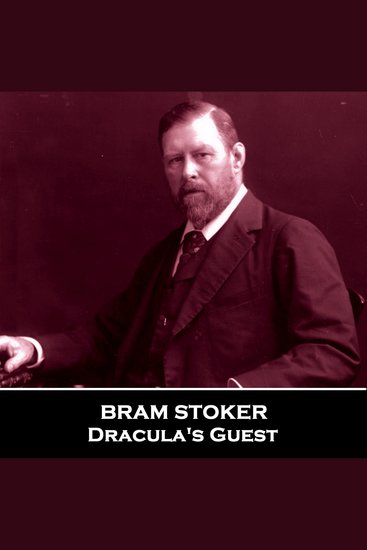
    Abraham Stoker was born in Dublin, Ireland on the 8th of November 1847, the third of seven children.  
    His early years were plagued with such ill-health that he was unable to start school until the age of seven.  He turned the long periods of recovery into an opportunity for thinking and said “I was naturally thoughtful, and the leisure of long illness gave opportunity for many thoughts which were fruitful according to their kind in later years”.  
    Strikingly at Trinity College, Dublin his health had returned with such vigour that he was named their University Athlete whilst also achieving a BA in Mathematics with honours.  
    At this time his interest in theatre became a job offer to be the Dublin Evening Mail’s theatre critic, co-owned by Sheridan Le Fanu.  He now began to also write short stories and in 1872 ‘The Crystal Cup’ was published.  An interest in art developed and he co-founded the Dublin Sketching Club.  
    In 1878 came marriage to Florence Balcombe.  She had formerly been courted by Stoker’s acquaintance, Oscar Wilde.  The marriage produced one child.   
    Stoker had some years before reviewed Henry Irving’s Hamlet and had dined with him.  That friendship now resulted in a proposal from Irving to move to London and to manage his Lyceum Theatre.  His numerous commercial innovations ensured both he and the theatre thrived.  Irving would also often take Stoker with him when he toured abroad. 
    Despite this busy life Stoker continued to write and these works paved the way for his most famous creation, published in 1897, ‘Dracula’.  It is rightly recognised as one of the greatest horror novels of all time and although not the first with a theme of Vampires, it is undoubtedly the most well-known. 
    Stoker also wrote poetry and many excellent short stories and continued to write novels and other works throughout his career. 
    Politically Stoker supported Home Rule, though only by peaceful means.  He was also keen on following scientific trends particularly in medicine. 
    In 1902 his tenure at the Lyceum Theatre ended and although he continued to write his health was deteriorating, mainly due to a series of debilitating strokes. 
    Bram Stoker died on the 20th April 1912, in Pimlico, London.  He was 64.
    Show book
  • Before the Supreme Court - From their pens to your ears genius in every story - cover

    Before the Supreme Court - From...

    Lafcadio Hearn

    • 0
    • 0
    • 0
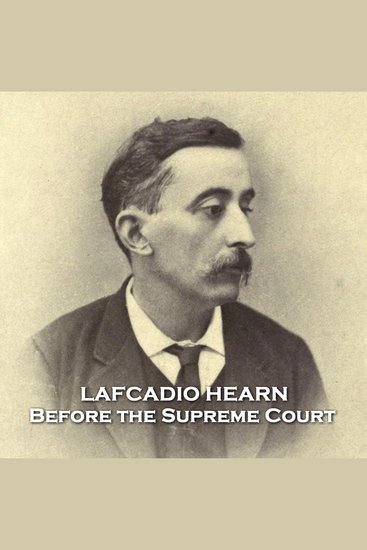
    Lafcadio Hearn was born on the 27th June 1850 on the Ionian isle of Levkás in Greece to a British Army officer and a Greek Mother. 
    His father, fearing for his career prospects at being married to a Greek Orthodox wife, sent them to Dublin whilst he continued to advance his career with further postings.  Life there was difficult for mother and son.  His father returned, wounded and traumatised, when Lafcadio was three.  He annulled the marriage and she remarried but had to give up care of Lafcadio to her sister-in law.   
    After brief periods for Catholic education in England and France he emigrated to Ohio in the United States when he was 19, taking on a series of casual jobs before embarking on a career as a journalist, publishing poems and essays in Cincinnati.  It was whilst here that he began a side-line in translating, starting with Gautier and Flaubert.  He married in 1874 to a 20 year old African-American woman in violation of Ohio's anti-miscegenation law.  The marriage soon failed. 
    In 1877 he relocated to New Orleans to write on a variety of themes before picking up a two year assignment from Harper’s to write in the West Indies, where he also wrote his first novel. 
    In 1890 Harper’s sent him to Japan.  Here he left journalism and took the remarkable decision to become a schoolteacher in the north of Japan.   Enraptured by the culture he was driven to explain it in various Western publications to those who had little, if any, knowledge of its culture.  Within the year he had fallen in love with, and married, a high-born Japanese lady, together they would have four children.   
    In 1895 he became a Japanese national and took the name Koizumi Yakumo, Koizumi being his wife’s family name. 
    The following few years, whilst a professor of Literature at the Imperial University of Japan, were his most creative and admired period.   
    Lafcadio Hearn died of heart failure on the 26th of September 1904, in Tokyo, Japan shortly before leaving to deliver a series of lectures at Cornell University in New York State.  He was 54.
    Show book
  • Forgotten Authors The - Women - Volume 1 - Alice Askew to Ethel Dell - cover

    Forgotten Authors The - Women -...

    Louisa Baldwin, Aphra Behn,...

    • 0
    • 0
    • 0
    Throughout the long centuries of human history is the want, and the need, to share information, to exchange ideas and for that knowledge and experience, for curiosity and learning, to be the basis of a civil society. 
    In literature the ambition is much narrower.  In order to be known, to be popular, you had to be published.  And for that people had to know you existed and your ideas worth reading.  Obviously for most of humanity’s time people couldn’t read and texts couldn’t be published in any great number. 
    In the 15th Century Gutenberg’s printing press began the revolution to address the second and by the 19th century had gathered pace with startling speed and mass distribution.  Education for the many was brought in to help people understand more of their world and, with new skills, how to have a better place within it.  Now, if the powers that owned the presses and means of distribution agreed an audience would now be able to avail themselves of your ideas, your printed words.  
    All too often the talents of women have been scorned, mocked and laughed at.  In reality that was more usually by those who’s own talents were hardly fit to even grace their shadows.   
    But society in general still connived and set women to one side in almost everything that men considered their rightful territory.  And literature was one such territory.  Remarkably resilient as well as talented these women strove to be published, to show themselves as equals.  The results more often than not proved that they were.   
    Sadly, in the thirst for the new, the recent and the past fell from sight, relegated to dark corners and dusty shelves.    
    But the printed word is rarely without someone, somewhere busying themselves through piles of papers and books rediscovering what a good story is, whatever its age. 
    In this volume we offer up a small selection of talents whose time has now come again.
    Show book
  • My Music Man - cover

    My Music Man

    Dede Montgomery

    • 0
    • 0
    • 0
    As Dede Montgomery moves through grief to accept the death of her father, the stories in My Music Man shed light on change, acceptance, and forgiveness amid close personal relationships and Oregon’s natural landscapes.The reader is catapulted into autumn on the Willamette’s riverbank in the 1960s with the author and her brothers, where they discover their father’s own childhood stories and the intimate relationship he shares with the land. Tales about seven generations of family weave between time periods, held together by the constancy of place and colored by memories of picking berries and filberts, traveling through the West Linn locks, and swimming in the river on a hot summer day. Montgomery describes small-town life in a school where everyone knows everybody, and how it felt to be an only girl in what often felt like a never-ending sea of boys. Chapters depict stories about place, seasons, gender, relationships and recovery. This book is to be savored. Yet it's much more than a memoir - it's a multi-generational story, lovingly told, of a family deeply tied to Oregon's history. Additional written information such as photographs, family tree and references may be found on the author's website at https://dedemontgomery.com (My Music Man: Audio Book Supplement).
    Show book
  • The Emerald Tablets of Thoth the Atlantean - cover

    The Emerald Tablets of Thoth the...

    Maurice Doreal

    • 0
    • 0
    • 0
    "The Emerald Tablets of Thoth the Atlantean: Illustrated" is a captivating edition that unveils the ancient wisdom and esoteric teachings attributed to Thoth, an enigmatic figure often associated with ancient Egyptian mythology. This edition presents the profound insights of Thoth, as recorded in the mystical Emerald Tablets, complemented by evocative illustrations that enhance the reader's journey into the realms of mysticism and ancient knowledge.
    The Emerald Tablets are said to contain the keys to understanding the mysteries of the universe, the nature of reality, and the spiritual evolution of humanity. Thoth, believed to be a wisdom keeper from the mythical Atlantis, imparts teachings that touch upon alchemy, cosmology, and the transformative power of consciousness.
    This illustrated edition enhances the textual richness of the tablets with visual elements that complement the arcane nature of Thoth's teachings, providing readers with a visually immersive experience as they explore the profound insights contained within the ancient text.
    "The Emerald Tablets of Thoth the Atlantean: Illustrated" invites seekers of ancient wisdom, spiritual enthusiasts, and those intrigued by esoteric knowledge to delve into the timeless teachings attributed to Thoth. This edition not only preserves the enigmatic essence of the Emerald Tablets but also offers a visually enchanting journey into the depths of ancient mysticism, providing readers with an opportunity to connect with the profound wisdom of one of history's most mysterious and revered figures.
    Show book
  • The Ayatollah's Gaze - A Memoir of the Forbidden and the Fabulous - cover

    The Ayatollah's Gaze - A Memoir...

    Majid Parsa

    • 0
    • 0
    • 0
    'Defiant, fabulous and filled with the nuanced challenges so many young queer people struggle to make sense of: family, faith, tradition, affection and belonging. I loved this intimate, heartbreaking coming-of-age story' Henry Fry, author of First Time for Everything
    An unflinching memoir about growing up in Iran where homosexuality is punishable by death, and yet underground, hidden from Sharia law, is a vibrant gay scene threatening to burst open.
    The dawn prayer calls echo through the streets. As many make their way to mosques, for some it signals the end of another illegal gay party. Under the cover of darkness, smiles on lips and sweat on foreheads, the gays of Tehran blend back into daily life. Hidden in plain sight, they plan when and where they will meet again.
    In an unparalleled true story, Majid Parsa recounts how a childhood of war, prayer and obedience was upended by a teenage sexual awakening and, ultimately, pride. He lifts the heavy veil of persecution to reveal the fabulous and flamboyant gay scene right at the heart of the Islamic Republic of Iran, flourishing under the ever-present shadow of the grand Ayatollah and morality police. Eye-opening and at times laugh-out-loud funny, The Ayatollah's Gaze is a story of self-discovery in a country where Sharia is the law.
    'The Protagonist, Majid, epitomises the duality of identity. He struggles with his Islamic faith and his burgeoning sexual awakening as a gay man. He finally emerges as a proud peacock but there is a cost to his freedom' Khakan Qureshi, LGBTQ+ activist and founder of Finding a Voice
    'When I wasn't laughing with the cast of larger-than-life characters, I was crying and shaking my head in sadness and disbelief . . . an important story for our times, and a testament to how we can find joy in even the bleakest of circumstances' Iqbal Hussain, author of Northern Boy
    Show book