Join us on a literary world trip!
Add this book to bookshelf
Grey
Write a new comment Default profile 50px
Grey
Subscribe to read the full book or read the first pages for free!
All characters reduced
The Greatest Works of Arnold Bennett - Enriched edition The Old Wives' Tale How to Live on 24 Hours a Day Riceyman Steps The Human Machine… - cover

The Greatest Works of Arnold Bennett - Enriched edition The Old Wives' Tale How to Live on 24 Hours a Day Riceyman Steps The Human Machine…

Arnold Bennett

Publisher: Musaicum Books

  • 0
  • 0
  • 0

Summary

Arnold Bennett's masterpiece, 'The Greatest Works of Arnold Bennett,' is a collection of some of the most acclaimed literary works by the prolific English author. Known for his realistic depiction of everyday life in the early 20th century, Bennett's writing style is characterized by its vivid details and keen observations of human nature. This collection includes some of his most famous works, such as 'The Old Wives' Tale' and 'Clayhanger, which showcase his ability to delve deep into the complexities of human relationships and societal norms of his time. Bennett's works are not only captivating reads but also offer valuable insights into the era in which he lived, making them essential reading for anyone interested in understanding the social and cultural fabric of that period.

In this enriched edition, we have carefully created added value for your reading experience:
- A comprehensive Introduction outlines these selected works' unifying features, themes, or stylistic evolutions.
- A Historical Context section situates the works in their broader era—social currents, cultural trends, and key events that underpin their creation.
- A concise Synopsis (Selection) offers an accessible overview of the included texts, helping readers navigate plotlines and main ideas without revealing critical twists.
- A unified Analysis examines recurring motifs and stylistic hallmarks across the collection, tying the stories together while spotlighting the different work's strengths.
- Reflection questions inspire deeper contemplation of the author's overarching message, inviting readers to draw connections among different texts and relate them to modern contexts.
- Lastly, our hand‐picked Memorable Quotes distill pivotal lines and turning points, serving as touchstones for the collection's central themes.
Available since: 12/18/2019.
Print length: 8902 pages.

Other books that might interest you

  • Bella and the Kind Wolf: Fun and Educational Short Stories for Children - cover

    Bella and the Kind Wolf: Fun and...

    Youness Oukhellouk

    • 0
    • 0
    • 0
    Bella and the Kind Wolf – Heartwarming Stories for Kids 
    Join Bella, a brave and kind-hearted girl, and Lupo, the gentle wolf, as they embark on magical adventures in an enchanted forest. Through each short story, children will learn valuable life lessons about friendship, kindness, courage, and teamwork. 
    Perfect for bedtime stories, relaxing audiobooks, and moral tales, this collection is designed to inspire young minds and create a world of wonder. Whether it’s helping lost animals, discovering hidden treasures, or teaching the importance of honesty, Bella and the Kind Wolf brings joy and wisdom to every child. 
    Ideal for toddlers, preschoolers, and young kids who love fairy tales and animal adventures!  
    Listen now for a magical journey filled with love, laughter, and life lessons!
    Show book
  • The Great Beyond - Unraveling the Mysteries of the Afterlife - cover

    The Great Beyond - Unraveling...

    John Harpoon

    • 0
    • 0
    • 0
    The concept of life after death is one of humanity’s most profound and enduring mysteries. Across cultures and time periods, people have sought to understand what happens after we take our last breath. Whether driven by religious beliefs, philosophical musings, or personal experiences, the question of the afterlife has shaped much of human thought and civilization. It has influenced not only religious teachings but also art, literature, and even scientific inquiries into consciousness and the nature of existence. 
    Throughout history, the afterlife has been envisioned in countless ways. Ancient Egyptians believed in a journey to the underworld where the soul would face judgment, while the Greeks and Romans saw it as a realm of shadows or a place of eternal bliss for the virtuous. In the East, Hinduism and Buddhism introduced the concept of reincarnation, where the soul is reborn into new lives, shaped by karma. Similarly, Christianity, Islam, and Judaism have their own distinct visions of heaven, hell, and the possibility of eternal life. 
    Despite the diversity of beliefs, there is a common thread that runs through all of them: the hope that death is not the end, but a transition to another realm or state of being. For many, the afterlife provides comfort, offering a sense of continuity after the end of physical existence. For others, it serves as a source of moral guidance, with promises of reward for virtue and punishment for wrongdoing.
    Show book
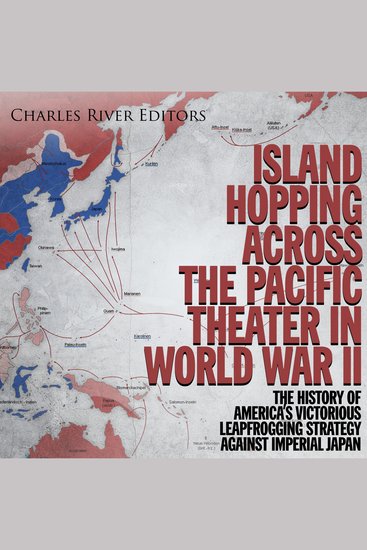
  • Island Hopping across the Pacific Theater in World War II: The History of America’s Victorious Leapfrogging Strategy against Imperial Japan - cover

    Island Hopping across the...

    Editors Charles River

    • 0
    • 0
    • 0
    The waters of the Pacific Ocean – stretching deep blue under the tropical sun, or scourged by typhoons – provided World War II's most far-flung battlefield. Two of the world's premier mid 20th century maritime powers, the United States of American and the Empire of Japan, grappled for supremacy across that vast expanse. 
    By the time the Battle of Midway was over in June 1942, the defeat was so devastating for Japan that it was actually kept secret from all but the highest echelons of the Japanese government. Along with the loss of hundreds of aircraft and over 3,000 men killed, the four Japanese aircraft carriers lost, when compared to America’s one lost carrier, was critical considering America’s huge shipbuilding superiority.  
    By the spring of 1943, American military planners had begun to create a plan to dislodge Japan from east and southeast Asia. To do so, parts of the Philippines were considered main strategic points in the potential Allied attack in the Pacific. The end goal of the Allied plan was an invasion of the Japanese home islands, in which heavy aerial bombardment would precede a ground assault. In order for this to occur, Allied forces would have to occupy areas surrounding Japan, with China adding to Luzon (the largest island in the Philippines) and Formosa (a large island off the coast of China) to create a triangle from which they could launch their bombers. 
    The Allied advance across the Pacific was based on this 1943 plan, with General MacArthur and his forces moving to the north through New Guinea, then Morotai Island, and then to Mindanao, which was the southernmost major island in the Philippines chain. At the same time, Admiral Chester Nimitz sent his fleet through the central Pacific, where they engaged Japanese forces at the Gilbert, Marshall, Marianas and Palau Islands en route to Mindanao.
    Show book
  • The Scientist's Doll Toy - Bimbo Dolls - cover

    The Scientist's Doll Toy - Bimbo...

    Kinky Press

    • 0
    • 0
    • 0
    Jack’s day goes from bad to worse. First, he loses his job, and then he allows himself to be talked into trialing an experimental drug for extra cash. When the drug turns him into a hot little bimbo woman with a huge chest and huge hips, and a tiny waist … Jack finds himself in a room with three hot college science majors. 
      
    And he finds that his new female body wants him to do some experimenting of his own... 
      
    PSA: This story contains a sexually… interesting position. There will be gratification and mindless submission to multiple men with complete mastery – in any slot this trio wish to be masters of.
    Show book
  • The Death of Omnipotence and Birth of Amipotence - cover

    The Death of Omnipotence and...

    Thomas Jay Oord

    • 0
    • 0
    • 0
    Omnipotence is dead. 
    At least it should be. It has no biblical support. And it dies a death of a thousand qualifications in philosophy. 
    Those harmed and hurting wonder why an omnipotent and loving God doesn't prevent pointless pain. The problem of evil buries omnipotence six feet under. 
    But the death of omnipotence is not the death of God. 
    In this ground-breaking book, best-selling and award-winning author Thomas Jay Oord explains why omnipotence should be rejected. But Oord offers a replacement: amipotence, the power of love. 
    If we think love shapes and guides God's power, we make better sense of life. We make better sense of the Bible. Amipotence explains why God doesn't prevent genuine evil and it overcomes other obstacles to belief. An amipotent Spirit empowers all that is loving, true, beautiful, and good. 
    No book makes a bolder but more needed argument for why God is not all-powerful. Those who care about God, love, scripture, and logic will find what they've long been looking for. 
    Get a copy of The Death of Omnipotence and Birth of Amipotence! 
    Endorsements: 
    "Omnipotence has long been considered a basic, non-negotiable, characteristic of God. But is it biblical? And does it push us toward theological landmines that blow up faith? In this book, Oord, with his typical gentle candor, lays out the complex issues in clear and readable chunks. In the end, Oord points to the beauty and comfort of a God who is uncontrolling love." 
    - Peter Enns, professor of biblical studies at Eastern University, author of Curveball
    Show book
  • Never Meant to Survive - Genocide and Utopias in Black Diaspora Communities - cover

    Never Meant to Survive -...

    João H. Costa Vargas

    • 0
    • 0
    • 0
    Never Meant to Survive presents a historical, political, and social assessment of anti-black genocide and liberatory struggles that arose to resist it. Based on fine-grained accounts of community life at the street level, Costa Vargas's work presents crucial examples of political resistance and community activism.  By examining two cities linked by common experiences of Blackness, Los Angeles and Rio de Janeiro, this book identifies a prevailing genocidal force that organizes individuals and groups across society. The 1965 and 1992 riots in Los Angeles, the work of the Black Panther Party and favela activists in Brazil, and police brutality in struggles between black communities and the state in both L.A. and Rio de Janeiro all figure importantly in Costa Vargas's compelling account. What emerges from this analysis is a call for the destruction of the conditions that foster the marginalization of black communities and a halt to the internal conflicts between black social groups themselves.
    Show book