

Join us on a literary world trip!
Add this book to bookshelf
Grey
Write a new comment Default profile 50px
Grey
Subscribe to read the full book or read the first pages for free!
All characters reduced
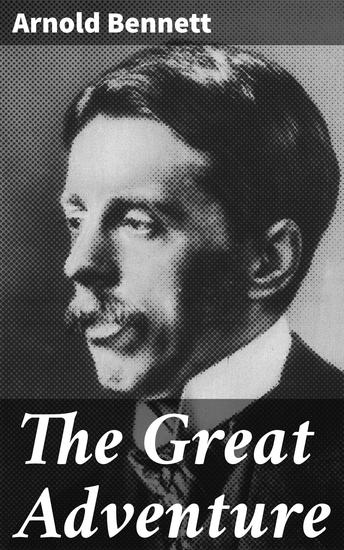
The Great Adventure - A Play of Fancy in Four Acts - cover

The Great Adventure - A Play of Fancy in Four Acts

Arnold Bennett

Publisher: Good Press

  • 0
  • 0
  • 0

Summary

In "The Great Adventure," Arnold Bennett presents a richly woven tapestry of life that explores the mundane and extraordinary elements of existence. Set against the backdrop of early 20th-century England, the narrative unfolds through a blend of vivid realism and introspective musings, typical of Bennett's literary style. The book is a meditation on the nature of adventure, urging readers to look beyond conventional definitions to find the remarkable in everyday experiences. Bennett captures the zeitgeist of the time, infusing his characters with an authentic voice that echoes the societal transformations occurring in Britain during the Edwardian era. Arnold Bennett, a prominent figure in the literary scene, was known for his keen observations on modern life and human relationships. His own journey through the industrial landscape of the Potteries imbued him with a sense of realism that permeates this work. Drawing from his personal experiences and the ethos of his time, Bennett articulates a belief in the profound significance of personal journeys and the challenges that life presents, making his reflections resonate deeply with readers. "The Great Adventure" is highly recommended for those seeking an introspective exploration of life's complexities and the notion of adventure. Bennett's insightful prose encourages readers to see beauty in life's transitions, making this work both compelling and timeless. It is an essential read for anyone interested in early modernist literature and the evolution of personal narrative.
Available since: 08/12/2023.
Print length: 68 pages.

Other books that might interest you

  • Imaginative Woman An - From their pens to your ears genius in every story - cover

    Imaginative Woman An - From...

    Thomas Hardy

    • 0
    • 0
    • 0
    Thomas Hardy was born in the hamlet of Upper Bockhampton about three miles east of Dorchester in Dorset, England, on 2nd June 1840.  
    Despite a fairly wide education and being an avid reader his parents thought it unlikely he would lead a successful scholarly or clerical career and he was apprenticed in 1856, at age 16, to a local architect whose speciality was in church restoration.  Hardy’s only opportunity to read was in the morning before work between the hours of five and eight.  
    On the back of a failed love affair he moved to London and spent five years working as an assistant to the architect Arthur Blomfield, also a restorer and designer of churches. Hardy though had by now become disillusioned with institutionalised forms of Christianity and abandoned any lingering hopes of ordination in the Anglican Church.  However, his writing of poetry was now flourishing, although it was still rejected for publication.  
    His novel ‘Desperate Remedies’, was published anonymously in 1871 and he now resolved to write full time though he was not yet in a position to achieve financial security or literary success. His second novel, ‘Under the Greenwood Tree’, appeared in 1872 and in 1873 ‘A Pair of Blue Eyes’, the most autobiographical of his works arrived. With ‘Far From the Madding Crowd’ in 1874, came critical acclaim, public attention and financial success. This was repeated in 1878 with ‘The Return of the Native’, and the ensuing years saw him rise to ever greater popularity.  
    His classic ‘The Mayor of Casterbridge’ arrived in 1886 and 5 years later ‘Tess of the d’Urbervilles’. The latter only saw publication after extensive alterations to its plot and the deletion of long passages to lessen the shock to the prudish Victorian audience who were dismayed by the seduction and ruin of a young girl by a rakish aristocrat.  
    ‘Jude the Obscure’, his last novel, suffered the same fate when it was published in 1895.  The uproar so disturbed him that he returned to poetry. In 1898 he had an earlier poetry collection, ‘Wessex Poems’ published. 
    Hardy spent the years between 1903 and 1908 writing ‘The Dynasts’, an epic poem on the Napoleonic Wars. 
    In his twilight years came honours and awards from the great and the good in recognition of his stature as one of the most outstanding of British authors across novels, short stories and poetry. George V conferred on him the Order of Merit in 1910. 
    From 1920 to 1927 he worked, in secret, on his autobiography, which was later published after his death as the work of his second wife, Florence Hardy.  
    Thomas Hardy OM died on the 11th January 1928. 
    His heart was buried alongside his first wife in Stinsford churchyard, Dorchester.
    Show book
  • Little Brother - cover

    Little Brother

    Mary E Mann

    • 0
    • 0
    • 0
    Mary E. Mann does not flinch. In Little Brother, she leads us by the hand into a world where hunger is constant, sorrow is routine, and the arrival of a child is met with neither joy nor mourning—just another mouth, another burden, another resignation. Yet even in this bleakness, life goes on, in ways both unsettling and eerily familiar. A stark, unflinching glimpse into the realities of the forgotten, this story is as haunting as it is quietly devastating.
    Show book
  • Lady Susan - cover

    Lady Susan

    Jane Austen

    • 0
    • 0
    • 0
    Step into the world of Regency-era England with Jane Austen's "Lady Susan" in digital audiobook format! 
     
    Experience the scandalous tale of Lady Susan Vernon, a cunning and captivating widow navigating the intricate social landscape of the time. With wit and manipulation, she orchestrates romantic entanglements while evading societal norms. 
     
    In this audiobook, immerse yourself in Austen's classic storytelling, filled with intrigue, romance, and the sharp commentary on societal expectations. Perfect for both Austen enthusiasts and newcomers, this rendition offers a captivating journey into the heart of Austen's literary brilliance. 
     
    Indulge in the allure of "Lady Susan" through our digital audiobook – where classic storytelling meets modern convenience!
    Show book
  • The Call of The Wild - cover

    The Call of The Wild

    Jack London

    • 0
    • 0
    • 0
    Buck, a pampered California pup, lived a life of naps and treats. But fate took a nasty turn when he was snatched and sold as a sled dog in Alaska. The cushy life vanished, replaced by bone-chilling nights and the sting of the whip 
    Buck, though, was tougher than he looked. The wilderness awakened something primal within him. He learned the howl of the pack, the bite of the cold, and the fight for survival.
    Show book
  • Persuasion - cover

    Persuasion

    Jane Austen

    • 0
    • 0
    • 0
    Jane Austens last ever published work, Persuasion is a tale reconnection, romance and the virtues of maturity. When mature and sensible Anne Elliot's spendthrift father: The Baronet Walter Elliot of Kellynch Hall is forced to rent the property and relocate to Bath due to his arrears, Anne is surprised that the tenant is married to the sister of Captain Frederick Wentworth, a man whom she had been persuaded to break off her engagement with eight years ago. Inevitably this brings the man she had thought forever lost to her back into her personal circle, can she reclaim a love she thinks lost? Will she even try? 
     Narrated by Michael Ward.
    Show book
  • Call of the Wild - cover

    Call of the Wild

    Jack London

    • 0
    • 0
    • 0
    The Call of the Wild is a novel by American writer Jack London. The plot concerns a previously domesticated and even somewhat pampered dog named Buck, whose primordial instincts return after a series of events finds him serving as a sled dog in the treacherous, frigid Yukon during the days of the 19th century Klondike Gold Rushes. Published in 1903, The Call of the Wild is one of London's most-read books, and it is generally considered one of his best.    Because the protagonist is a dog, it is sometimes classified as a juvenile novel, suitable for children, but it is dark in tone and contains numerous scenes of cruelty and violence. London followed the book in 1906 with White Fang, a companion novel with many similar plot elements and themes as The Call of the Wild, although following a mirror image plot in which a wild wolf becomes civilized by a mining expert from San Francisco named Weedon Scott.
    Show book
