Join us on a literary world trip!
Add this book to bookshelf
Grey
Write a new comment Default profile 50px
Grey
Subscribe to read the full book or read the first pages for free!
All characters reduced
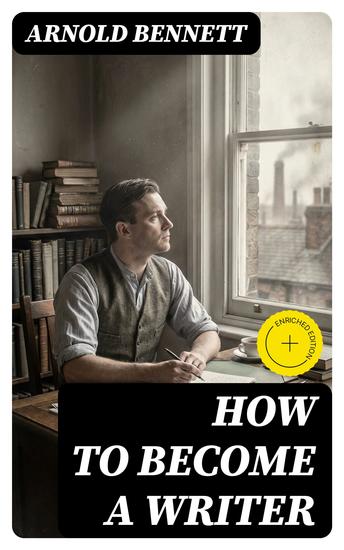
How to Become a Writer - Enriched edition How to Become an Author The Truth about an Author Literary Taste: How to Form It & The Author's Craft - cover

How to Become a Writer - Enriched edition How to Become an Author The Truth about an Author Literary Taste: How to Form It & The Author's Craft

Arnold Bennett

Publisher: DigiCat

  • 0
  • 0
  • 0

Summary

In "How to Become a Writer," Arnold Bennett encapsulates the essence of literary craftsmanship through a meticulous exploration of the art and intricacies of writing. Not merely a how-to guide, Bennett delves into the psychological motivations and discipline required for a writer's journey. His style is characterized by clarity and encouragement, blending pragmatic advice with philosophical insights that mirror the socio-cultural milieu of early 20th-century England. This period saw the rise of modernism, and Bennett's emphasis on personal experience and individuality resonates with the evolving literary landscape. Arnold Bennett, a prominent figure in the literary world, was not only a novelist but also a journalist and playwright. His diverse experiences informed his writing, encouraging him to challenge aspiring authors to harness their inner voice. Born in a working-class family, Bennett's life journey from the pottery town of Stoke-on-Trent to literary acclaim imbued him with a unique perspective on art and authenticity—elements he passionately shares in this work. This book is a vital companion for both novice and seasoned writers, offering profound insights into developing one's craft while navigating the complexities of self-expression. Bennett's blend of practicality and inspiration serves as a guiding beacon for those aspiring to leave a mark in the literary world.

In this enriched edition, we have carefully created added value for your reading experience:
- A comprehensive Introduction outlines these selected works' unifying features, themes, or stylistic evolutions.
- A Historical Context section situates the works in their broader era—social currents, cultural trends, and key events that underpin their creation.
- A concise Synopsis (Selection) offers an accessible overview of the included texts, helping readers navigate plotlines and main ideas without revealing critical twists.
- A unified Analysis examines recurring motifs and stylistic hallmarks across the collection, tying the stories together while spotlighting the different work's strengths.
- Reflection questions inspire deeper contemplation of the author's overarching message, inviting readers to draw connections among different texts and relate them to modern contexts.
- Lastly, our hand‐picked Memorable Quotes distill pivotal lines and turning points, serving as touchstones for the collection's central themes.
Available since: 11/10/2023.
Print length: 247 pages.

Other books that might interest you

  • Victory in Papua - cover

    Victory in Papua

    Samuel Milner

    • 0
    • 0
    • 0
    "Victory in Papua" is a pivotal volume in the comprehensive "The Green Books" series, chronicling the United States Army's extensive involvement in World War II. Authored by Samuel Milner, this book delves into the critical campaign in Papua New Guinea, offering a detailed examination of the strategic battles, operational challenges, and the indomitable spirit of the Allied forces tasked with halting Japanese expansion in the Southwest Pacific. Through meticulous research and compelling narrative, Milner captures the harsh realities of jungle warfare, the strategic significance of the region, and the extraordinary efforts of the soldiers who fought there. This volume stands as a testament to the complexities of military strategy, the harshness of the battle conditions, and the strategic importance of Papua New Guinea in the broader context of World War II.
    Show book
  • Stakeknife's Dirty War - The Inside Story of Scappaticci the IRA's Nutting Squad and the British Spooks Who Ran the War - cover

    Stakeknife's Dirty War - The...

    Richard O'Rawe

    • 0
    • 0
    • 0
    Freddie Scappaticci was born in 1946 and raised in a deeply nationalist area of Belfast. When the Troubles broke out in 1969, he joined the Provisional IRA, where he quickly rose through the ranks, becoming commander of Belfast in 1984. 
     
    From the outside, Scappaticci appeared to be a dedicated volunteer, but inwardly, he had become disenchanted with the IRA and, in 1977, he started working for British intelligence. At the same time, he took up a leading role in a newly formed IRA Internal Security Unit (ISU), aka ‘The Nutting Squad’. He personally executed two suspected informers and condemned at least thirty-seven more to death. 
     
    Was he the serial killer that history portrays him? Undoubtedly. But it’s not that simple, because every time he passed the death penalty on an informer, he told his British intelligence handlers about the intended execution, giving them the opportunity to prevent the killing. 
     
    Did the tasking and co-ordinating group, the primary British intelligence organisation in Northern Ireland during the troubles, aid and abet the IRA in the mass-murder of British citizens? That is the question Richard O’Rawe poses in Stakeknife’s Dirty War. But O’Rawe goes further: he lays out a very compelling case that points to the TCGs running the IRA’s war from the mid-1980s to the 1994 ceasefire. Such was the British intelliegence penetration of the IRA, that Freddie Scappaticci, aka ‘Stakeknife’, was in control of all IRA operations in the Belfast Brigade area. This book will shock readers, and cause them to reevaluate everything they formerly held to be true about Stakeknife’s dirty war in Ireland.
    Show book
  • License to kill - Gaza: genocide Holocaust denial and hasbara - cover

    License to kill - Gaza: genocide...

    Pascal Boniface

    • 0
    • 0
    • 0
    The silence on the genocidal situation in Gaza is questionable. How can we explain the double standard when we compare the - legitimate - indignation provoked by the Russian bombing of the Ukraine with the omerta surrounding the bombing of a civilian population under blockade? Beyond the problem of certain community institutions, there is a cocktail of feelings of guilt, cultural solidarity, fear of or hostility to Islam, a threat of terrorism linked to Islam, colonial memories that have not been properly digested, and adherence to the concept of the clash of civilizations, which explains the widespread support in the media and among politicians for the actions of the Israeli government. The aim of this book is to analyze this genocidal situation and to show that this guilty silence is a strategic error for France and, more generally, for Western countries.
    Show book
  • Your Path to Greatness - Essential Leadership Skills - cover

    Your Path to Greatness -...

    Cliff K Locks

    • 0
    • 0
    • 0
    If you're seeking to enhance your leadership skills and navigate the complexities of being a great leader in the Artificial Intelligence (AI) era, "Your Path to Greatness: Essential Leadership Skills" is tailored for you. Whether you're an aspiring leader or already in a leadership role, this book offers valuable insights and actionable strategies to propel your success. Here's why it's for you: Clarify Your Leadership Goals: Define the skills you want to hone and envision your leadership trajectory. Set SMART goals that are specific, measurable, achievable, relevant, and time-bound to guide your development effectively. Understand Your Leadership Style: Leadership isn't one-size-fits-all. Reflect on your unique leadership approach and how it aligns with your objectives and team dynamics. Tailor your style to suit diverse situations and foster effective leadership. Cultivate Your Authentic Persona: Authenticity is key, but so is understanding how you're perceived. Shape your leadership identity consciously, embodying the qualities you aspire to be known for while remaining true to yourself. Craft a Strategic Action Plan: Translate your goals and insights into actionable steps. Develop a comprehensive plan with clear milestones to track your progress and ensure you're moving closer to your leadership aspirations. In essence, this book is designed for those committed to continuous self-improvement in leadership. Whether you're stepping into a new role or seeking to refine your existing skills, its blend of introspection, learning, and strategic action will empower you to lead effectively amidst the challenges of today's AI-driven landscape.
    Show book
  • How to Think More and Better - Being Reasonable in Unreasonable Times - cover

    How to Think More and Better -...

    William B. Irvine

    • 0
    • 0
    • 0
    William B. Irvine, author of the popular book "A Guide to the Good Life," offers much needed philosophical advice on how to become a more rational and critical thinker in today's emotionally-driven and complex world. 
      
    Even the most reasonable of us can be selective about when we think reasonably. We may realize that the best thing to do is to take the advice of our doctor when facing a medical issue. When shopping for a new car or appliance we might carefully assess online reviews and weigh our options calmly before making an informed decision. But when it comes to things that feel more fraught—voting, navigating a challenge in our family, figuring out what to do in a difficult professional situation—we might throw this approach out the window, dismissing facts and patterns that form a body of evidence, and trust our gut. (Of course, there is a time and place for this, but not every big decision is purely a matter of the heart.) Likewise, when we think about big ideas, about right and wrong, or about concepts so complex they make anyone's head spin, we can freeze, jumping to conclusions rather than wading into the details, or considering the existing arguments that others offer as a trail through challenging terrain. How can we do better? How can we train our minds to be more consistent? How can we practice using the best of our rational abilities when it matters most? 
      
    How to Think More and Better offers a philosopher's advice on becoming a more rational and critical thinker, rather than relying on emotions or hearsay to reach important decisions. It trains the reader in open-minded critical thinking. This thinking is crucial in a time of political polarization, social media, politicized news media, and echo chambers, to help us pursue truth and understanding in a world of rabbit holes, echo chambers, and disinformation. Irvine explains the prevalence of emotion-driven thinking is often at the expense of engagement with evidence, and then lays out strategies readers can use to train themselves to think more critically, drawn from what worked for him in the classroom. He also covers important areas to aid intellectual self-transformation, such as Mindcare and Mindcleaning.  
      
    With practice, most people can become evidence-based thinkers. Seemingly intractable contemporary problems might be solved if we all start engaging more in this kind of slow and careful thinking, considering arguments and evidence even from those on opposite sides of key debates. 
      
    "William B. Irvine is the voice of reason—and reasoned thinking—in a world that feasts on attention and spectacle and drama. How to Think More and Better is a guide to recovering our senses not only as citizens, but as judicious and thoughtful human beings."—Tom Nichols, author of The Death of Expertise
    Show book
  • Homer and Classic Psychology - cover

    Homer and Classic Psychology

    Friedrich Nietzsche

    • 0
    • 0
    • 0
    "Homer and Classical Psychology" by Friedrich Nietzsche is a philosophical work that delves into the psychological insights found within the writings of Homer, particularly in "The Iliad" and "The Odyssey." Nietzsche explores the characterizations, motivations, and behaviors of the epic heroes and how they reflect fundamental aspects of human psychology. Through his analysis, Nietzsche provides a deeper understanding of both Homer's works and the nature of human consciousness.
    Show book