Join us on a literary world trip!
Add this book to bookshelf
Grey
Write a new comment Default profile 50px
Grey
Subscribe to read the full book or read the first pages for free!
All characters reduced
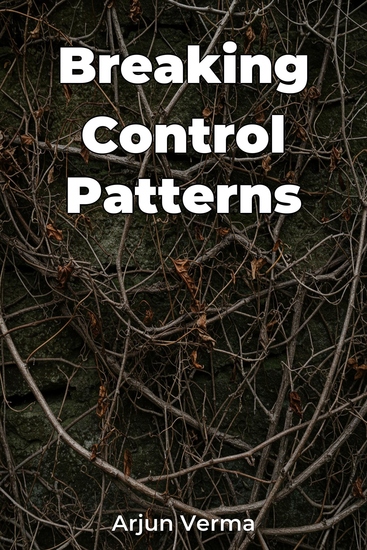
Breaking Control Patterns - cover

Breaking Control Patterns

Arjun Verma

Translator A AI

Publisher: Publifye

  • 0
  • 0
  • 0

Summary

Breaking Control Patterns explores the pervasive nature of control in our lives, particularly its links to codependency and addiction. It examines how controlling behaviors, whether overt manipulation or subtle emotional blackmail, stem from deep-seated needs and fears. Did you know that these behaviors are often rooted in societal norms, family dynamics, and individual experiences, creating cycles that are hard to break? The book uniquely integrates insights from addiction recovery and codependency treatment, highlighting how the need to control or be controlled can be a central issue. It progresses through three key sections: defining control patterns and their connections, exploring the psychological underpinnings like trauma and attachment styles, and providing practical strategies. This includes cognitive-behavioral techniques and mindfulness practices, offering actionable steps to build healthier boundaries and foster self-compassion. Ultimately, this self-help guide aims to shift the focus from managing symptoms to addressing the root causes of these issues. By understanding the interplay between control, addiction, and codependency, readers can achieve genuine freedom, improve their communication skills, and establish more balanced and fulfilling relationships. Case studies and personal narratives are used to illustrate the concepts and techniques discussed.
Available since: 02/28/2025.
Print length: 101 pages.

Other books that might interest you

  • Pompeii - History of the Roman Pleasure Resort That Got Buried in Ashes - cover

    Pompeii - History of the Roman...

    Kelly Mass

    • 0
    • 0
    • 0
    Pompeii was an ancient Roman city situated near modern-day Naples in the Campania region of Italy, within what is now the comune of Pompei. It thrived as a bustling urban center until the catastrophic eruption of Mount Vesuvius in AD 79. This violent explosion buried Pompeii, along with the neighboring cities of Herculaneum and several luxurious villas in the surrounding countryside, including those at Boscoreale and Stabiae, beneath a thick blanket of volcanic ash and pumice. The depth of this sudden entombment ranged from four to six meters (13 to 20 feet), sealing the city and its inhabitants in a chilling moment of suspended animation.  
    When excavations began centuries later, Pompeii revealed itself as an unprecedented time capsule of Roman life. The city was preserved in remarkable detail, offering a rare and invaluable glimpse into the daily routines, architectural styles, and cultural expressions of its people. However, the early excavations, conducted with rudimentary methods, often led to the destruction of crucial evidence. Despite these losses, Pompeii remains one of the most well-documented archaeological sites, providing scholars with insights into the lives of Romans that would have otherwise been lost to history. 
    Show book
  • Righteous Renegades : Once Hidden Heroes of the Holocaust - cover

    Righteous Renegades : Once...

    Quentin Drummond Anderson

    • 0
    • 0
    • 0
    Righteous Renegades: Once Hidden Heroes of the Holocaust 
    By Quentin Drummond Anderson 
    As the Nazi regime tightened its grip across Europe, four diplomats waged a silent battle with bureaucracy itself. Chiune Sugihara, Raoul Wallenberg, Varian Fry, and Aristides de Sousa Mendes defied their governments to save thousands during the Holocaust. 
    The Nazi genocide operated through meticulous documentation and legal decrees. Escape required someone willing to break these very rules. 
    Japanese consul Sugihara issued thousands of unauthorized transit visas from Lithuania. Swedish diplomat Wallenberg arrived in Budapest in 1944, using forged documents and safe houses to rescue Hungarian Jews. American journalist Fry transformed an assignment in Vichy France into a covert rescue operation for intellectuals and refugees. Portuguese consul Sousa Mendes granted visas to thousands in Bordeaux against direct orders. 
    Their heroism came at tremendous cost. Some faced professional ruin, while others vanished into Soviet captivity. Recognition as Righteous Among the Nations came decades later. 
    Through gripping storytelling and extensive research, Anderson examines the ethical dilemmas these men confronted. Each was bound by government duty yet found moral courage to disobey. The book explores power structures, bureaucratic indifference, and how a single signature determined life or death. 
    More than historical account, Righteous Renegades reflects on individual responsibility within systems of power. In today's world of refugee crises and political oppression, these lessons remain profoundly relevant. 
    For readers of Erik Larson, Deborah Lipstadt, and Timothy Snyder, this essential addition to Holocaust literature poses a timeless question: When faced with injustice, would you have the courage to act?
    Show book
  • Distracted - A Philosophy of Cars and Phones - cover

    Distracted - A Philosophy of...

    Robert Rosenberger

    • 0
    • 0
    • 0
    Although the dangers of texting while driving are widely known, many people resist the idea that phone usage will impair their driving. And connectivity features in new cars have only made using technology behind the wheel more tempting. What will it take to change people's minds and behavior? Robert Rosenberger contends that a better understanding of why this combination of technologies is so dangerous could effectively adjust both habits and laws. 


    Rosenberger brings together ideas from philosophy and cognitive science to leverage a postphenomenological perspective that reveals how our smartphones make us such bad drivers. Reviewing decades of empirical studies in cognitive science, he shows that we have developed habits of perception regarding our compulsive technology use—habits that may wrest our attention away from the road. 


    Distracted develops innovative concepts for understanding technology-related habits and the ways that our relationships to our devices influence how we perceive the world. In turn, these ideas can help drivers be more cognizant of the effect that smartphone usage has on their perceptions, better inform efforts to enact stricter regulations, and help us all to be more reflective about the technologies that shape our lives.
    Show book
  • The Pacific Theater - Island Hopping and the Fight Against Japan - cover

    The Pacific Theater - Island...

    Sage Winters

    • 0
    • 0
    • 0
    The Pacific Theater of World War II was the culmination of decades of tension, territorial disputes, and ideological differences between Japan and the Allied Powers, particularly the United States. The roots of the conflict can be traced back to Japan’s rise as an imperial power in the late 19th and early 20th centuries. Seeking to expand its influence across East Asia and the Pacific, Japan embarked on a campaign of military conquest and economic domination, often at the expense of its neighbors.  
      
    By the 1930s, Japan’s aggressive expansionist policies became more pronounced, beginning with the invasion of Manchuria in 1931 and escalating with the full-scale war against China in 1937. These actions alarmed Western powers, who viewed Japan’s ambitions as a direct challenge to their interests in the region. The United States, in particular, responded by imposing economic sanctions and cutting off vital supplies, including oil, to curtail Japan’s militarism. However, these measures only further inflamed tensions, as Japan viewed them as an existential threat to its survival and growth as a global power.  
      
    The turning point came on December 7, 1941, with Japan’s surprise attack on Pearl Harbor. This audacious assault on the U.S. Pacific Fleet in Hawaii aimed to neutralize American naval power and secure Japan’s dominance in the Pacific. Although the attack achieved significant tactical success, crippling much of the U.S. fleet, it also galvanized American public opinion and led to the United States’ entry into World War II. The attack on Pearl Harbor marked the beginning of a brutal and protracted conflict that would span nearly four years and claim millions of lives. 
    Show book
  • Erich Hartmann: The Life and Legacy of the Luftwaffe’s Top Fighter Ace during World War II - cover

    Erich Hartmann: The Life and...

    Editors Charles River

    • 0
    • 0
    • 0
    The Third Reich's Luftwaffe began World War II with significant advantages over other European air forces, playing a critical role in the German war machine's swift, powerful advance. By war's end, however, the Luftwaffe had been decimated by combat losses and crippled by poor decisions at the highest levels of military decision-making, and it proved unable to challenge Allied air superiority despite a last-minute upsurge in German aircraft production. 
    When Erich Hartmann joined the Luftwaffe, it was a highly advanced, confident, and powerful weapon of war, and Hartmann was perhaps in the “sweet spot” of the Luftwaffe’s training program. He was surrounded by an organization and men with real combat experience, including in Spain, Poland, France and the first brutal 15 months on the Russian front, and all of that helped shape him into the fighter ace that he was to become. He went on to fly 1,404 combat missions and engage in aerial combat on 825 occasions. He crash-landed 16 times, but, never, as he liked to point out in post-war interviews, due to enemy action. As he put it, “I never became another pilot’s victory.” 
    Over the course of the war, Hartmann was credited with shooting down 352 enemy aircraft, 345 of which were Russian and seven being American, making him the most successful combat fighter of all time. In fact, the number is so incredible that it has inevitably come under intense criticism and scrutiny over the years, with some suggesting outright that the figure is falsified, while others have pointed to the unique combat circumstances of the Russian front and suggested that aerial combat there was somehow easier. 
    Either way, Hartmann was in continuous combat for 32 months of the most brutal conflict in history and came out of it almost entirely unscathed, perhaps his most remarkable feat of all.
    Show book
  • The Popcorn Principles Strike Back - Interviews With Screenwriters Who Also Write Novels - cover

    The Popcorn Principles Strike...

    John Gaspard

    • 0
    • 0
    • 0
    Mastering Fiction with Hollywood's Finest Writers 
    Discover the secrets of successful storytelling from twelve acclaimed writers who have mastered the art of captivating audiences across both the screen and the page.  
    From Nicholas Meyer (The Seven-Per-Cent Solution) to Dennis Palumbo (My Favorite Year), Lawrence Allan (Big Fat F@!k Up), April Smith (Cagney & Lacey), Ken Levine (M*A*S*H, Cheers), Matt Goldman (Seinfeld), Phoef Sutton (Cheers, Boston Legal), Ellen Byron (Wings, Just Shoot Me), John August (Big Fish, Charlie and the Chocolate Factory), Kellye Garrett (Cold Case), Nick Mohammed (Intelligence), and Tom Straw (Night Court), these accomplished authors share their wisdom, wit, and inspiration, providing a master class in storytelling. 
    These storytellers offer invaluable advice on character development, plot structure, dialogue, and more, drawing from their unique experiences in film and television and how those insights have shaped their approach to writing novels. 
    Whether you're an aspiring novelist looking to learn from the best or a film buff curious about the creative process behind your favorite movies and shows, "The Popcorn Principles Strike Back" is a must-read.  
    Don't miss this opportunity to take your writing to the next level with the help of these talented writers.  
    Get your copy today and start applying their invaluable lessons to your own storytelling journey!
    Show book