Join us on a literary world trip!
Add this book to bookshelf
Grey
Write a new comment Default profile 50px
Grey
Subscribe to read the full book or read the first pages for free!
All characters reduced
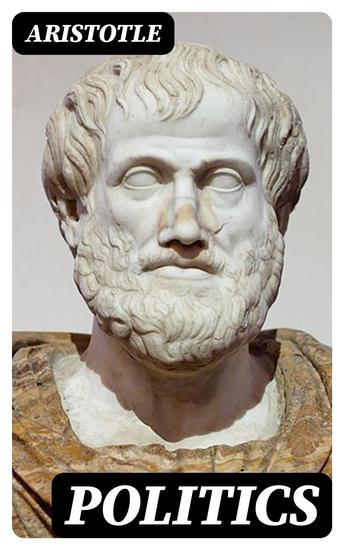
Politics - cover

Politics

Aristotle

Translator A.M. William Ellis

Publisher: DigiCat

  • 0
  • 0
  • 0

Summary

In "Politics," Aristotle meticulously examines the organization of city-states, civic life, and the nature of justice, synthesizing empirical observation with philosophical inquiry. Through a comparative analysis of various political systems including monarchies, aristocracies, and democracies, Aristotle presents his belief in the importance of the middle class for a stable polity. His incisive prose combines rigorous logical reasoning with vivid examples, reflecting a commitment to grounding his theories in the practical realities of governance, thus situating his work firmly within the tradition of classical political philosophy. Aristotle, a student of Plato, was profoundly influenced by his teacher's idealism yet diverged towards a more pragmatic approach rooted in the world of empirical observation. His diverse experiences, including his role as tutor to Alexander the Great, endowed him with a unique perspective that merged theoretical principles with real-world applications. As one of the founding figures of Western philosophy, his insights into morality, politics, and ethics in "Politics" reflect a comprehensive understanding of human behavior in communal life. I highly recommend "Politics" to scholars and enthusiasts alike, as it not only lays the groundwork for future political theory but also invites readers to contemplate the essential questions of governance and the common good. Aristotle's thought-provoking analysis remains relevant in today's complex political landscape, making this work a cornerstone for anyone seeking deeper insights into the nature of human society.
Available since: 10/11/2022.
Print length: 324 pages.

Other books that might interest you

  • Subtle Abuse - Indirect Forms of Psychological Harm - cover

    Subtle Abuse - Indirect Forms of...

    Cito Harder

    • 0
    • 0
    • 0
    Subtle abuse is a form of psychological harm that often goes unnoticed, yet its effects can be just as damaging as more overt forms of mistreatment. Unlike physical abuse, which leaves visible marks, or direct verbal abuse, which is easier to identify, subtle abuse operates in the shadows, disguised as normal behavior, misunderstandings, or even acts of care. This makes it particularly dangerous because victims may not recognize it until significant emotional and psychological damage has already occurred. 
    At its core, subtle abuse is about control, manipulation, and emotional harm inflicted in ways that are difficult to detect. It can take many forms, including gaslighting, passive-aggressive behavior, emotional withholding, and undermining someone’s confidence in indirect ways. A common characteristic of subtle abuse is its plausibility—it often leaves victims doubting their own experiences and questioning whether they are simply overreacting. Because the harm is delivered in small, often deniable doses, victims may struggle to explain their distress to others, further isolating them in their experience. 
    One of the most insidious aspects of subtle abuse is its ability to erode a person’s sense of self over time. The victim may start to feel insecure, anxious, or even incapable, not realizing that their mental state has been shaped by constant, indirect put-downs or the gradual withholding of emotional support. For example, a partner who consistently dismisses concerns with phrases like “You’re too sensitive” or “I was just joking” may be engaging in subtle emotional abuse by invalidating the other person’s feelings. Similarly, a boss who subtly undermines an employee’s work without overt criticism may be manipulating them into self-doubt and compliance.
    Show book
  • Speaking Up without Freaking Out 3rd ed - 50 Techniques for Confident and Compelling Presenting - cover

    Speaking Up without Freaking Out...

    Matt Abrahams

    • 0
    • 0
    • 0
    The Speaking Up without Freaking Out audio book by Matt Abrahams (host of the award-winning Think Fast Talk Smart podcast) contains over 50 anxiety management techniques that are based on scientifically supported theory and evidence that will help you become a more confident and compelling communicator regardless of where you present -- on stage, in a meeting, or virtually. 
    Confident and compelling presenting involves a complicated mix of physiological and psychological factors. In the 3rd edition, this audio book provides specific guidance and opportunities to practice developing the skills you will need to feel more comfortable speaking in front of others in an engaging way. 
    This book is divided into seven chapters: 
    Chapter 1 describes speaking anxiety, how it shows itself, its negative effects, and how you can appear less nervous. 
    Chapter 2 describes the main theories about why people feel anxious when speaking and, importantly, offers you several specific techniques to reduce speaking anxiety and bolster your confidence. 
    Chapter 3 details how you can use your nonverbal presence and voice to not only appear more confident, but also feel more confident. 
    Chapter 4 how focusing on your audience’s needs and connecting your content to them can reduce your anxiety and make your presentations more compelling. 
    Chapter 5 provides techniques and guidance on how to structure your presentations to better help you and your audience remember what you present. 
    Chapter 6 teaches how to resist and stop some self-defeating beliefs and behaviors that perpetuate and exacerbate anxiety. 
    Chapter 7 addresses how to put all this information to work for you by creating your own Anxiety-Management Plan.
    Show book
  • Radiant Awakening: Humanity's Transformational Journey - cover

    Radiant Awakening: Humanity's...

    Lesley Carmack, Ruth Eichler

    • 0
    • 0
    • 0
    Radiant Awakening: Humanity's Transformational Journey 
    In a world of increasing complexity and rapid change, "Radiant Awakening" offers a transformative roadmap for those seeking deeper meaning and authentic connection. This visionary work weaves scholarly insights with contemporary spiritual wisdom, creating a tapestry that speaks to both mind and heart. 
    Through personal narratives and universal truths, the authors guide listeners on a journey through humanity's evolutionary acceleration—a time when old paradigms are dissolving and new possibilities emerge. The Phoenix serves as the central metaphor, embodying our capacity to rise renewed from personal challenges and collective trials. 
    Drawing from Sacred Feminine principles, the book bridges ancient prophecies with modern scientific understanding, while incorporating wisdom received through subtle dimensions of consciousness. Listeners will discover practical guidance for navigating life's paradoxes with compassion, humor, and intentionality. 
    "Radiant Awakening" speaks to those who sense the profound shifts occurring in our world and who wish to participate consciously in this global transformation. It offers heart-centered practices that empower individuals to become both initiates and initiators—awakening to their highest potential while contributing to our collective evolution. 
    As you listen, you'll find yourself embraced by a vision that honors both our spiritual heritage and our future possibilities, inviting you to step more fully into your role in humanity's extraordinary journey of awakening.
    Show book
  • Saints and Liars - The Story of Americans Who Saved Refugees from the Nazis - cover

    Saints and Liars - The Story of...

    Debórah Dwork

    • 0
    • 0
    • 0
    Long before their country officially joined the war, American aid workers were active in rescue efforts across Europe. Two such Americans were Martha and Waitstill Sharp, who were originally sent to Prague as part of a relief effort but turned immediately to helping Jews and dissidents after the 1939 invasion by Germany. 


    They were not the only ones. Renowned historian Debórah Dwork follows the story of rescue workers in five major cities as the refugee crisis expanded to Vilna, Shanghai, Marseille, and Lisbon. Followed by Nazi agents, spiriting people across borders, they learned secrecy. 


    Others negotiated with government representatives, like Laura Margolis, who worked with the Japanese, to get enough food and warm shelter for the refugees in Shanghai. Yet, the women also often faced lack of support from their agencies; if part of a couple, they fought to get paid even at a low salary despite working as long and hard as their husbands. 


    Moving and revelatory, Saints and Liars illuminates the unpredictable circumstances with which these aid workers contended, while revealing the moral questions they encountered and the devastating decisions they had to make.
    Show book
  • Nazis on the Potomac - The Top-Secret Intelligence Operation that Helped Win World War II - cover

    Nazis on the Potomac - The...

    Robert K. Sutton

    • 0
    • 0
    • 0
    “A fascinating account” of the secret Virginia facility code-named PO Box 1142, where the US gathered intelligence and interrogated German prisoners (Journal of Counterterrorism & Homeland Security International).   About fifteen miles south of Washington, DC, Fort Hunt, Virginia is a green open space enjoyed by residents. But not so long ago, it was the site of one of the highest-level clandestine operations of World War II.   Shortly after the US entered the war, the military realized it had to work on exploiting any advantages it might gain on the Axis Powers. One part of this endeavor was to establish a secret facility not too close to—but also not too far from—the Pentagon, which would interrogate and eavesdrop on the highest-level Nazi prisoners and also translate and analyze captured German war documents. That complex was established at Fort Hunt, known by the code name: PO Box 1142.   The American servicemen who did the interrogating and translating were young, bright, hardworking, and absolutely dedicated to their work. Many of them were Jews who’d escaped Nazi Germany as children—some had come to America with their parents, others had escaped alone, but their experiences, and what they’d been forced to leave behind, meant they had personal motivation to do whatever they could to defeat Nazi Germany. They were perfect for the difficult and complex job at hand. They never used corporal punishment in interrogations of German soldiers but developed and deployed dozens of tricks to gain information. The Allies won the war against Hitler for a host of reasons, discussed in hundreds of volumes. This is the first book to describe the intelligence operations at PO Box 1142 and their part in that success. It will never be known how many American lives were spared, or whether the war ended sooner with the programs at Fort Hunt, but it’s doubtless that they made a difference—and gave the young Jewish men stationed there the chance to combat the evil that had befallen them and their families.   “Fills a gap in World War II intelligence history by documenting the origins of a number of European Theater intelligence successes thanks to the work of Ft. Hunt interrogators.” —Studies in Intelligence  Includes photographs
    Show book
  • Clean Your Debts - cover

    Clean Your Debts

    Earl Dickerson

    • 0
    • 0
    • 0
    Clean Your Debts: The Comprehensive Guide on the Effective Ways and Methods of Eliminating Out your Debts, Learn All Types of Credits and Debts and How to Get Rid of ThemDebt is not inherently a bad thing. Credit and debt allow people and organizations to do things that they would otherwise not be able, or allowed, to do. Commonly, people in industrialized nations use it to purchase houses, cars, and many other things too expensive to buy with cash on hand. Companies also use debt in many ways to leverage the investment made in their assets, "leveraging" the return on their equity.Credit card debt is extremely stressful and it can take over your life but it’s not insurmountable. Before you get consumed by the seemingly endless torrent of bill collector calls and fruitless interest payments, consider some of the many options that you have to take care of credit card debt. Statistics show that 80% of Americans have debts to their name. Debts have different effects on everyone. While it may seem like just a mild inconvenience to some, it could be ruining the lives and taking control of the lives of some people.This comprehensive guide about debts will give you essential information and proven tips on how you can rid yourself of credit card debt, student loans, and mortgage debt. Learn useful strategies and knowledge on how to improve your credit score.Here are some of the topics that will be discussed in this guide: What is Credit Debt? Credit Card Debt, Student Loans, Mortgages, Bankruptcy Facts, Credit Score Facts, and a lot more.There really is no fast and easy way to clear yourself of debt, you have to understand that it’s a slow and steady process. To learn more, download Clean Your Debt Today!
    Show book