Join us on a literary world trip!
Add this book to bookshelf
Grey
Write a new comment Default profile 50px
Grey
Subscribe to read the full book or read the first pages for free!
All characters reduced
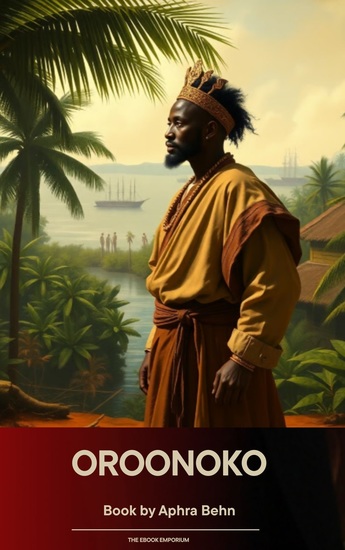
Oroonoko - cover

Oroonoko

Aphra Behn

Publisher: The Ebook Emporium

  • 0
  • 0
  • 0

Summary

"A man that has all the virtues that can adorn a human mind."

Oroonoko, a powerful African prince and brilliant general, falls deeply in love with the beautiful Imoinda. Their romance is shattered when they are both betrayed and sold into slavery, eventually reuniting on a sugar plantation in the English colony of Surinam. Renamed "Caesar" by his captors, Oroonoko cannot be broken by the chains of his station. Aphra Behn's narrative is a searing, tragic exploration of the "noble savage," the cruelty of the colonial system, and the indomitable spirit of a man born to rule.

A Landmark in Literary History: As one of the earliest examples of the English novel, Oroonoko is a fascinating blend of travelogue, memoir, and epic tragedy. Behn claims the authority of an eyewitness, painting a vivid—and often brutal—picture of life in the 17th-century Caribbean. The novel challenges the moral justifications of slavery by presenting a protagonist who possesses more honor and nobility than his "civilized" Christian masters.

The Tragedy of the Heroic Ideal: The story culminates in a desperate and violent rebellion as Oroonoko seeks to win freedom for his family. It is a profound meditation on the conflict between natural law and man-made systems of oppression. Oroonoko remains a critical text for understanding the origins of the novel form and the long history of social justice in literature.

Witness the strength of a royal heart in chains. Purchase "Oroonoko" today and discover a foundational work of English prose.
Available since: 01/06/2026.
Print length: 387 pages.
Other books that might interest you

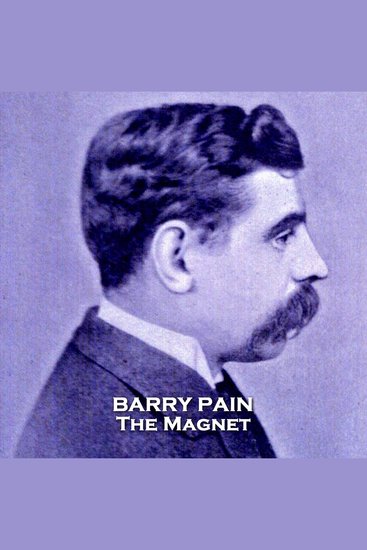
  • The Magnet - From their pens to your ears genius in every story - cover

    The Magnet - From their pens to...

    Barry Pain

    • 0
    • 0
    • 0
    Barry Eric Odell Pain was born at 3 Sydney Street in Cambridge on 28th September 1864. He was one of 4 children. 
    He was educated at Sedbergh School and then Corpus Christi College, Cambridge where he read classics and contributed to and edited Granta. 
    Four years of service as an Army coach followed before he moved to London. In 1889, Cornhill Magazine published his short story ‘The Hundred Gates’.  This opened the way for Pain to advance his literary career on several fronts. He became a contributor to Punch and The Speaker, as well as joining the staff of both the Daily Chronicle and Black and White.  
    In 1897 he succeeded Jerome K Jerome as editor of To-Day but still contributed regularly, until 1928, to the Windsor Magazine. 
    It is often said that Pain was discovered by Robert Louis Stevenson, who compared his work to that of Guy de Maupassant.  It’s an apt comparison. Pain was also a master of disturbing prose but able to inject parody and light comedy into many of his works.  A simple premise could in his hands suddenly expand into a world very real but somehow emotionally fraught and on the very edge of darkness as many of these short stories demonstrate.   
    Despite applying his talents to several genres and forms today Pain is more readily thought of, especially during the first decade of the 20th Century, as perhaps the leading British humorist of his day.  These stories reveal a darker side and beg to differ. 
    Barry Pain died on 5th May 1928 in Bushey, Hertfordshire.
    Show book
  • Home Life Relayed - BBC presents a live show from a family house with disastrous consequences - cover

    Home Life Relayed - BBC presents...

    E M Delafield

    • 0
    • 0
    • 0
    Edmée Elizabeth Monica Dashwood, née de la Pasture, and more commonly known as E M Delafield, was born in Steyning, Sussex on 9th June 1890.   
     
    Raised in the fading years of the Victorian era with its Empire and strict moral codes Delafield, not yet married at twenty-one, joined a French religious order, in Belgium, but soon decided that this was a totally wrong choice for her.   
     
    Her next challenge was her work during the horror of the First World War.  Delafield decided to take up a position as a nurse in a Voluntary Aid Detachment in Exeter.  It was whilst here that she managed to write her first novel, ‘Zella Sees Herself’.   
     
    With the end of the war new opportunities were sought and she now took up a position for the South-West Region of the Ministry of National Service in Bristol.  With it came enough time to write two more novels: ‘The War Workers’ (1918) and ‘The Pelicans’ (1918).   
     
    On 17th July 1919, she married Colonel Arthur Paul Dashwood, OBE, an engineer responsible for building the massive docks at Hong Kong Harbour.  The marriage produced two children; Lionel and Rosamund.  That same year her fourth novel, ‘Consequences’, was published.   
     
    The couple spent their early years in Malaya but returned to England to live in Croyle, an old house in Kentisbeare, Devon.  Delafield continued to collect responsibilities and organise whatever she could.  At the initial meeting of the Kentisbeare Women's Institute, Delafield was unanimously elected president, and also became a Justice of the Peace, raised the children and, of course, continued to write her best-selling novels.   
     
    Her greatest work is undoubtedly the largely autobiographical ‘Diary of a Provincial Lady’, which is a simply structured journal of the life of an upper-middle class Englishwoman, living mostly in a Devon village of the 1930s.  It spawned several best-selling sequels.  Her works also includes stage and radio plays, film scripts and short stories.  
     
    After the death of her son in 1940, her health began to markedly decline.    
     
    E M Delafield died on 2nd December 1943 after collapsing whilst giving a lecture in Oxford.  She was 53.
    Show book
  • One Autumn Night - From their pens to your ears genius in every story - cover

    One Autumn Night - From their...

    Maxim Gorky

    • 0
    • 0
    • 0
    Alexei Maximovich Peshkov was born on 28th March 1868, in Nizhny Novgorod, Russia. 
    Better known as Maxim Gorky he was orphaned at 11 and ran away from home at 12.  At 19 he had already attempted suicide and thereafter travelled, by foot, across the Russian Empire for 5 years. 
    His first book ‘Essays & Stories’ in 1898 was a sensation and so began a long career as an author of short stories, novels and plays.  Gorky saw writing as a moral and political act that would help to change the unjust world around him.  He was an ardent early advocate of the emerging Marxist movement and publicly opposed the Tsarist regime leading several times to his arrest.  
    In 1904 he began his own theatre but the censor banned every play and Gorky was forced to abandon the project. 
    But Gorky was a financially successful author, editor, and playwright and gave monies to political parties as well as for civil rights and social reform.  The brutal shooting of workers, which set in motion the Revolution of 1905, pushed Gorky more decisively toward radical solutions.  
    In 1906 he went to the United States to raise funds for the Bolsheviks. Those experiences including a scandal over travelling with his lover and not his wife deepened his contempt for the ‘bourgeois soul.’ 
    Gorky now moved to Capri in Italy, both for health reasons and to escape the increasingly repressive times in Russia.  
    An amnesty for the 300th anniversary of the Romanov dynasty saw him return to Russia in 1914. His politics remained close to the Bolshevik cause.  But soon, after the 1918 revolution, his essays referred to Lenin as a tyrant for his senseless arrests and repression.  He was soon appealing to the outside world for food aid after the catastrophic crop failure. 
    In October 1921 Gorky returned to Italy, now in Fascist hands, and settled in Sorrento until 1932.  His health worsened with the onset of tuberculosis. 
    He wrote several successful books there but now decided to find an understanding with the communist regime. Stalin invited him home and his return was hailed as a major propaganda victory.  He was decorated with the Order of Lenin, and a province, a park, and various streets re-named in his honour. 
    But he had his faults too.  In 1933, Gorky co-edited a book on the White Sea-Baltic Canal and denied even a single prisoner died during its construction, but thousands had. As well, knowing that some Nazis were homosexual, a phrase was attributed to him that said ‘exterminate all homosexuals and fascism will vanish’.  Although he was himself was quoting another he was decidedly homophobic. 
    With the increase of Stalinist repression in 1935 Gorky was placed under unannounced house arrest. 
    Maxim Gorky died on the 18th June 1936 from pneumonia.  He was 68. 
    Stalin and Molotov were among those who carried Gorky's urn of ashes at his funeral.
    Show book
  • Persuasion (Argo Classics) - cover

    Persuasion (Argo Classics)

    Jane Austen

    • 0
    • 0
    • 0
    William Collins Books and Decca Records are proud to present ARGO Classics, a historic catalogue of classic fiction read by some of the world’s most renowned voices. Originally released as vinyl records, these expertly abridged and remastered stories are now available to download for the first time. 
    An overlooked middle daughter destined to be a spinster. A handsome rejected naval officer. A family on the brink of financial ruin. 
      
    Anne Elliot has never forgotten about the man to whom she was persuaded out of an engagement by her family. When he returns to Anne's life eight years later, will she be able to secure a second chance? 
      
    Narrated by the incredible Prunella Scales, Persuasion is a story of missed opportunities, of family and class systems, love and heartache. 
    For fans of Coralie Bickford-Smith (The Brothers Karamazov), Sheba Blake (A Room With A View), M. L. Rio (Hot Wax), Diane Long Hoeveler (Castle of Wolfenbach), and Gill Hornby (Miss Austen).
    Show book
  • Dracula – Chapter 14: The Gathering of the Clues - A Chapter-by-Chapter Reading of Bram Stoker’s Classic - cover

    Dracula – Chapter 14: The...

    Bram Stoker

    • 0
    • 0
    • 0
    Title: 
    Dracula – Chapter 14: The Gathering of the Clues 
    Subtitle: 
    A Chapter-by-Chapter Reading of Bram Stoker’s Classic 
    Series Name: 
    Dracula (Chapter-by-Chapter Reading) 
    Series Entry: 
    14 
    Description: 
    In this pivotal chapter, the scattered horrors surrounding Count Dracula finally begin to connect. Mina Harker, deeply troubled by Jonathan’s breakdown after seeing the mysterious stranger in London, secretly reads and types her husband’s terrifying journal from Castle Dracula. What once seemed like the ravings of illness now carries the chilling weight of truth. 
    Professor Van Helsing reaches out to Mina after studying Lucy Westenra’s papers, sensing that Mina may hold the missing pieces of a far greater mystery. Their meeting reveals Mina’s intelligence, compassion, and remarkable attention to detail, qualities that immediately earn Van Helsing’s admiration and trust. In turn, Mina bravely places Jonathan’s journal in his hands, risking painful memories in the hope of uncovering the truth behind Lucy’s death. 
    Van Helsing’s reading of Jonathan’s account confirms his darkest suspicions: Count Dracula has indeed come to England. Reassured that he is not mad, Jonathan begins writing again and joins Van Helsing in quietly preparing for the struggle ahead. Meanwhile, disturbing newspaper reports about the mysterious “Bloofer Lady” and children found wounded in the night convince Van Helsing that Lucy’s transformation is already underway. 
    The chapter builds toward one of the novel’s most unforgettable revelations. In a tense conversation with Dr. Seward, Van Helsing finally dares to speak the impossible aloud: Lucy Westenra has become one of the Un-Dead. 
    This is Chapter 14 of Bram Stoker’s Dracula, narrated by Amazon-bestselling horror author Jonathan Dunne, part of a complete chapter-by-chapter audiobook presentation of this enduring Gothic masterpiece. 
    📖 Public domain text. Original publication: 1897.
    Show book
  • Here We Are - From their pens to your ears genius in every story - cover

    Here We Are - From their pens to...

    Dorothy Parker

    • 0
    • 0
    • 0
    The bookshelves of American literature are incredible collections that have gathered together centuries of very talented authors.  From this continent their fame spread and whilst among their number many are now forgotten or neglected their talents endure.  Among them is Dorothy Parker.
    Show book