Join us on a literary world trip!
Add this book to bookshelf
Grey
Write a new comment Default profile 50px
Grey
Subscribe to read the full book or read the first pages for free!
All characters reduced
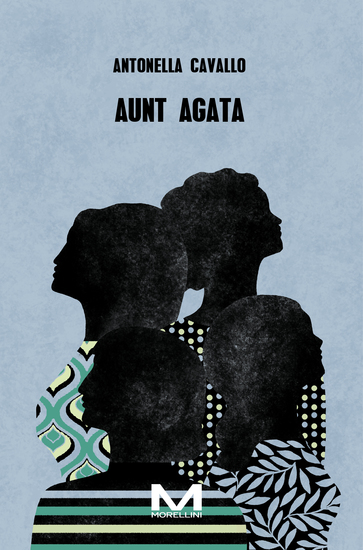
Aunt Agata - cover

Aunt Agata

Antonella Cavallo

Publisher: Morellini Editore

  • 0
  • 0
  • 0

Summary

On one of those days that herald the arrival of summer, with the sky torn apart by thunderclaps, a procession of umbrellas tossed by gusts of wind winds itsway along the central avenue of Milan's Cimitero Maggiore. Margherita, Victoria, Agata and Annalisa, devastated by grief, mourn the death of young Edmond. A common destiny and unspeakable secrets bind the four women in an indissoluble way, upsetting the lives of their respective families in an alternation of events that whirl backwards in time between Milan, Paris and New York. Digging deep into their memories, they will discover emotions linked to unspoken motherhood, fought and experienced at different times, starting with the student protests of 1968. The discovery of old letters will reveal a shocking secret that could destroy the family. How much can a letter help us to reconcile with life? 
Available since: 03/21/2025.
Print length: 293 pages.
Other books that might interest you

  • Pickman's model - cover

    Pickman's model

    H. P. Lovecraft

    • 0
    • 0
    • 0
    "Pickman's Model" is a short story by H. P. Lovecraft, written in September 1926 and first published in the October 1927 issue of Weird Tales. It was adapted for television in a 1971 episode of the Night Gallery anthology series, starring Bradford Dillman. The story revolves around a Bostonian painter named Richard Upton Pickman who creates horrifying images. His works are brilliantly executed, but so graphic that they result in the revocation of his membership in the Boston Art Club and he is shunned by his fellow artists. The narrator is a friend of Pickman, who, after the artist's mysterious disappearance, relates to another acquaintance how he was taken on a tour of Pickman's personal gallery, hidden away in a run-down backwater slum of the city. As the two delved deeper into Pickman's mind and art, the rooms seemed to grow ever more evil and the paintings ever more horrific, ending with a final enormous painting of an unearthly, red-eyed and vaguely canine humanoid balefully chewing on a human victim. A noise sent Pickman running outside the room with a gun while the narrator reached out to unfold what looked like a small piece of rolled paper attached to the monstrous painting. The narrator heard some shots and Pickman walked back in with the smoking gun, telling a story of shooting some rats, and the two men departed. Afterwards the narrator realized that he had nervously grabbed and put the rolled paper in his pocket when the shots were fired. He unrolled the paper to reveal that it is a photograph not of the background of the painting, but of the subject. Pickman drew his inspirations not from a diseased imagination, but from monsters that were very much real.
    Show book
  • Dhara - Part 2 - Short stories based on Water element - cover

    Dhara - Part 2 - Short stories...

    Antara Karvade

    • 0
    • 0
    • 0
    "Dhara" - These short stories are intricately woven around the element of water, reflecting a profound truth of life. As we journey alongside, we encounter the moisture, the flow, and the current that define our experiences—what we call perception. 
    The short stories in Dhara could very well mirror your own life tales, offering solace to the soul and ultimately delivering a delightful literary experience. Immerse yourself in these water-themed narratives and feel the positive flow they bring.
    Show book
  • The Queen's Game - Lady Mary Grey goes head to head with Queen Elizabeth I - cover

    The Queen's Game - Lady Mary...

    Raymond Wemmlinger

    • 0
    • 0
    • 0
    A game of succession has begun . . . England, 1565Queen Elizabeth Tudor is wary of the cousins. Ever since the ill-fated Lady Jane Grey nearly wrested the throne from her family, Elizabeth has been keen to ensure the fate of England doesn't land in Grey hands.She has banished Catherine Grey from court, along with her two children, but her unwed sister Mary remains at Whitehall Palace as one of Elizabeth's courtiers.  
     
    Mary has ambitions for her family and she realizes she may be the only one who can continue the bloodline, seeing as Catherine's marriage has been deemed illegitimate. She does not want to waste any time in bearing children, as she is worried her scoliosis may make pregnancy difficult, so she begins to search for a suitable husband at court.But while she does so, she finds out that her cousin, Lord Darnley is scheming to marry the widowed Queen Mary Stuart. If that marriage goes ahead, Darnley's child may have a strong claim to the throne, which increases Mary Grey's ambition to have an heir of her own.As the game of succession intensifies, will Mary Grey see her family name rise to victory, or tumble into obscurity . . . ?
    Show book
  • The Picture in the House - cover

    The Picture in the House

    H. P. Lovecraft

    • 0
    • 0
    • 0
    "The Picture in the House" is a short story written by H.P. Lovecraft. It was written on December 12, 1920, and first published in the July issue of The National Amateur—which was published in the summer of 1921.While riding on his bicycle in the Miskatonic Valley of rural New England, a genealogist seeks shelter from an approaching storm in an apparently abandoned house, only to find that it is occupied by a "loathsome  old,  white-bearded,  and  ragged  man," speaking  in  "an  extreme  form  of  Yankee dialect...thought long extinct." The narrator notices that the house is full of antique books, exotic artifacts, and furniture predating the American Revolution. The old man is apparently harmless and ignorant, but shows a disquieting fascination for an engraving in a rare old book, Regnum Congo, and admits to the narrator that it made him hunger for "victuals I couldn't raise nor buy"- presumably human flesh. It is suggested that the old man in the house was murdering men who stumbled upon the shack to satisfy his "craving", and that the old man has extended his life preternaturally  through  cannibalism.  The  narrator realizes the old man has been alive for over a century. The old man denies that he ever acted on his desire, but then a red drop of blood falls from the ceiling, clearly coming from the floor above, and splashes a page in the book. The narrator then looks up to see a spreading red stain on the ceiling; this belies the old man's statement. At that moment, a bolt of lightning destroys the house, bringing oblivion to the narrator.
    Show book
  • Immortal Desire - Book One - cover

    Immortal Desire - Book One

    Linda Ashton Trott

    • 0
    • 0
    • 0
    This is a story between one human woman and one immortal man. 
    Falon thought she had it all figured out: soon-to-be-divorced, a great job, and a fresh start. But when she meets a mysterious man with an other-worldly air, her life is upended in ways she never expected. Sparks fly between them, and they share a passionate, erotically charged romance that stirs her soul. Yet before she can explore their love, she discovers that he's not human, and he disappears without a trace. Overcome with heartache and confusion, Falon moves away and tries to make a new life for herself. She has exciting encounters with other men, but none of them measure up to her first love. Will she ever be able to find him again?
    Show book
  • Nostromo - cover

    Nostromo

    Joseph Conrad

    • 0
    • 0
    • 0
    Nostromo, written by Joseph Conrad and published in 1904, is set in the fictional South American country of Costaguana, particularly in the port city of Sulaco. The novel explores themes of imperialism, capitalism, and the moral dilemmas faced by its characters amid political turmoil.The story revolves around Charles Gould, a Costaguanero of English descent who owns a silver mine. Disillusioned by the political instability in Costaguana, Gould supports the dictatorship of President Ribiera, hoping to bring order to the region. However, the wealth generated by the mine attracts the attention of revolutionaries, leading to chaos as General Montero's forces invade Sulaco.
    Show book