Join us on a literary world trip!
Add this book to bookshelf
Grey
Write a new comment Default profile 50px
Grey
Subscribe to read the full book or read the first pages for free!
All characters reduced
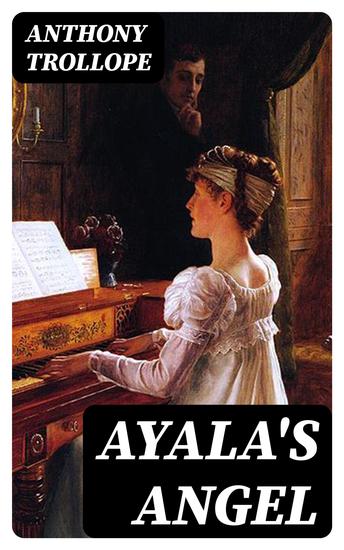
Ayala's Angel - cover

Ayala's Angel

Anthony Trollope

Publisher: DigiCat

  • 0
  • 0
  • 0

Summary

In "Ayala's Angel," Anthony Trollope weaves a rich narrative that delves into themes of love, social class, and personal integrity. Set against the backdrop of Victorian England, the novel employs Trollope's signature blend of irony and keen social observation, providing a vivid portrayal of the complexities of human relationships. The narrative follows Ayala, a young woman caught between her desire for autonomy and her romantic entanglements, particularly with the charming but unreliable Mr. Crosbie. Trollope's masterful characterization and subtle humor illuminate the struggles faced by women in a patriarchal society, making this work both a compelling story and a reflection on the social mores of the time. Anthony Trollope was a contemporary of the great Victorian novelists, and his experiences in various professions, including a lengthy career in the Post Office, informed his astute understanding of societal structures and human behavior. His literary output is distinguished by his prolific nature and commitment to exploring the nuances of contemporary British life, as seen in the Barsetshire series and beyond. "Ayala's Angel," while not part of this central canon, reflects his ongoing fascination with the intricacies of individuals navigating societal expectations. Readers drawn to richly layered narratives that examine personal and social dynamics will find "Ayala's Angel" to be a compelling addition to their literary exploration. This novel not only provides an engaging plot but also offers profound insights into the moral dilemmas and societal pressures of its time. For anyone interested in the nuanced interplay of romance and class, Trollope's work stands as an indispensable entry point into Victorian literature.
Available since: 08/10/2022.
Print length: 512 pages.


Other books that might interest you

  • The Phantom of the Opera - cover

    The Phantom of the Opera

    Gaston Leroux

    • 0
    • 0
    • 0
    When stripped of the musical and cinematic additions which have clung to the story over the last 100 years, Gaston Leroux's tragic tale still sounds fresh and engaging. A beautifully crafted tale with at its heart the brooding, monstrous, yet pitiful figure of the Phantom. Around him swirl the young and naive lovers and the almost comic comings and goings of the 18th century Paris Opera House. 
    Head Stories Audio present this classic tale narrated by Simon Hester. With original music.
    Show book
  • Outcast of the People An - Society abandons a woman after her husbands death - cover

    Outcast of the People An -...

    Bithia Mary Croker

    • 0
    • 0
    • 0
    Bithia Mary Sheppard was born in Kilgefin, County Roscommon, Ireland, the only daughter of an Anglican Church of Ireland rector.  
     
    She was educated at Rockferry, Cheshire and in Tours, France.  
     
    Her initial fame rested as a horsewoman with the Kildare Hunt.  
     
    In 1871, she married John Stokes Croker, an officer in the Royal Scots Fusiliers and later the Royal Munster Fusiliers. 
     
    In 1877, the couple moved to Madras and then Bengal. They would spend 14 years in India. 
     
    Bithia only began writing at the age of 33 and in her life wrote 42 novels and 7 volumes of short stories.  Within her short story creations are much anthologized ghost, supernatural and macabre tales.  Many of her novels reveal a side of Empire that is undeniably of its time and a fine example of both talent and observation. 
     
    After her husband's retirement at the rank of lieutenant-colonel in 1892, the couple moved to County Wicklow, then London, and finally Folkestone, where her husband died in 1911. 
     
    Bithia Mary Croker died at 30 Dorset Square, London, on 20th October 1920.
    Show book
  • The Short stories by Anton Chekhov - cover

    The Short stories by Anton Chekhov

    Anton Chekhov

    • 0
    • 0
    • 0
    Anton Chekhov belongs to the cohort of the most prominent Russian classics, together with Tolstoy, Dostoevsky, Turgenev and Pushkin. The rankings of the most read authors, comprising the 'golden fund' of the world's literature, persistently include Chekhov alongside Charles Dickens, the Bronte Sisters, Mark Twain... Chekhov's plays, such as 'Three Sisters', 'The Cherry Orchard', and the short stories of this collection, are featured in the curriculum of faculties of philology of top global universities, such as University of Oxford, Harvard University and many more.
    This audiobook includes:
    A Lottery Ticket
    A Story Without An End
    About Love
    Difficult People
    The Doctor
    Show book
  • Bel Ami or the History of a Scoundrel - cover

    Bel Ami or the History of a...

    Guy de Maupassant

    • 0
    • 0
    • 0
    "Bel-Ami ([bɛlami], "Dear Friend") is the second novel by French author Guy de Maupassant, published in 1885. An English translation titled Bel Ami, or, The History of a Scoundrel: A Novel first appeared in 1903.    The story chronicles journalist Georges Duroy's corrupt rise to power from a poor former cavalry NCO in France's African colonies to one of the most successful men in Paris. Duroy achieves this by manipulating a series of powerful, intelligent, and wealthy women. The novel is set in Paris among the upper-middle class environment of leading journalists and their friends."
    Show book
  • King Lear | Shakespeare for kids - Shakespeare in a language kids will understand and love - cover

    King Lear | Shakespeare for kids...

    Jeanette Vigon

    • 0
    • 0
    • 0
    Dive into the stormy world of "King Lear," a brilliant adaptation of Shakespeare's tragic tale, transformed into an accessible and engaging narrative for young readers by Jeanette Vigon. This rendition captures the essence of the original story, focusing on themes of love, betrayal, and redemption, while simplifying its complex language and situations to suit a younger audience. 
    Highlights Include:Simplified Shakespeare: Jeanette Vigon skillfully adapts the challenging themes and language of "King Lear" into a story that's easy for children to understand and enjoy.Moral Lessons Galore: Through the tumultuous journey of King Lear and his daughters, young readers will explore important lessons about the consequences of our actions and the true meaning of loyalty and forgiveness.Adventure in Every Page: Set in the mystical landscapes of ancient Britain, children will be transported into a world where the lines between right and wrong are blurred, and the quest for understanding and reconciliation takes center stage. 
    "King Lear" is not just a storybook; it's a gateway to the world of classic literature, tailored to spark curiosity and empathy in young minds. Whether for home reading or classroom learning, this book promises to be a cherished addition to any child's library.
    Show book
  • Champagne - cover

    Champagne

    Anton Chekhov

    • 0
    • 0
    • 0
    Champagne is a short story by Anton Pavlovich Chekhov, written in 1887.
    The story is written in the first person. The young head of a remote railway stop lived with his wife and without children in solitude, amusing himself with vodka and watching passing trains.
    Life was boring. One day before celebrating the New Year, he sat with his wife at the festive table, drank enough and thought about boredom. We waited for the clock to show the arrival of the New Year. At five minutes to twelve he uncorked the bottle, the cork flew out, and the bottle slipped out of his hands and fell to the floor. The wife greeted Happy New Year with frightened eyes. She knew that the falling bottle was a bad omen and meant that something bad would happen in the new year.
    After arguing with his wife, the narrator left the house thinking that this had already happened to them, that the worst could not happen. He remembered his dead parents, how he was kicked out of the gymnasium, how he wandered around with nothing to do and friends. He did not love his wife; he married when he was still a boy.
    Returning home, he saw his wife cheerful - "good aunt" Natalya Petrovna, the wife of the hero's wife's uncle, a woman of free behavior, came to them for three days. At dinner, "aunt" and "nephew" drank well, they became dizzy, and their romance began (a terrible, mad whirlwind). In this whirlwind, the hero loses his wife, mistress, and job. He asks "what else bad could happen to me?"
    Show book