Join us on a literary world trip!
Add this book to bookshelf
Grey
Write a new comment Default profile 50px
Grey
Subscribe to read the full book or read the first pages for free!
All characters reduced
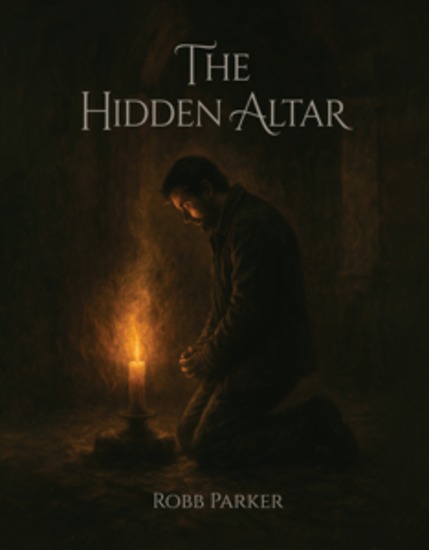
The Hidden Altar - cover

The Hidden Altar

Anonymous

Publisher: Spines

  • 0
  • 0
  • 0

Summary

Embark on a heartfelt spiritual journey with this collection of daily meditations. As a guide for intimate prayer and transformation, it invites introspection and communion with the Divine. Through themes of brokenness, purpose, and grace, readers are called to a silent, sacred dialogue with the Creator. Weaving through a tapestry of scripture, reflections, and music, this devotional nurtures a private faith lived boldly. Embrace the whispers of humility and the courage of compassion as each day brings you closer to the presence of the eternal, echoing your whispered hallelujahs through time.
Available since: 12/31/2025.
Print length: 772 pages.


Other books that might interest you

  • The Monster Movies of Universal Studios - cover

    The Monster Movies of Universal...

    James L Neibaur

    • 0
    • 0
    • 0
    This history and critique of classic scary films “honors Universal’s horror legacy. . . . an excellent resource for film students and monster movie fanatics” (Library Journal). In 1931 Universal Studios released Dracula starring Bela Lugosi. This box office success was followed by a string of films featuring macabre characters and chilling atmospherics, including Frankenstein, The Mummy, and The Invisible Man. With each new film, Universal established its place in the Hollywood firmament as the leading producer of horror films, a status it enjoyed for more than twenty years. In The Monster Movies of Universal Studios, James L. Neibaur examines the key films produced by the studio from the early 1930s through the mid-1950s. In each entry, Neibaur recounts the movie’s production, provides critical commentary, considers the film’s commercial reception, and offers an overall assessment of the movie’s significance. Neibaur also examines the impact these films had on popular culture, an influence that resonates in the cinema of fear today. From the world premiere of Dracula to the 1956 release of The Creature Walks among Us, Universal excelled at scaring viewers of all ages—and even elicited a few chuckles along the way by pitting their iconic creatures against the comedic pair of Abbott and Costello. The Monster Movies of Universal Studios captures the thrills of these films, making this book a treat for fans of the golden age of horror cinema.   “Studio stills and trade ads for several of the films add a suitably scary touch to this treat for fans and scholars alike. ― Booklist “An impressive work of film scholarship.” ― Cinema Retro  
    Show book
  • Asadah All about her Business - cover

    Asadah All about her Business

    Asadah Carpenter

    • 0
    • 0
    • 0
    Asadah is all excited and ambitious about starting her own business of lip gloss. She works on it day in and day out to make its quality stand out. Her parents believed in her and support this dream of hers to come true. With the help of her parents, Asadah is able to complete all formalities and start her company. Asadah found what she wants to do in her life and she's happy.
    Show book
  • Forgive the Bride - A Parody of Kill Bill Volume 3 - cover

    Forgive the Bride - A Parody of...

    Dr. Stanley Quincy Upjohn

    • 0
    • 0
    • 0
    What if the most important story in the Kill Bill universe was never told? At just four years old, Nikki Belle witnessed her mother, Copperhead, killed by The Bride. Decades later, the child left in the kitchen returns as a woman carrying trauma, questions, and the weight of legacy. This is not another revenge tale—it is the emotional, psychological, and spiritual finale to the Kill Bill saga. 
    Forgive The Bride delivers intense martial arts tension, deep character exploration, and a bold shift from vengeance to redemption. Featuring cinematic narration and powerful dialogue, this audiobook feels like a movie in your mind. Fans of Tarantino, strong female leads, psychological thrillers, and character-driven action will experience a continuation worthy of the original films. 
    This is the story of Nikki Belle. 
    This is the end of the cycle. 
    This is the final chapter—where vengeance meets forgiveness. 
    Step into the sequel the films never gave you.
    Show book
  • Caspar David Friedrich Master of the tragic landscape (5 September 1774 – 7 May 1840) - cover

    Caspar David Friedrich Master of...

    Victoria Charles

    • 0
    • 0
    • 0
    Caspar David Friedrich (1774-1840), a prominent German painter of the 19th century, was a vital figure in the Romantic movement. His artwork is characterised by its poetic and melancholic essence, displaying a profound sense of spirituality and transcendence. In his paintings, he masterfully blended external nature depictions with deep inner symbolism. His often desolate landscapes and grand architecture evoke a yearning for peace, solitude, and spiritual elevation. The skilful utilisation of light and shadow in his composition amplifies the emotional resonance of Friedrich's art, imbuing it with an almost mystical quality. The artistic legacy of Caspar David Friedrich continues to influence contemporary landscape painting. His unparalleled aptitude for capturing the infinite within the finite renders his work a timeless representation of humanity's quest for transcendence and spiritual connection. This biography delves into the life and creations of this remarkable artist, celebrating his invaluable contributions to the evolution of Romantic painting.
    Show book
  • Lurking Under the Surface - Horror Religion and the Questions that Haunt Us - cover

    Lurking Under the Surface -...

    Brandon R. Grafius

    • 0
    • 0
    • 0
    Horror can be a valuable conversation partner for the spiritual questions that animate so many of us. 


    Whether through a movie, television show, novel, or even myth, horror as a genre has always spoken to our deepest human fears and anxieties: fear of death, of the unknown, of knowing too much. Whether you're looking at classic narratives like Frankenstein, or contemporary films like Get Out, which explores racism and white guilt, horror provides a window into our culture and what makes us human. The same can be said of religion. 


    Horror movie buff and religion scholar Brandon Grafius finds common ground between these two seemingly disparate bedfellows—horror and religion—in Lurking under the Surface. What parallels can we draw between The Walking Dead and sacred texts? How do the stories of Hebrew Christian scriptures and apocalyptic films like A Quiet Place and Bird Box help us find hope when it's in short supply? When we treat them both seriously, we see that horror movies and religion lead us through the same sets of questions. Both explore questions of justice, hope, and our relationship to the world and the cosmos. And both offer us ways to make meaning out of the contradictory pieces of our world—a world filled with so much hope and so many recognizable fears lurking just beneath the surface.
    Show book
  • Anatomy of 55 More Songs - The Oral History of Top Hits That Changed Rock Pop and Soul - cover

    Anatomy of 55 More Songs - The...

    Marc Myers

    • 0
    • 0
    • 0
    Songs that sell the most copies become hits, but some of those hits become something more—iconic recordings that not only inspire a generation but also change the direction of music. In Anatomy of 55 More Songs, based on his column for the Wall Street Journal, music journalist and historian Marc Myers tells the story behind fifty-five rock, pop, R&B, country, and soul-gospel hits through intimate interviews with the artists who wrote and recorded them. 


    Part oral history, part musical analysis, Anatomy of 55 More Songs ranges from Creedence Clearwater Revival's "Bad Moon Rising" to Dionne Warwick's "Walk On By," The Beach Boys' "Good Vibrations," and Black Sabbath's "Paranoid." Bernie Taupin recalls how he wrote the lyrics to Elton John's "Rocket Man;" Joan Jett remembers channeling her rage against how she had been unfairly labeled and treated as a female rocker into "Bad Reputation;" and Ozzy Osbourne, Elvis Costello, Bob Weir, Sheryl Crow, Alice Cooper, Roberta Flack, John Mellencamp, Keith Richards, Carly Simon, and many others reveal the emotions and technique behind their major works. 


    Through an absorbing chronological, song-by-song analysis of the most memorable post-war hits, Anatomy of 55 More Songs provides a sweeping look at the evolution of pop music between 1964 and today.
    Show book