Join us on a literary world trip!
Add this book to bookshelf
Grey
Write a new comment Default profile 50px
Grey
Subscribe to read the full book or read the first pages for free!
All characters reduced
Mussolini: The March on Rome - A Narrative History of the Father of Fascism - cover

Mussolini: The March on Rome - A Narrative History of the Father of Fascism

Anonymous

Publisher: Dominic Haynes

  • 0
  • 0
  • 0

Summary

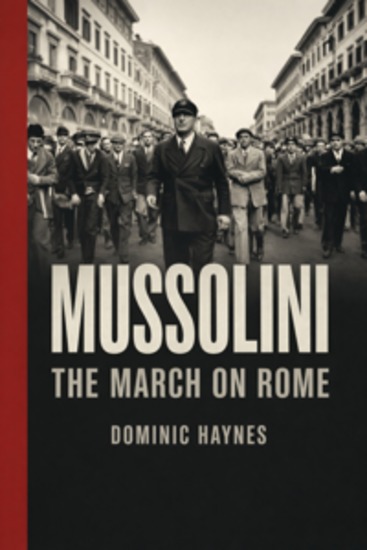
A wounded agitator seized a nation by sleeper car while the world watched.How did a fringe movement of street fighters topple a centuries-old order in a single weekend? What happens when a state becomes so paralyzed that it hands the keys to its own executioner?Dominic Haynes delivers a cinematic retelling of the birth of Fascism. Moving from the blood-stained Po Valley to the gilded Quirinal Palace, this narrative weaves together the perspectives of Mussolini, the ruthless Italo Balbo, a paralyzed King, and the intellectual Margherita Sarfatti. This is history as it was felt—raw, violent, and inevitable.Inside, you will witness:The visceral transformation of a socialist rebel into a calculating statesman.The "Iron Harvest" of the Po Valley, where paramilitary violence silenced a nation.The King’s fateful midnight surrender that disarmed the Italian army.The final, chilling transition from a fragile coalition to absolute dictatorship.You may know the name, but you have never felt the suffocating heat of the mobilization or the damp chill of the march. This is the definitive psychological portrait of a collapse that changed the world.Witness the fall of Rome.
Available since: 01/21/2026.
Other books that might interest you

  • Tang Dynasty - Golden Age of Art Culture and Trade - cover

    Tang Dynasty - Golden Age of Art...

    Rolf Hedger

    • 0
    • 0
    • 0
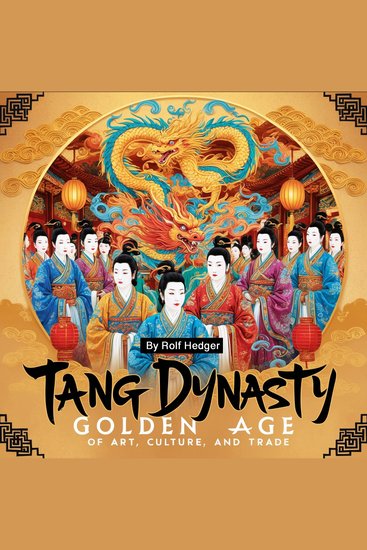
    The Tang Dynasty, one of the most prosperous and influential periods in Chinese history, lasted from 618 to 907 CE. Often referred to as a golden age, it was marked by significant cultural, political, and economic developments that shaped the trajectory of Chinese civilization. The dynasty succeeded the Sui Dynasty, which had fallen due to internal strife and excessive military campaigns, and it laid the foundation for many of the political and cultural features that would characterize Chinese history for centuries. The Tang Dynasty's legacy is still visible in the arts, governance, and cultural exchanges that continue to influence China today. 
    The founding of the Tang Dynasty is attributed to Li Yuan, who became Emperor Gaozu after a successful rebellion against the Sui Dynasty in 618. His reign was followed by that of his son, Emperor Taizong, one of the most renowned rulers in Chinese history. Under their leadership, the Tang Empire quickly expanded its territories, establishing control over much of present-day China and extending its influence across Central Asia, Korea, and parts of Southeast Asia. This expansion was not only military but also cultural, as the Tang Dynasty became a melting pot of diverse peoples, cultures, and ideas. 
    Politically, the Tang Dynasty introduced several innovations that helped maintain its stability and success. It perfected the imperial examination system, which allowed for a more meritocratic approach to selecting government officials, and it expanded the civil service, ensuring that a large and efficient bureaucracy could handle the empire’s vast territory. The legal system, known as the Tang Code, was influential in shaping the governance of China for centuries and served as a model for other East Asian countries.
    Show book
  • A History of Europe - From Pre-History to the 21st Century - cover

    A History of Europe - From...

    Anonymous

    • 0
    • 0
    • 0
    A History of Europe is a masterful narrative, bringing together the continent's common threads of history from the end of the ice ages until the present day. 
     
    Leading historian Professor Jeremy Black takes a journey through the vast sweep of European history, examining events as diverse as the rise of the Roman Empire, the brutal Viking raids, the cultural explosion of the Renaissance period, the dissolution of the Soviet Union and the rise of consumer culture in the 21st century. 
     
    These varied strands are bought together in a clear and concise narrative, perfect for anyone wanting a comprehensive look at Europe's fascinating and complex past.
    Show book
  • Fate: Part VII - Defy (Yaoi MM Arranged Marriage Romance) - cover

    Fate: Part VII - Defy (Yaoi MM...

    Kai Aubrey

    • 0
    • 0
    • 0
    The day of the royal wedding has arrived. 
    Prince Cecil is to cement his imperial alliance by marrying the foreign princess, but she is unaware of his illicit love for her brother, heir to the rival throne. 
    As the time comes to say his vows, a strange feeling wells up within him like a building wildfire. With each passing moment, it grows larger, swelling into an inferno of confidence. 
    The crowd stares in stunned silence as he turns toward the man he truly desires. In this moment, Cecil needs only one thing: to be free. 
    --- 
    CONTAINS EXPLICIT GAY SEXUAL CONTENT. 
    For more stories, visit www.KaiAubrey.com.
    Show book
  • From Stormy Seas to Plymouth's Shores - The Epic Tale of the First Thanksgiving - cover

    From Stormy Seas to Plymouth's...

    Dr. David K. Ewen

    • 0
    • 0
    • 0
    The topic of the first Thanksgiving is exciting to read about and learn because it offers a captivating and adventurous tale of courage, resilience, and cultural encounters. The daring journey of the Mayflower in 1620 sets the stage for an epic narrative as the Pilgrims face numerous challenges and overcome obstacles in their pursuit of religious freedom. The story of survival and cooperation between the Pilgrims and the Wampanoag tribe, led by Chief Massasoit, adds a heartwarming dimension to the historical account, capturing the spirit of unity and gratitude.The vivid descriptions of the Pilgrims' journey, the treacherous storm, and their eventual settlement in Plymouth, Massachusetts, paint a vivid picture of the hardships they endured. The first winter's unforgiving nature and the subsequent assistance from the Wampanoag create a sense of anticipation and emotional depth in the narrative. The eventual celebration of a triumphant three-day feast of thanksgiving not only marks the origin of Thanksgiving but also highlights the power of unity and mutual support in the face of adversity.Moreover, the historical context of Thanksgiving and its evolution into a beloved holiday in modern times add layers of complexity and relevance to the topic. Learning about the challenges and conflicts that followed the initial harmony between the Pilgrims and the Wampanoag encourages readers to engage in meaningful discussions about the impact of colonization and the importance of cultural understanding. The topic invites readers to reflect on the true essence of Thanksgiving, embracing themes of gratitude, empathy, and inclusivity.Overall, the captivating tale of the first Thanksgiving weaves together history, culture, and human experiences, making it a compelling and enriching subject to explore. By delving into this narrative, readers gain insights into the interconnectedness of the past and present, and the significance of fostering a more inclusive and equitable future.
    Show book
  • Classic Speeches: 1940-1987 - cover

    Classic Speeches: 1940-1987

    Winston Churchill, Martin Luther...

    • 0
    • 0
    • 0
    A collection of the most famous speeches of all time from political figures, such as Winston Churchill, Martin Luther King Jr and John F Kennedy.
    Show book
  • The Pacific Theater - Island Hopping and the Fight Against Japan - cover

    The Pacific Theater - Island...

    Sage Winters

    • 0
    • 0
    • 0
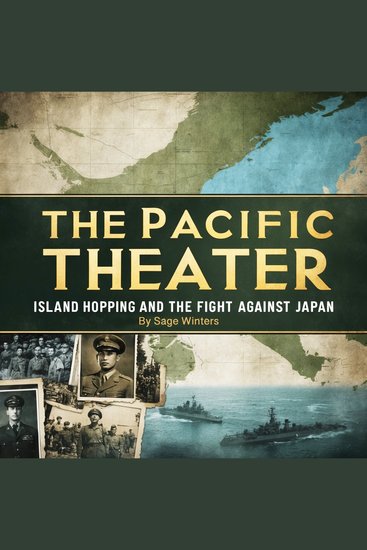
    The Pacific Theater of World War II was the culmination of decades of tension, territorial disputes, and ideological differences between Japan and the Allied Powers, particularly the United States. The roots of the conflict can be traced back to Japan’s rise as an imperial power in the late 19th and early 20th centuries. Seeking to expand its influence across East Asia and the Pacific, Japan embarked on a campaign of military conquest and economic domination, often at the expense of its neighbors.  
      
    By the 1930s, Japan’s aggressive expansionist policies became more pronounced, beginning with the invasion of Manchuria in 1931 and escalating with the full-scale war against China in 1937. These actions alarmed Western powers, who viewed Japan’s ambitions as a direct challenge to their interests in the region. The United States, in particular, responded by imposing economic sanctions and cutting off vital supplies, including oil, to curtail Japan’s militarism. However, these measures only further inflamed tensions, as Japan viewed them as an existential threat to its survival and growth as a global power.  
      
    The turning point came on December 7, 1941, with Japan’s surprise attack on Pearl Harbor. This audacious assault on the U.S. Pacific Fleet in Hawaii aimed to neutralize American naval power and secure Japan’s dominance in the Pacific. Although the attack achieved significant tactical success, crippling much of the U.S. fleet, it also galvanized American public opinion and led to the United States’ entry into World War II. The attack on Pearl Harbor marked the beginning of a brutal and protracted conflict that would span nearly four years and claim millions of lives. 
    Show book