Join us on a literary world trip!
Add this book to bookshelf
Grey
Write a new comment Default profile 50px
Grey
Subscribe to read the full book or read the first pages for free!
All characters reduced
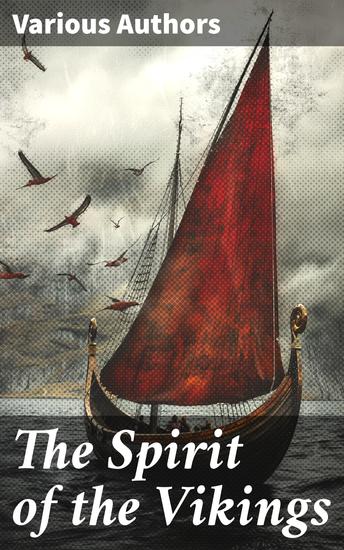
The Spirit of the Vikings - Norse Eddas Sagas Mythology & Ballads - cover

The Spirit of the Vikings - Norse Eddas Sagas Mythology & Ballads

Anonymous, Conrad Hjalmar Nordby, Sturluson Snorri, Saemund Sigfusson, Sturla Þórðarson, Hélène Adeline Guerber, Nora Kershaw

Translator John Coles, Eiríkr Magnússon, James Johnston, G. W. DaSent, W. G. Collingwood, W. C. Green, John Sephton, Samuel Laing, F. York Powell, Arthur Middleton Reeves, Muriel A.C. Press, George Webbe, J. Stefansson, Edmund Head, William Morris, Benjamin Thorpe, I.A. Blackwell

Publisher: Good Press

  • 0
  • 0
  • 0

Summary

The Spirit of the Vikings offers readers a comprehensive passage through the myths, sagas, and histories that encapsulate Viking ethos and ingenuity. This anthology spans a spectrum of literary styles, from cryptic eddic poetry to compelling sagas filled with legendary exploits, capturing the essence of one of history's most enigmatic cultures. Under the discerning editorial overview, this collection features illustrious narratives alongside lesser-known treasures, inviting a re-examination of the Viking age's impact on literature and culture. Within its pages, readers are privy to a literary voyage traversing themes of heroism, exploration, and the navigating of fate. Contributors to this volume, including medieval scholars such as Snorri Sturluson and Saemund Sigfusson, alongside modern interpreters like Hélène Adeline Guerber and Nora Kershaw, collectively breathe life into the rich tapestry of Norse literature. This confluence of voices reflects the historical and cultural dynamism of the Norse people, presenting the collection as a crucible where ancient poetics meets modern interpretation. By aligning with medieval Icelandic traditions and subsequent scholarly revivals, these authors enrich the thematic exploration, providing both primary literary engagement and informed commentary for a deeper understanding of Viking spirit. For scholars, students, and enthusiasts alike, The Spirit of the Vikings serves as an indispensable resource, offering a multifaceted exploration of Norse cultural legacy. It is an invitation to journey through time, appreciating the intricate dance between narrative and history. This collection fosters a rich dialogue across temporal and stylistic divides, providing readers with invaluable insights into the Viking psyche and the profound narratives that continue to shape literature. Engage with this anthology to broaden your appreciation of literary traditions and to witness the craft that echoes across ages.
Available since: 12/03/2023.
Print length: 4967 pages.

Other books that might interest you

  • In Search of a Boy Named Chester - A gift to my father for his 100th birthday - cover

    In Search of a Boy Named Chester...

    Ford S. Worthy

    • 0
    • 0
    • 0
    Shortly after the end of World War II, a 21-year-old Navy officer – just back after a year at war in the Pacific – was eager to return to his small hometown in eastern North Carolina for a brief home leave. At the San Francisco airport, a mother travelling to Omaha offered him her seat – a patriotic gesture of gratitude, he believed. There was one condition: the sailor would need to accompany her 10-year-old son and see him safely to his grandmother in Omaha. 
    The boy’s name was Chester. The sailor never forgot him. 
    Nearly 80 years later, the sailor’s son sets out to give his father a special 100th birthday gift: to discover what became of that precocious boy. 
    The book blends memoir, investigative nonfiction, and family history into a poignant and suspenseful journey. Through letters, military records, census and newspaper archives and outreach to strangers-turned-allies, the author pieces together the life of a boy nearly lost to time. Along the way, the story explores themes of memory, intergenerational connection, and the lasting impact of wartime experiences. Rich in historical detail and emotional resonance, the book will appeal to readers of narrative nonfiction, World War II history, and family sagas, and to genealogical sleuths drawn to real-life mysteries. In Search of a Boy Named Chester is a story that shows us how even the most fleeting encounters can reveal who we are and who we may become.
    Show book
  • Han Dynasty - Silk Roads Science and the Confucian Revival - cover

    Han Dynasty - Silk Roads Science...

    Rolf Hedger

    • 0
    • 0
    • 0
    The Han Dynasty, lasting from 206 BCE to 220 CE, is one of the most significant periods in Chinese history, shaping the culture, politics, and identity of China for centuries. It followed the brief but influential Qin Dynasty, which had laid the foundations for imperial rule but also faced internal strife and rebellion. The Han emerged as the new power, restoring stability and expanding China's borders, making significant contributions to science, technology, trade, and philosophy. 
    The dynasty's rise was primarily due to the leadership of Liu Bang, a former peasant who became Emperor Gaozu. He defeated his rival, Xiang Yu, and took control of the vast Qin Empire, establishing the Han Dynasty. Gaozu's leadership marked the beginning of a new era, one that would see the consolidation of power and the implementation of reforms that would shape the future of the empire. 
    The Han Dynasty’s political structure was deeply influenced by the collapse of the Qin Dynasty. Emperor Gaozu restored the decentralized feudal system of governance, but with modifications to ensure more central control. Over time, the emperors of the Han Dynasty would strengthen the centralized bureaucracy, establishing a model that would endure for centuries in imperial China. One of the key developments was the introduction of Confucianism as the state philosophy. Confucian ideals, emphasizing hierarchy, duty, and moral governance, became deeply embedded in the political and social structure of the Han Empire. Confucian scholars played an essential role in the administration, and the dynasty itself was viewed as a time when the state was governed by virtuous and learned rulers.
    Show book
  • Women of Ancient Babylon - Queens Priests and Architects - cover

    Women of Ancient Babylon -...

    Layla Gupta

    • 0
    • 0
    • 0
    The ancient city of Babylon, nestled along the banks of the Euphrates River in what is now modern-day Iraq, was once the heart of a thriving and sophisticated civilization. As early as the third millennium BCE, this region—Mesopotamia—was home to great cities, towering ziggurats, and a people whose innovations would echo through history. Babylon, in particular, rose to prominence under rulers like Hammurabi and later Nebuchadnezzar II, becoming a center of law, culture, architecture, and religion. It was in this complex and multilayered society that women of various classes and backgrounds lived lives shaped by intricate social structures, religious practices, and evolving legal systems. 
    Life in ancient Babylon was deeply hierarchical, with power distributed according to class, gender, and occupation. At the top of society were the royal family and elite nobles, followed by priests, scribes, merchants, and skilled artisans. Below them were laborers, slaves, and other commoners. Women existed in all these layers of society and their roles, rights, and opportunities were directly influenced by their social standing. Elite women might serve as priestesses or manage large households and estates, while lower-class women often labored in agriculture, textile production, or domestic service. Despite the limitations placed on them by patriarchal norms, Babylonian women carved out meaningful spaces for themselves in both public and private life. 
    Religion was a central pillar of Babylonian culture and offered women specific roles within its framework. Temples were among the most powerful institutions, and women—especially those from noble or priestly families—could attain influential positions as priestesses. These women oversaw rituals, managed temple property, and acted as intermediaries between the divine and human realms.
    Show book
  • Edited Story An - From their pens to your ears genius in every story - cover

    Edited Story An - From their...

    Morley Roberts

    • 0
    • 0
    • 0
    The bookshelves of British literature are incredible collections that have gathered together centuries of very talented authors.  From these Isles their fame spread and whilst among their number many are now forgotten or neglected their talents endure.  Among them is Morley Roberts.
    Show book
  • Esmond and Ilia - An Unreliable Memoir - cover

    Esmond and Ilia - An Unreliable...

    Marina Warner

    • 0
    • 0
    • 0
    Marina Warner's father, Esmond, met her mother, Ilia, while serving as an officer in the British Army during the Second World War. As Allied forces fought their way north through Italy, Esmond found himself in the southern town of Bari, where Ilia had grown up, one of four girls of a widowed mother. The Englishman approaching middle age and the twenty-one-year-old Italian were soon married. Before the war had come to an end, Ilia was on her way alone to London to wait for her husband's return and to learn how to be Mrs. Esmond Warner, an Englishwoman. 


    Ilia begins to learn the world of cricket, riding, canned food, and distant relations she has landed in, while Esmond struggles to support his wife and young daughter. He comes up with the idea of opening a bookshop, a branch of W.H. Smith's, in Cairo, where he had spent happy times during the North African campaign. In Egypt, however, nationalists are challenging foreign influences, especially British ones, and before long Cairo is on fire. 


    Esmond and Ilia is a picture of vanished worlds, a portrait of two people struggling to know each other and themselves, a daughter's story of trying to come to terms with a past that is both hers and unknowable to her. It is an "unreliable memoir" and a lasting work of literature, lyrical, sorrowful, shaped by love and wonder.
    Show book
  • When Christians Disagree - Lessons from the Fractured Relationship of John Owen and Richard Baxter - cover

    When Christians Disagree -...

    Tim Cooper, Michael A. G. Haykin

    • 0
    • 0
    • 0
    Two Oppositional Figures in Church History Shed Light on Division in the Church Today
    Our current culture seems to be increasingly divided on countless issues, including those affecting the church. But for centuries, theological disagreements, political differences, and issues relating to church leadership have made it challenging for Christians to foster unity and love for one another.
    In this book, author Tim Cooper explores this polarization through the lives of two oppositional figures in church history: John Owen and Richard Baxter. Cooper highlights their individual stories while showing how their contrasting life experiences, personalities, and temperaments led to their inability to work together. After exploring these lessons from the past, readers will gain insights into their own relationships, ultimately learning how to love and live in harmony with their fellow believers despite their disagreements.
    
    - Timely: In today's deeply divided culture, this book offers past examples to help spur unity among believers today
    - Historical: Biographical examination of two Puritan writers from the 17th century: John Owen and Richard Baxter
    - Accessible: Short format and crisp writing style offer an engaging story with no background knowledge required
    Show book