Join us on a literary world trip!
Add this book to bookshelf
Grey
Write a new comment Default profile 50px
Grey
Subscribe to read the full book or read the first pages for free!
All characters reduced
The Battle of Ros na Ríg - cover

The Battle of Ros na Ríg

Anonymous

Translator Edmund Hogan

Publisher: DigiCat

  • 0
  • 0
  • 0

Summary

The Battle of Ros na Ríg is a masterful tapestry of myth and history, intricately woven with elements of Irish folklore and legend. This epic tale unfolds against the backdrop of a mythical landscape, recounting the valiant struggles and spiritual conflicts that define the Irish cultural identity. The rich prose, fraying the lines between reality and imagination, evokes a powerful sense of place while employing allusions to the heroic sagas of yore. Through its vivid characterization and poetic imagery, the narrative explores themes of honor, fate, and the enduring spirit of resistance, making it a quintessential piece of medieval Irish literature. The enigmatic author, known only as Anonymous, emerges from the rich tradition of oral storytelling that has shaped Ireland's literary heritage. Likely a participant in or deeply influenced by the social and political tumult of their time, the author seeks to preserve the cultural ethos of ancient Ireland, resonating with the values and struggles of their contemporary society. This layering of personal and collective memory suggests a profound engagement with the themes of identity and legacy, inviting readers to ponder the relationship between past and present. The Battle of Ros na Ríg is an essential read for those interested in Irish literature, mythology, and history. Its rich narrative not only captivates the imagination but also prompts deeper reflection on what it means to belong to a place fraught with both beauty and conflict. This timeless epic will enthrall readers, offering insights into the struggles that forge not only a nation but the very fabric of human experience.
Available since: 09/15/2022.
Print length: 27 pages.
Other books that might interest you

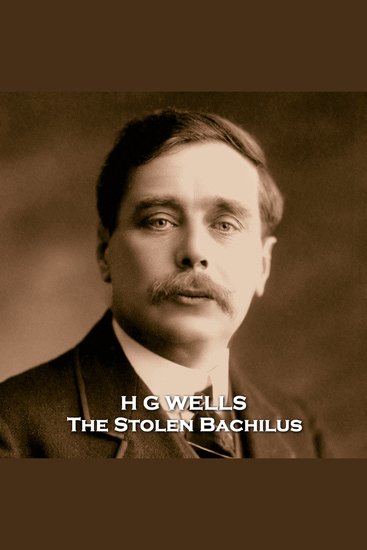
  • The Stolen Bachilus - From their pens to your ears genius in every story - cover

    The Stolen Bachilus - From their...

    HG Wells

    • 0
    • 0
    • 0
    Herbert George Wells was born on September 21st, 1866 at Atlas House, 46 High Street, Bromley, Kent. He was the youngest of four siblings and his family affectionately knew him as ‘Bertie’.  
    The first few years of his childhood were spent fairly quietly, and Wells didn’t display much literary interest until, in 1874, he accidentally broke his leg and was left to recover in bed, largely entertained by the library books his father regularly brought him. Through these Wells found he could escape the boredom and misery of his bed and convalescence by exploring the new worlds he encountered in these books.  
    From these humble beginnings began a career that was, after several delays, to be seen as one of the most brilliant of modern English writers.    
    Able to write comfortably in a number of genres he was especially applauded for his science fiction works such as The Time Machine and War of the Worlds but his forays into the social conditions of the times, with classics such as Kipps, were almost as commercially successful.  His short stories are miniature masterpieces many of which bring new and incredible ideas of science fiction to the edge of present day science fact.  Wells also received four nominations for the Nobel Prize in Literature 
    Despite a strong and lasting second marriage his affairs with other women also brought the complications of fathering other children.  His writings and work against fascism, as well as the promotion of socialism, brought him into increasing doubts with and opposition to religion.  His writings on what the world could be in works, such as A Modern Utopia, are thought provoking as well as being plausible, especially when viewed from the distressing times they were written in. 
    His diabetic condition pushed him to create what is now the largest Diabetes charity in the United Kingdom.  Wells even found the time to run twice for Parliament. 
    It was a long, distinguished and powerfully successful career by the time he died, aged 79, on August 13th, 1946.
    Show book
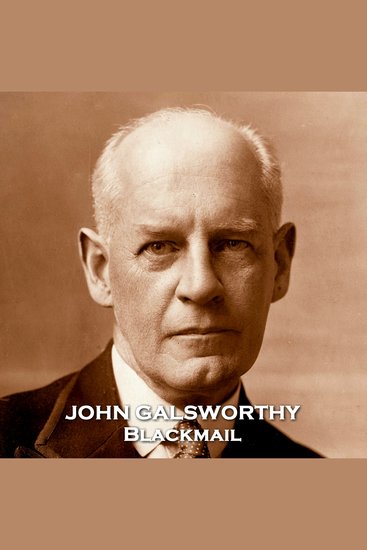
  • Blackmail - From their pens to your ears genius in every story - cover

    Blackmail - From their pens to...

    John Galsworthy

    • 0
    • 0
    • 0
    John Galsworthy was born on the 14th August 1867 on the family estate, Parkfield, in Kingston-upon-Thames.  His family’s wealth came from the shipping industry 
    At age nine he began his education at Saugeen, a Bournemouth preparatory school, before moving to Harrow school in 1881, distinguishing himself as an athlete.  
    Galsworthy attended New College, Oxford to read law and left with a second-class degree with honours in 1889. The bar called him in 1890 but Galsworthy decided he would rather run the family’s shipping business. This also meant travelling to destinations such as Vancouver, South Africa and Australia. 
    In 1895 Galsworthy began a decade long affair with Ada Nemesis Pearson Cooper, the wife of his first cousin. It was only when, in 1905, she divorced and married Galsworthy that their affair became known. 
    His literary career began in 1897 with a short story volume, ‘From the Four Winds’, with the pseudonym John Sinjohn as were three further works. Under his own name, in 1904, came ‘The Island Pharisees’, a novel of social observation, seasoned with flashes of satire and propaganda. He also switched from small, independent publishers to the larger Heinemann and to whom he remained for the duration of his career. 
    1906 saw first major play, ‘The Silver Box’, and the novel ‘The Man of Property’. Each to considerable acclaim. The latter was the first in ‘The Forsyte Saga’ trilogy written between 1906 and 1921. It dealt with the questions of status, class and materialism through Soames Forsyte, who is acutely aware of his ‘new money’ status. Jealous of his wife, his machinations drive her into the arms of another. Soames engages in a terrible revenge with terrible consequences.  
    His social agenda was enlightened particularly in his condemnation over the use of solitary confinement in prisons, his attacks on theatrical censorship and campaigning for animal rights. 
    Galsworthy, having been passed over for active service, spent much of the First World War working as an orderly in a field hospital in France. 
    Despite his it was only in 1920 that he had his first blockbuster play ‘The Skin Game’, a melodrama dealing with ethics, property and class.  
    In 1920 ‘In Chancery’ also arrived with further discourse on the marital disharmony between Soames Forsyte and his wife.  
    The appreciation of his work gradually shifted from plays to novels, particularly through his detailing English social difference, tension and pretension with the Forsytes.  A second trilogy, ‘A Modern Comedy’, followed, examining his love for his daughter Fleur and the English commercial upper-middle class, its ideologies and Soames’ poisonous materialism.  
    Having rejected a knighthood in 1918 he was appointed, in 1929, to the Order of Merit. Galsworthy spent his last years writing a third Forsythe trilogy, ‘End of the Chapter’.   
    In 1932 he was awarded the Nobel Prize, but by now failing health meant he was too ill to attend the ceremony. 
    John Galsworthy died at his Hampstead home of a brain tumour on 31st January, 1933. He was cremated and his ashes scattered from an aeroplane over the South Downs.
    Show book
  • This Side of Paradise (Book One: The Romantic Egotist) - cover

    This Side of Paradise (Book One:...

    F. Scott Fitzgerald

    • 0
    • 0
    • 0
    Book One: The Romantic Egotist
    Amory Blaine, a young Midwesterner, believes that he has a great destiny, but the precise nature of this destiny eludes him. He attends a preparatory school where he becomes a football quarterback. He grows estranged from his eccentric mother Beatrice Blaine and becomes the protégé of Monsignor Thayer Darcy, a Catholic priest. During his sophomore year at Princeton, he returns to Minneapolis over Christmas break and falls in love with Isabelle Borgé, a wealthy debutante whom he first met as a boy. Amory and Isabelle embark upon a romance.
    Show book
  • Dracula – Chapter 8: Letter from Mina Harker to Lucy Westenra - A Chapter-by-Chapter Reading of Bram Stoker’s Classic - cover

    Dracula – Chapter 8: Letter from...

    Bram Stoker

    • 0
    • 0
    • 0
    In this chapter, the narrative returns to Mina Harker, who writes a letter to her dear friend Lucy Westenra. Mina recounts her reunion with Jonathan, now safely returned from his terrifying ordeal in Transylvania, and the relief she feels at his homecoming. Yet, the shadow of his experiences lingers — his strange behavior and troubled memories hint at horrors that are far from over. 
    Through her affectionate and observant voice, we glimpse Victorian domestic life and the intimate bonds of friendship and love. However, the letter carries an undercurrent of unease, as hints of Dracula’s growing influence begin to surface. Mina’s intelligence and resourcefulness continue to stand out, providing a calm counterpoint to the looming supernatural threat. 
    This is Chapter 8 of Bram Stoker’s Dracula, narrated by Amazon bestselling horror author Jonathan Dunne — part of a complete chapter-by-chapter audiobook series that brings the Gothic classic to life with haunting atmosphere, rich characterization, and cinematic storytelling. 
    Experience Mina’s warmth and concern, the tension of Jonathan’s lingering trauma, and the subtle dread that signals the dark forces gathering beyond their awareness. 
    📖 Public domain text. Original publication: 1897.
    Show book
  • Cordelia the Crude - From their pens to your ears genius in every story - cover

    Cordelia the Crude - From their...

    Wallace Thurman

    • 0
    • 0
    • 0
    The bookshelves of American literature are incredible collections that have gathered together centu-ries of very talented authors.  From this continent their fame spread and whilst among their number many are now forgotten or neglected their talents endure.  Among them is Wallace Thurman.
    Show book
  • The Mutineers of the "Bounty" - cover

    The Mutineers of the "Bounty"

    Jules Verne

    • 0
    • 0
    • 0
    The Mutineers of the "Bounty" is Jules Verne's compelling retelling of one of the most famous episodes in maritime history—the dramatic mutiny aboard HMS Bounty. Drawing on historical accounts while infusing the narrative with his trademark clarity and sense of adventure, Verne brings new depth and perspective to this legendary tale of authority, rebellion, and survival at sea.
    
    The novel chronicles the ill-fated voyage of the Bounty, sent to the South Pacific to transport breadfruit plants to the West Indies. Under the rigid command of Captain William Bligh, tensions steadily rise among the crew, culminating in a dramatic act of mutiny led by Fletcher Christian. What follows is a gripping account of divided loyalties, perilous ocean journeys, and the struggle to endure in some of the world's most remote and unforgiving regions.
    
    Beyond the excitement of seafaring adventure, The Mutineers of the "Bounty" explores complex moral questions about leadership, justice, and human endurance. Verne presents the mutiny not merely as an act of defiance, but as a human drama shaped by harsh conditions, clashing personalities, and the limits of authority.
    
    Rich in historical detail and maritime atmosphere, this classic work stands as a powerful blend of history and storytelling. The Mutineers of the "Bounty" remains a timeless narrative of rebellion and survival, captivating readers who appreciate nautical adventures and true stories brought vividly to life.
    Show book