Rejoignez-nous pour un voyage dans le monde des livres!
Ajouter ce livre à l'électronique
Grey
Ecrivez un nouveau commentaire Default profile 50px
Grey
Abonnez-vous pour lire le livre complet ou lisez les premières pages gratuitement!
All characters reduced
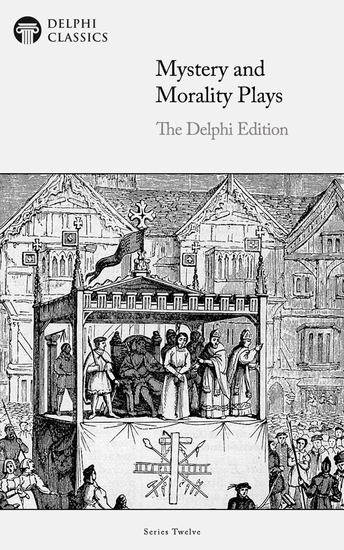
Mystery and Morality Plays - The Delphi Edition (Illustrated) - cover

Mystery and Morality Plays - The Delphi Edition (Illustrated)

Anonyme

Maison d'édition: Delphi Publishing Ltd

  • 0
  • 0
  • 0

Synopsis

The mystery and morality play were two of the three principal kinds of vernacular drama in Europe during the Middle Ages. Mystery plays, usually representing biblical subjects, developed from dramas presented in Latin by churchmen on sacred premises, depicting subjects like the Creation, Adam and Eve and the Last Judgment. They were often performed together in cycles which could last for days at special festivals and occasions. The morality play is an allegorical drama, in which the characters personify moral qualities and undergo didactic lessons. The action centres on a hero, such as Mankind, whose inherent weaknesses are assaulted by personified diabolic forces like the Seven Deadly Sins, but who may choose redemption and enlist the aid of such figures as Mercy, Justice, Temperance and Truth. This eBook presents a comprehensive collection of mystery and morality plays, with numerous illustrations, rare medieval texts, informative introductions and the usual Delphi bonus material. (Version 1)
 
Please note: due to the book‐burning zeal of the English Reformation, no English text of a ‘miracle play’ survives and so an example of this drama cannot appear in this edition.
 
* Beautifully illustrated with images relating to mystery and morality plays* Concise introductions to the major cycles and plays* All of the plays of the four principal mystery play cycles (York, Wakefield, N-Town and Chester)* The plays appear in the form of their original Middle English texts* Many rare dramas appearing for the first time in digital publishing* All extant English morality plays from the Middle Ages* Excellent formatting of the texts* Special Middle English glossary of words to aid your reading of the plays* Special contextual section, with four essays charting the development of drama in the Middle Ages* Ordering of texts into chronological order and genres
 
Please visit www.delphiclassics.com to browse through our range of exciting titles
 
CONTENTS:
 
The Mystery PlaysYork Mystery Plays (c. mid-14th century)Wakefield Mystery Plays (mid-15th century)N-Town Plays (late 15th century)Chester Mystery Plays (15th century)
 
The Morality PlaysThe Pride of Life (late 14th century)The Castle of Perseverance (c. 1425)Wisdom (c. 1460)Mankind (c. 1470)Nature (c. 1495) by Henry MedwallEveryman (1510)
 
Contextual WorksMiracle Plays and Mysteries (1913) by Georges Michel BertrinEnglish Miracle Plays (1914) by Arnold WynneMoralities and Interludes (1914) by Arnold WynneRise of the Drama (1921) by Andrew Lang
 
Glossary of Middle English Words
 
Please visit www.delphiclassics.com to browse through our range of exciting titles or to purchase this eBook as a Parts Edition of individual eBooks
Disponible depuis: 12/09/2022.
Longueur d'impression: 1256 pages.

D'autres livres qui pourraient vous intéresser

  • Echoes Of My Mind - Poems From Life's Journey - cover

    Echoes Of My Mind - Poems From...

    Glenn S Duquette

    • 0
    • 0
    • 0
    This audiobook is narrated by an AI Voice.  
    Echoes of My Mind: Poems from Life’s Journey by Glenn S. Duquette is a heartfelt collection of poetry that captures the essence of love, loss, resilience, and the simple beauty of life’s moments. Through vivid imagery and poignant verses, Duquette reflects on the trials and triumphs of the human spirit, weaving themes of hope, connection, and the enduring power of love. 
    From tender dedications to lost loved ones to lyrical musings on nature, relationships, and personal growth, this collection speaks to the universal experiences that shape us all. Whether you're seeking solace, inspiration, or a deeper understanding of life's complexities, Echoes of My Mind invites you on a journey of introspection and emotional discovery. 
    Perfect for lovers of poetry and those who find comfort in words that resonate with the heart, this book serves as a testament to the power of expression and the enduring strength of the human soul.
    Voir livre
  • L'Allegro - From their pens to your ears genius in every story - cover

    L'Allegro - From their pens to...

    John Milton

    • 0
    • 0
    • 0
    John Milton was born in Bread Street, London, on December 9th, 1608.  His early years were privately tutored before gaining a place at St Paul’s School and in 1625 he matriculated at Christ's College, Cambridge, earning a BA in 1629 and an MA in 1632. At Cambridge he had developed a reputation for poetic skill but also experienced alienation from his peers and university life as a whole.  
    The next 6 years were spent in private study. He read both ancient and modern works of theology, philosophy, history, politics, literature and science, in preparation for a poetical career.  Milton mastered Latin, Greek, Hebrew, French, Spanish, and Italian. To these he would add Old English (whilst researching his History of Britain) and also acquired more than a passing acquaintance in Dutch.  
    Although he was studying, some of his poetry from this time is remarkable; L’Allegro and Il Penseroso in 1631 and Lycidias in 1638. 
    In May 1638, Milton embarked upon a 15 month tour of France and Italy. These travels added a new and direct experience of artistic and religious traditions, especially Roman Catholicism.  He cut the journey short to return home during the summer of 1639 because of what he claimed were "sad tidings of civil war in England."  
    Once home, Milton wrote prose tracts against episcopacy, in the service of the Puritan and Parliamentary cause.  
    He married 16-year-old Mary Powell in June 1643 but she left him after only a few months during which he wrote and published several writings on divorce. Mary did return after 3 years and their life thereafter seemed harmonious.  Milton received a hostile response to the divorce tracts and drove him to write Areopagitica, his celebrated attack on pre-printing censorship.  
    With the parliamentary victory in the Civil War, Milton wrote The Tenure of Kings and Magistrates (1649) which defended popular government and implicitly sanctioned the regicide which led to his appointment as Secretary for Foreign Tongues by the Council of State.  
    On 24 February 1652 Milton published his Latin defense of the English People, Defensio Pro Populo Anglicano, also known as the First Defense. Milton's Latin prose and intellectual sweep, quickly gained him a European reputation.  
    Tragically his first wife, Mary, died on May 5th, 1652 following the birth of their fourth child.   The following year Milton had become totally blind, probably due to glaucoma.  He then had to dictate his verse and prose to helpers, one of whom was the poet Andrew Marvell.  
    He married again to Katherine Woodcock but she died in February 1658, less than four months after giving birth to a daughter, who also tragically died.  
    Though Cromwell’s death in 1658 caused the English Republic to collapse Milton stubbornly clung to his beliefs and in 1659 he published A Treatise of Civil Power, attacking the concept of a state-dominated church. Upon the Restoration in May 1660, Milton went into hiding for his life. An arrest warrant was issued and his writings burnt. He re-emerged after a general pardon was issued, but was nevertheless arrested and briefly imprisoned before influential friends, such as Marvell, now an MP, intervened 
    His third marriage was to Elizabeth Mynshull. Despite a 31-year age gap, the marriage seemed happy and Milton spent the remaining decade of his life living quietly in London, apart from a short spell in Chalfont St. Giles, during the Great Plague of London.  
    Milton was to now publish his greatest works, which had been gestating for many years.  Paradise Lost, perhaps the classic English Epic poem was originally published in 10 books in 1667.  This was followed by Paradise Regained and Samson Agonistes in 1671.  Because of his anti-monarchy views their reception was muted but over the centuries since Milton has established himself as second only to Shakespeare.  He died of kidney failure on November 8th, 1674 and was buried in the church of St Giles Cripplegate.
    Voir livre
  • A Sad Case - cover

    A Sad Case

    Edgar Fawcett

    • 0
    • 0
    • 0
    LibriVox volunteers bring you 14 recordings of A Sad Case by Edgar Fawcett. This was the Weekly Poetry project for June 6th, 2010.
    Voir livre
  • The Misandrist - cover

    The Misandrist

    Lisa Carroll

    • 0
    • 0
    • 0
    'Maybe it's in the air. Maybe it's the weather. Maybe it's the pace of life. Maybe it's breathing in that black soot everyday on the tube. Maybe it's commuting. Maybe it's the cultural consciousness. Maybe it's being a millennial. Maybe it's the climate crisis. Maybe it's the patriarchy.'
    When 'intimidating' Rachel and eternal 'nice guy' Nick meet at an awkward work Christmas party, what was meant to be a one-night-stand becomes a sexual odyssey of self-discovery… and mutual destruction.
    Adrift, isolated and insecure, they scramble for new ways to connect. Can some playful, passionate pegging provide a pathway through the pitfalls of modern relationships and present the possibility of a deeper bond?
    A penetrating comedy about the search for sexual knowledge, true love and top-notch Tupperware, Lisa Carroll's play The Misandrist was first produced by Metal Rabbit Productions at the Arcola Theatre, London, in May 2023.
    Voir livre
  • Hafiz's Little Book of Life - cover

    Hafiz's Little Book of Life

    Hafiz Hafiz

    • 0
    • 0
    • 0
    Silver Winner, Focused Topic-Translation, Nautilus Book Awards “Delicate and tough, a crafted danger, full of wit as well as abandon, Hafiz’s lyric is one of the rare mysteries of world literature.” —Coleman Barks, author and translator of The Essential Rumi   I have this gem and it’s looking for a beholder   Hafiz of Shiraz (also known as Hafez) remains the most beloved name in all of Persian literature. Indeed, his mystic, lyric poetry is cherished as one of the great achievements of world literature, on a par with Dante, Goethe, and Shakespeare.  Hafiz’s Little Book of Life is a lush collection of more than 250 selections from his lifework. Also included is a vivid portrait of his life and times, translators’ notes, an extensive glossary, a bibliography, and an appendix on Hafiz as an oracle. Here are classic soaring flights of fancy and solid life lessons—made new by two award-winning translators.   This is the perfect introduction to Hafiz for all lovers of poetry and seekers of love, spirituality, and wisdom. Let the unforgettable words of Hafiz shine through you with their love, profundity, wit, and celebration of life.   “This is translation as a real ‘carrying-across,’ as art, not artifact . . . this one drops the reader/listener directly into their own soul-struggle. Immerse yourself and be transformed!” —Neil Douglas-Klotz, author of The Sufi Book of Life and A Little Book of Sufi Stories   “From the first page, you are invited to settle into a sublime sanctuary and partake in enchantment until you feel the Beloved inside your beating heart and running through your veins.” —Ari Honarvar, author of A Girl Called Rumi
    Voir livre
  • Winter Day - cover

    Winter Day

    Lucy Maud Montgomery

    • 0
    • 0
    • 0
    Montgomery's poem on winter is an analogy for life, symbolizing the three life stages of youth, adulthood and old age.
    Voir livre