Join us on a literary world trip!
Add this book to bookshelf
Grey
Write a new comment Default profile 50px
Grey
Subscribe to read the full book or read the first pages for free!
All characters reduced
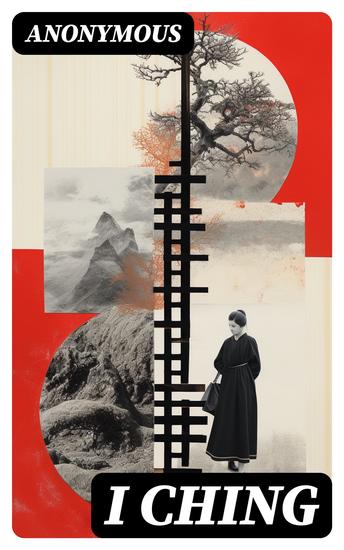
I Ching - The Book of Changes - cover

I Ching - The Book of Changes

Anonymous

Translator James Legge

Publisher: DigiCat

  • 0
  • 0
  • 0

Summary

The "I Ching," also known as the Book of Changes, is an ancient Chinese text that serves as both a divination manual and a philosophical treatise. Composed in a unique combination of poetic verses and commentary, the book is structured around 64 hexagrams, each composed of broken and unbroken lines, symbolizing various states of change and duality. Rich in symbolism and metaphor, the "I Ching" draws deeply from the principles of yin and yang and offers profound insights into the cyclical nature of life and human experience. Its literary style, characterized by brevity and evocative imagery, invites reflection and meditation, making it a cornerstone of Chinese literature and philosophy within the Confucian and Daoist traditions. The authorship of the "I Ching" remains anonymous, reflecting the collective wisdom of many generations rather than the vision of a single author. Believed to have originated over 3,000 years ago, its influence spans centuries, guiding emperors, philosophers, and mystics alike. Its integration of cosmology, ethics, and practical wisdom reveals a multi-layered understanding of existence that has inspired scholars and practitioners throughout history, pointing to the author's deep connection with the cultural and spiritual landscape of ancient China. This timeless classic is highly recommended for both spiritual seekers and enthusiasts of Eastern philosophy. Engaging deeply with its text not only enhances personal introspection but also cultivates a broader understanding of the intricate tapestry of human experience and the universal patterns found within it. The "I Ching" remains an essential read for those exploring the interplay of change and stability in their lives.
Available since: 11/27/2023.
Print length: 409 pages.

Other books that might interest you

  • Who Has Buried the Dead? - From Stalin to Putin … The last great secret of World War Two - cover

    Who Has Buried the Dead? - From...

    KGE Konkel

    • 0
    • 0
    • 0
    The Second World War was fought not only on the front lines but also in secrets, some of which have never been revealed. One such secret was buried in the deep, dark forest of Katyn, Poland. The other in the pages of a notebook hidden in an otherwise unremarkable café in an ancient Polish city.
    		 
    That notebook, known as the Scottish Book, was an obscure work of intellectual gamesmanship between a specialized group of mathematicians who met at a local pub near the town’s medieval university, where they shared and solved complex mathematical problems in the pages of the book. In 1939, as the Nazis overran the country, the book mysteriously vanished from its hiding place in the café. Some of its contributors avoided certain death by fleeing Poland  for America, where the government recruited them. Ultimately, some of these intellectuals became participants in a deadly undertaking: the Manhattan Project.
    		 
    Who Has Buried the Dead? may be fiction, but it draws on years of research to plausibly answer the real questions surrounding one of the last great secrets of the Second World War. What did the Scottish Book contain that led the NKVD, the Gestapo, and the Allies on a desperate search, using any means to find it? Why has its existence not factored into the telling of Second World War history? What is ultimately revealed within the Scottish Book that brought mortal enemies and their top spy operatives into a deadly contest for its discovery and seizure?
    Show book
  • Ending The Cycle Of Inherited Family Trauma - cover

    Ending The Cycle Of Inherited...

    Mark Wolynn

    • 0
    • 0
    • 0
    Inherited family traumas may be at the core of our inability to succeed in life. Wolynn’s research has shown that unresolved traumatic events in our families can hinder how success flows to us and how well we are able to receive it.
    Show book
  • Violins of Hope - Violins of the Holocaust-Instruments of Hope and Liberation in Mankind's Darkest Hour - cover

    Violins of Hope - Violins of the...

    James A. Grymes

    • 0
    • 0
    • 0
    The violin has formed an important aspect of Jewish culture for centuries, both as a popular instrument with classical Jewish musicians—Jascha Heifetz, Yehudi Menuhin, Itzhak Perlman—and also a central factor of social life as part of the enduring Klezmer tradition. But during the Holocaust, the violin assumed extraordinary new roles within the Jewish community. For some musicians, the instrument was a liberator; for others, it was a savior that spared their lives. For many, the violin provided comfort in mankind's darkest hour, and, in at least one case, helped avenge murdered family members. Above all, the violins of the Holocaust represented strength and optimism for the future. 


    In Violins of Hope, music historian James A. Grymes tells the amazing, horrifying, and inspiring story of the violins of the Holocaust, and of Amnon Weinstein, the renowned Israeli violinmaker who has devoted the past twenty years to restoring these instruments in tribute to those who were lost, including 400 members of his own family. Juxtaposing tales of individual violins with one man's harrowing struggle to reconcile his own family's history and the history of his people, it is a poignant, affecting, and ultimately uplifting look at the Holocaust and its enduring impact.
    Show book
  • Key to the City - How Zoning Shapes Our World - cover

    Key to the City - How Zoning...

    Sara C. Bronin

    • 0
    • 0
    • 0
    In Key to the City, legal scholar and architect Sara C. Bronin examines how zoning became such a prevailing force and reveals its impact—and its potential for good. Outdated zoning codes have maintained racial segregation, prioritized cars over people, and enabled great ecological harm. But, as Bronin argues, once we recognize the power of zoning, we can harness it to create the communities we desire, and deserve. Drawing on her own experience leading the overhaul of Hartford's zoning code and exploring the efforts of activists and city planners across the country, Bronin shows how new codes are reshaping our cities—from Baltimore to Chicago, Las Vegas to Minneapolis, and beyond. In Boston, a law fought for by a passionate group of organizers, farmers, and beekeepers is transforming the city into a haven for urban farming. In Tucson, zoning codes are mitigating the impacts of climate change and drought-proofing neighborhoods in peril. In Delray Beach, Florida, a new code aims to capture and maintain the town's colorful spirit through its architecture. 


    With clarity and insight, Bronin demystifies the power of an inscrutable organizing force in our lives and invites us to see zoning as a revolutionary vehicle for change. In Key to the City, she puts forward a practical and energizing vision for how we can reimagine our communities.
    Show book
  • Ultimate Learning Spanish Blueprint The - 10 Essential Steps - cover

    Ultimate Learning Spanish...

    Andres Ramirez

    • 0
    • 0
    • 0
    Embark on a Journey through the Riches of Spanish: Your Comprehensive Path to Fluency 
    Imagine conversing with locals on a bustling street of Barcelona, deciphering the menu at an authentic tapas restaurant, and experiencing the soul-stirring literature of Gabriel García Márquez in its original form. All these become infinitely more within reach through "The Ultimate Spanish Learning Blueprint: 10 Essential Steps" - the only guide you'll ever need to navigate the beautiful and intricate Spanish language. 
    Begin your adventure with a solid foundation, as we delve into the nuances of Spanish language structureand pronunciation. These first keys to unlocking fluency are crafted for ease and understanding, setting you on a path with confidence. Next, bring the vibrant colors of Spanish culture into your home with step-by-step cultural immersion techniques, allowing you to live and breathe the language even before you set foot on Spanish soil. 
    As your journey progresses, watch your vocabulary bloom. No more feeling tongue-tied with essential phrases and expressions at your fingertips. Our holistic approach to grammar demystifies Spanish verbs and tenses, enabling you to weave your sentences together with the same grace and precision as a native speaker. And when it comes to conversation, our book guides you through shattering the invisible barrier of fear and stepping into everyday dialogues with newfound assurance. 
    Yet, what sets this blueprint apart are the tangible goals and personalized milestones that light up your path. Regular checkpoints ensure that motivation remains your constant companion, and any hurdles are deftly overcome. With a wealth of advanced learning strategies and a robust appendix of resources, this book is more than just an educational tool—it's a lifelong companion on your road to Spanish mastery. 
     
    Show book
  • The Road I Never Meant to Take - Real Stories Real Science Real Recovery - cover

    The Road I Never Meant to Take -...

    Alanna Bell

    • 0
    • 0
    • 0
    The Road I Never Meant to Take is a memoir like no other—a poignant and transformative collection of 52 letters that guide readers through the descent into addiction and the soul-lifting climb toward recovery. Each letter is its own chapter—a standalone reflection that can be read daily, weekly, or at the reader’s own pace. 
    At the heart of the book is L, a therapist in recovery writing to a friend who understands the darkness. Through her voice, the letters explore not just one woman’s story, but a collective experience—shaped by Alanna Bell’s personal recovery and the lives of many she’s walked alongside as a therapist and fellow traveler. 
    What makes this memoir truly distinct is its fusion of lived experience, clinical insight, scientific understanding, and spiritual depth. The letters weave together research-based truths about the biology of addiction, the neurochemistry of trauma, and the impact of chronic stress on the brain, alongside the emotional and spiritual realities of what it means to fall apart—and heal. 
    This is a book for anyone who is: 
     – Living with addiction or substance use disorder 
     – Supporting a loved one through recovery 
     – Working in the fields of mental health, medicine, or spiritual care 
     – Longing for emotionally honest writing about trauma, healing, and hope 
    Written with grace, grit, and grounded wisdom, The Road I Never Meant to Take is both a testimony and a tool. It invites readers not just to witness a journey—but to reflect on their own, and perhaps, begin again.
    Show book