Rejoignez-nous pour un voyage dans le monde des livres!
Ajouter ce livre à l'électronique
Grey
Ecrivez un nouveau commentaire Default profile 50px
Grey
Abonnez-vous pour lire le livre complet ou lisez les premières pages gratuitement!
All characters reduced
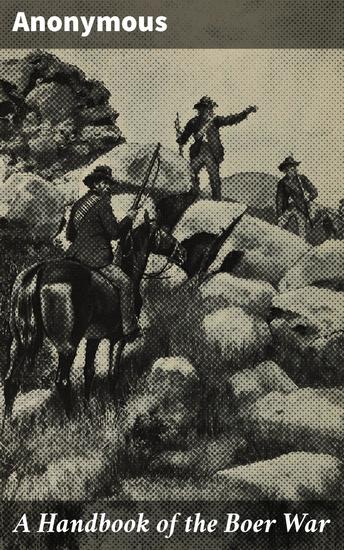
A Handbook of the Boer War - With General Map of South Africa and 18 Sketch Maps and Plans - cover

A Handbook of the Boer War - With General Map of South Africa and 18 Sketch Maps and Plans

Anonyme

Maison d'édition: Good Press

  • 0
  • 0
  • 0

Synopsis

A Handbook of the Boer War offers a comprehensive overview of the conflict between the British Empire and the Boer republics of southern Africa (1899-1902). This meticulously documented work combines firsthand accounts, strategic analyses, and sociopolitical commentary, reflecting the complexities and nuances of colonial warfare. Written in a straightforward yet evocative style, the book serves as an essential historical reference, presenting a rich tapestry of battles, tactics, and the larger geopolitical ramifications of the war. The literary context situates it among the era's military literature, particularly examining the evolution of guerrilla warfare techniques and their implications for modern military strategy. The author, writing under the veil of anonymity, reflects a broader collective sentiment of the time, possibly drawing from a military background or personal experiences related to the conflict. This obscured identity may speak to the contentious nature of the war, encapsulating the diverse perspectives that shaped the narrative. By focusing on the objective presentation of facts and experiences, the author seeks to transcend partisanship, targeting a post-war audience eager to comprehend the ramifications of this pivotal struggle. I wholeheartedly recommend A Handbook of the Boer War to historians, military enthusiasts, and any reader interested in the intricate dynamics of imperialism and resistance. This work enriches our understanding of a transformative conflict while laying bare the human experiences that define the theater of war, ensuring its place as an indispensable resource in historical scholarship.
Disponible depuis: 19/08/2023.
Longueur d'impression: 317 pages.

D'autres livres qui pourraient vous intéresser

  • Jesus and the Abolitionists - How Anarchist Christianity Empowers the People - cover

    Jesus and the Abolitionists -...

    Terry J. Stokes

    • 0
    • 0
    • 0
    Isn't anarchy just chaos? How could it possibly relate to Christianity? 
    Countless people, including (and sometimes especially) those from religious backgrounds, are exploring radical ideas. The pandemic, the Black liberation movement, climate disaster--all these concerns are leading us to ask, "Does our system actually work? Is capitalism ethical? Is this the only way to build a society?" 
    Questions like these led author and pastor Terry Stokes to the political philosophy of anarchy. Now, we all have a scary picture in our minds about anarchy: that it calls for chaos, violence, and disorder. But anarchy actually calls for the end of rulership, not violence in the streets. Anarchy seeks to empower small communities of people to take care of their own needs at the local level, thereby making the state obsolete. It's all about constructing societies in which people are placed above profit and systems are built on ethics of justice and equality. To Stokes, that sounded a whole lot like the building blocks of Christian faith. 
    In Jesus and the Abolitionists, Stokes introduces readers to the ancient practice of anarchy and how it intersects with Christian beliefs and values. We see how beliefs about God, humanity, divine-human interaction, the Bible, and more can be illuminated and faithfully reformulated through an anarchist lens. This view, which Stokes calls anarchist Christianity, seeks to abolish tyrannical systems that do not recognize the changing values of our times and that disempower the people. Stokes's vision of an anarchist Christian future charts a caring theology and practice of living, one based in our voluntary cooperation, the goodness of all people, and faith in God. We can build an ethical world--one built on structures of care--and anarchy might just be the unlikely key.
    Voir livre
  • Ramses II - The Great Pharaoh of Egypt - cover

    Ramses II - The Great Pharaoh of...

    Omar Khalil

    • 0
    • 0
    • 0
    Ramses II, also known as Ramses the Great, ascended to the throne of Egypt at the age of around twenty-five, marking the beginning of one of the most illustrious reigns in ancient Egyptian history. Born to Seti I and Queen Tuya, Ramses was the second son in a royal family with a rich history of military conquest and religious devotion. His early life was marked by a deep connection to his father, who was a powerful Pharaoh and who taught him the ways of leadership, military strategy, and governance. 
    Ramses II’s rise to power was in part due to the untimely death of his older brother, Amunherkhepeshef. His subsequent coronation followed the traditional Egyptian custom, but Ramses’s reign would quickly set him apart from his predecessors. Under Seti I’s rule, Egypt had already gained considerable strength, and Ramses inherited an empire that was well-positioned for further military expansion. Yet, it was his own brilliance, both as a military leader and as a strategist, that allowed him to solidify his place as one of the greatest Pharaohs of Egypt. 
    One of the first significant moments of his reign was his involvement in the Battle of Kadesh. Although young at the time, Ramses’s leadership during this critical battle would define his reputation as a warrior king. Despite facing a large Hittite force, Ramses II's audacity and resilience ensured Egypt's power remained strong. Though the battle ended in a stalemate, Ramses managed to secure his status through subsequent peace negotiations, leaving a lasting legacy on Egypt’s military and political landscape.
    Voir livre
  • On the Nature of the Gods - cover

    On the Nature of the Gods

    Cicero

    • 0
    • 0
    • 0
    "On the Nature of the Gods" by Cicero is a profound philosophical work that delves into the nature and existence of the gods. In this thought-provoking treatise, Cicero engages in a series of dialogues between representatives of different philosophical schools, each presenting their arguments regarding the divine. Through these discussions, Cicero explores the various theories of the gods, their attributes, and their role in the universe. Drawing on the teachings of prominent Greek philosophers such as Epicurus, Stoicism, and the Academic school, Cicero skillfully presents the contrasting viewpoints on the nature of the gods. He navigates through complex philosophical arguments, dissecting each perspective with intellectual rigor and eloquence. The dialogues explore questions of theology, ethics, and the human relationship with the divine, offering readers a comprehensive overview of the different philosophical approaches to understanding and interpreting the gods. Read in English, unabridged.
    Voir livre
  • History of Russia - Catherine II to the Revolution of 1905-1906 - cover

    History of Russia - Catherine II...

    Days of History

    • 0
    • 0
    • 0
    Introducing "History of Russia: Catherine II to the Revolution of 1905-1906". 
    - The Second Volume in Our "Russia's Epic Saga: A Journey Through Time" Series. 
    Immerse yourself in the captivating world of Russia's past with the second book in our enthralling Russian history series. This book transports you to an era of profound transformation, where visionary rulers and revolutionary ideas shaped the course of Russian history. 
    Witness the reign of Catherine the Great, a powerful and ambitious leader who modernized Russia and expanded its territories. Delve into the 19th century, an era marked by an intellectual ferment, social upheaval, and the growing call for change. Discover the events that culminated in the Revolution of 1905-1906, a turning point that paved the way for the momentous Russian Revolution. 
    "History of Russia: Catherine II to the Revolution of 1905-1906" masterfully weaves together vivid storytelling with insightful analysis, offering readers a comprehensive and engaging account of this critical period in Russia's development. Accessible and informative, this book is perfect for history enthusiasts and newcomers alike. 
    Don't miss the opportunity to explore Russia's fascinating past. Order your copy of "History of Russia: Catherine II to the Revolution of 1905-1906" today, and continue your journey through our captivating "Russia's Epic Saga: A Journey Through Time" series.
    Voir livre
  • Those About To Die - cover

    Those About To Die

    Daniel P. Mannix

    • 0
    • 0
    • 0
    Putting the games in the context of Rome's rise and dramatic fall, Mannix captures all the history, planning, and savage pageantry that went into creating the first spectator sports. 


    The games began in 238 BC as nearly county fair–like entertainment, with trick riding, acrobats, trained animals, chariot racing, and athletic events. The contests then evolved into slave fights thanks to wealthy patricians Marcus and Decimus Brutus, who wanted to give their father an unforgettable funeral by reviving an old tradition. What the brothers wrought, Rome devoured, demanding even greater violence to satisfy the bloodlust of the crowd. Architectural wonders in themselves, massive arenas like Circus Maximus and the Colosseum were built, able to host sea battle reenactments on actual water. Successful gladiators found fame, fortune—and freedom. 


    But as Rome begin to fall in the fifth century, so did the games, devolving into nothing more than pointless massacres. In the end, millions of humans and animals were sacrificed in barbaric displays. What were once ceremonies given in honor of gods met an inglorious fate, yet they still captivate the imagination of people today. 


    Contains mature themes.
    Voir livre
  • The Balkans - A Historical Journey Through Time - Understanding the Political Social and Cultural Evolution of the Region - cover

    The Balkans - A Historical...

    Will Forrest

    • 0
    • 0
    • 0
    Looking to delve deeper into the history of the Balkans? 
    This insightful book explores the complex factors that have led to the region's ongoing conflict and division. 
    In this exploration, you will uncover four crucial aspects:The influence of religious beliefs in the Balkans, encompassing Orthodox Christianity, Islam, and Catholicism, as well as the disputes that have emerged due to these differences.The consequences of nationalist sentiments in the region, with a focus on the emergence of Serbian nationalism and the friction among various ethnic communities.The Impact of Ottoman Rule on the BalkansThe persistent hurdles that the Balkans have confronted, such as political volatility, economic difficulties, and war. 
    With engaging writing and detailed research, this book provides a comprehensive overview of the history of the Balkans. Don't miss out on this opportunity to deepen your understanding of the Balkans!
    Voir livre