Join us on a literary world trip!
Add this book to bookshelf
Grey
Write a new comment Default profile 50px
Grey
Subscribe to read the full book or read the first pages for free!
All characters reduced
The Little Colonel's Hero - A Heartwarming Tale of Honor Courage and Friendship in the Post-Civil War American South - cover

The Little Colonel's Hero - A Heartwarming Tale of Honor Courage and Friendship in the Post-Civil War American South

Annie F. Johnston

Publisher: Good Press

  • 0
  • 0
  • 0

Summary

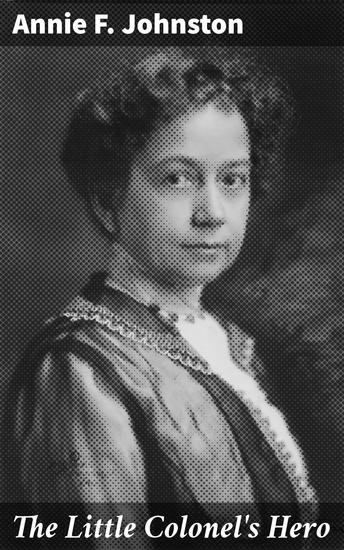
In "The Little Colonel's Hero," Annie F. Johnston weaves a captivating narrative that beautifully merges themes of heroism, friendship, and personal growth within the formative landscape of early 20th-century America. Through the adventures of her beloved character, the Little Colonel, Johnston employs a rich, descriptive literary style that resonates with the innocence of childhood while simultaneously addressing complex social issues, including class differences and the meaning of bravery. The book is set against the backdrop of the post-Civil War South, providing a critical examination of regional identity as experienced by young protagonists navigating their formative years amidst societal challenges. Annie F. Johnston, an influential author of children'Äôs literature, was deeply connected to the themes she explored in her works. Her own Southern upbringing and extensive travels informed her portrayal of Southern life, while her commitment to children's education and moral development guided her narrative approach. Johnston wrote with a passion for inspiring resilience and courage in young readers, drawing upon her personal experiences and the profound societal shifts of her time. For readers seeking an enriching literary experience that combines adventure and moral lessons, "The Little Colonel's Hero" is a highly recommended read. Its timeless themes and engaging characters make it not only a delightful story for young readers but also a significant contribution to children's literature that invites deeper reflection on courage and friendship.
Available since: 08/12/2023.
Print length: 134 pages.

Other books that might interest you

  • Taiwan Travelogue - A Novel - cover

    Taiwan Travelogue - A Novel

    Yang Shuang-Zi

    • 0
    • 0
    • 0
    WINNER OF THE 2024 NATIONAL BOOK AWARD FOR TRANSLATED LITERATURE 


    May 1938. The young novelist Aoyama Chizuko has sailed from her home in Nagasaki, Japan, and arrived in Taiwan. She's been invited there by the Japanese government ruling the island, though she has no interest in their official banquets or imperialist agenda. Instead, Chizuko longs to experience real island life and to taste its authentic cuisine. 


    Soon a Taiwanese woman—who is younger than she is, and who shares the characters of her name—is hired as her interpreter and makes her dreams come true. Chizuru arranges Chizuko's travels and proves to be an exceptional cook. Chizuko grows infatuated with her companion and intent on drawing her closer. But something causes Chizuru to keep her distance. It's only after a heartbreaking separation that Chizuko begins to grasp what the "something" is. 


    Disguised as a translation of a rediscovered text by a Japanese writer, this novel was a sensation on its first publication in Mandarin Chinese in 2020 and won Taiwan's highest literary honor, the Golden Tripod Award. Taiwan Travelogue unburies lost colonial histories and reveals how power dynamics inflect our most intimate relationships.
    Show book
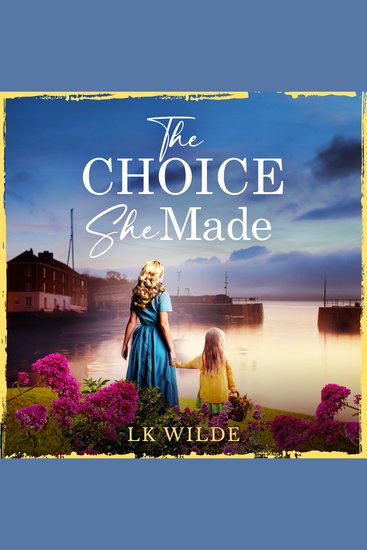
  • The Choice She Made - An evocative and heartbreaking historical family saga - cover

    The Choice She Made - An...

    LK Wilde

    • 0
    • 0
    • 0
    1930, Suffolk 
    Marnie Watson has her whole life ahead of her. About to marry her sweetheart Tom, the future looks bright for the young couple. 
    But when the fishing industry begins to decline, Marnie’s marriage is tested like never before. In a bid to reverse their fortunes, Marnie and Tom head west to Cornwall with the promise of a fresh start. 
    Before their new life can begin, tragedy strikes, threatening to destroy everything Marnie holds dear. And when war engulfs the world, Marnie’s strength is tested further than she thought possible. 
    Marnie forms an unlikely friendship with gruff, sultry Jack Tristan, but their friendship will lead to devastating consequences, and the hardest choice Marnie has ever had to make. 
    Will Marnie make the right choice for her family? And will her sacrifice provide the future she wants for her children?
    Show book
  • The Keepers of Memory - A Tale of the Norman Conquest - cover

    The Keepers of Memory - A Tale...

    Christopher Allen

    • 0
    • 0
    • 0
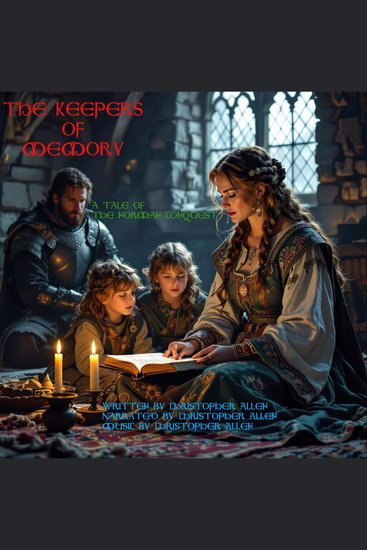
    "The Keepers of Memory" tells the remarkable story of Lady Aelfwyn, an Anglo-Saxon widow whose world is shattered by the Norman Conquest of 1066. When her husband Thegn Aelred dies at the Battle of Hastings, Aelfwyn faces an impossible choice: flee into exile with her three children or submit to Norman rule and marry the foreign knight who has claimed her lands. 
    Choosing survival over pride, Aelfwyn marries Sir Raoul de Montfort, a Norman lord who needs legitimacy through union with Anglo-Saxon nobility. But this marriage of necessity becomes the foundation for something far more significant—a quiet revolution of cultural preservation. While publicly embracing her role as a Norman lady, Aelfwyn secretly begins teaching her children the Anglo-Saxon heritage that the conquest threatens to erase. 
    In hidden evening lessons, she passes down the ancient stories, songs, and customs of her people. Her eldest son Godwin struggles with his dual identity, torn between resentment and pragmatism. Her daughter Eadgyth becomes a natural bridge between cultures, while young Wulfric grows up truly bilingual and bicultural. Through patient persistence, Aelfwyn demonstrates that Anglo-Saxon traditions can coexist with Norman rule, gradually winning over even her initially skeptical husband. 
    The family's greatest test comes when Archbishop Lanfranc arrives to investigate reports of their cultural preservation activities. Rather than deny her actions, Aelfwyn boldly argues that understanding Anglo-Saxon customs makes Norman lords more effective rulers. Her courage and wisdom not only save her family but help convince the Church hierarchy that transformation, rather than destruction, is the wisest approach to conquered peoples. 
    The story culminates thirty-three years later, when Aelfwyn's youngest son Wulfric is commissioned by King Henry I to establish a school teaching both Norman and English customs to royal administrators.
    Show book
  • Last Kingdom's Whisper The: Book summary & analysis - cover

    Last Kingdom's Whisper The: Book...

    Alexander Pike

    • 0
    • 0
    • 0
    This content is an independent and unofficial summary created for informational and educational purposes only. It is not affiliated with, authorized, approved, licensed, or endorsed by the original author or publisher. All rights to the original work belong to its respective copyright holders. This summary is not intended to substitute the original book, but to offer a concise overview and interpretation of its main ideas.
     
    
    Amid the ruins of a forgotten realm, The Last Kingdom's Whisper unfolds a haunting tale of legacy, loyalty, and lost glory. As ancient secrets stir and the final embers of power flicker in the darkness, one soul stands against the tide of time, determined to unearth the truth hidden beneath centuries of silence. With vivid imagery, deep emotional resonance, and relentless suspense, this mesmerizing journey explores the echoes of a kingdom that refuses to be forgotten.
    Show book
  • The Short Stories of Franz Kafka - Jewish master of the bizarre and creator of Kafkaesque - cover

    The Short Stories of Franz Kafka...

    Franz Kafka

    • 0
    • 0
    • 0
    Franz Kafka was born on 3rd July 1883 in Prague, then in Bohemia, the eldest of 6, into a middle-class Jewish family. 
     
    Life for the young Kafka and his passion for literature was often made an ordeal by his over-bearing and domineering entrepreneur of a father.   
     
    In 1889 Kafka was sent to the Deutsche Knabenschule, an elementary school in Prague. His father would only allow him to be educated in German-speaking schools and even went so far as to limit visits to the synagogue to four a year. 
     
    In 1901 he graduated from the classics-oriented Altstädter Gymnasium. Kafka did well there and across a large range of subjects.  He now enrolled at the Charles Ferdinand University, to study chemistry, but quickly switched to law for which he obtained his degree in June 1906 and then performed the mandatory year of unpaid service as clerk at the civil and criminal courts. 
     
    A job at an Italian insurance company left him little time to write and after a year he took another job with the Worker's Accident Insurance Institute for the Kingdom of Bohemia where he stayed until ill health led to his resignation in 1922. 
     
    Although he saw work as a means to pay the bills and to allow him time to write, he received several promotions and was noted as a good employee. 
     
    By 1917 Kafka was suffering from tuberculosis, which required frequent periods of convalescence. Interspersed with this, were several intense affairs before he settled in Berlin with Dora Diamant, a 25-year-old kindergarten teacher who herself having left the ghetto now influenced Kafka's interest in the book of Jewish law, the Talmud. 
     
    Kafka’s on-going health was littered with problems. Apart from TB there were several other ailments, including migraines, insomnia, boils, depression, all usually brought on by excessive stresses and strains. He attempted to counteract all of this by naturopathic treatments, a vegetarian diet and consuming large quantities of unpasteurized milk. 
     
    His tuberculosis still worsened. He returned to Prague, where he died on 3rd June 1924. He was 40. 
     
    His literary works are few in number but towering in influence.  His masterpieces include ‘The Trial’, ‘The Metamorphosis’ as well as a number of short stories which reveal facets of humankind that truthfully could only be born from Kafka’s brain and pen. 
    01 - Franz Kafka - A Short Story Collection - An Introduction 
    02 - In the Penal Colony by Franz Kafka 
    03 - Before the Law by Franz Kafka 
    04 - A Country Doctor by Franz Kafka 
    05 - A Hunger Artist by Franz Kafka
    Show book
  • Jam For The Enemy - Former soldier and journalist that became a revered author and screenwriter - cover

    Jam For The Enemy - Former...

    Edgar Wallace

    • 0
    • 0
    • 0
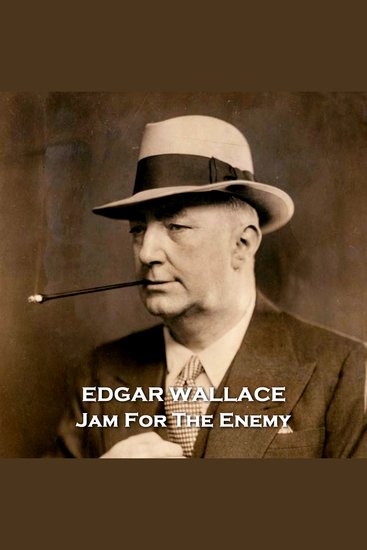
    Richard Horatio Edgar Wallace was born on the 1st April 1875 in Greenwich, London.  Leaving school at 12 because of truancy, by the age of fifteen he had experience; selling newspapers, as a worker in a rubber factory, as a shoe shop assistant, as a milk delivery boy and as a ship’s cook.  
     
    By 1894 he was engaged but broke it off to join the Infantry being posted to South Africa. He also changed his name to Edgar Wallace which he took from Lew Wallace, the author of Ben-Hur.  
     
    In Cape Town in 1898 he met Rudyard Kipling and was inspired to begin writing. His first collection of ballads, The Mission that Failed! was enough of a success that in 1899 he paid his way out of the armed forces in order to turn to writing full time.  
     
    By 1904 he had completed his first thriller, The Four Just Men. Since nobody would publish it he resorted to setting up his own publishing company which he called Tallis Press. 
      
    In 1911 his Congolese stories were published in a collection called Sanders of the River, which became a bestseller. He also started his own racing papers, Bibury’s and R. E. Walton’s Weekly, eventually buying his own racehorses and losing thousands gambling.  A life of exceptionally high income was also mirrored with exceptionally large spending and debts.  
     
    Wallace now began to take his career as a fiction writer more seriously, signing with Hodder and Stoughton in 1921. He was marketed as the ‘King of Thrillers’ and they gave him the trademark image of a trilby, a cigarette holder and a yellow Rolls Royce. He was truly prolific, capable not only of producing a 70,000 word novel in three days but of doing three novels in a row in such a manner. It was estimated that by 1928 one in four books being read was written by Wallace, for alongside his famous thrillers he wrote variously in other genres, including science fiction, non-fiction accounts of WWI which amounted to ten volumes and screen plays. Eventually he would reach the remarkable total of 170 novels, 18 stage plays and 957 short stories. 
     
    Wallace became chairman of the Press Club which to this day holds an annual Edgar Wallace Award, rewarding ‘excellence in writing’.  
     
    Diagnosed with diabetes his health deteriorated and he soon entered a coma and died of his condition and double pneumonia on the 7th of February 1932 in North Maple Drive, Beverly Hills. He was buried near his home in England at Chalklands, Bourne End, in Buckinghamshire.
    Show book