Join us on a literary world trip!
Add this book to bookshelf
Grey
Write a new comment Default profile 50px
Grey
Subscribe to read the full book or read the first pages for free!
All characters reduced
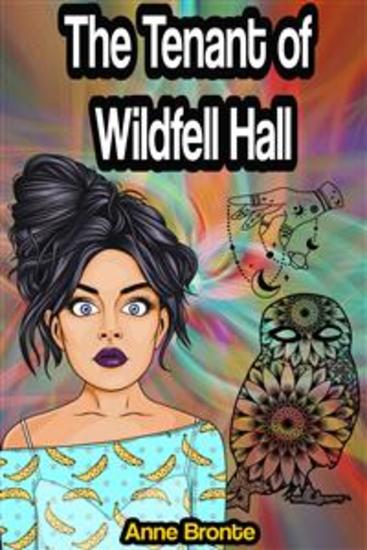
The Tenant of Wildfell Hall - cover

The Tenant of Wildfell Hall

Anne Brontë

Publisher: Memorable Classics eBooks

  • 0
  • 0
  • 0

Summary

The Tenant of Wildfell Hall by Anne Bronte is the second and final novel written by English author Anne Brontë. It was first published in 1848 under the pseudonym Acton Bell. Probably the most shocking of the Brontës' novels, it had an instant and phenomenal success, but after Anne's death her sister Charlotte prevented its re-publication in England until 1854.

The novel is framed as a series of letters from Gilbert Markham to his friend about the events connected with his meeting a mysterious young widow, calling herself Helen Graham, who arrives at Wildfell Hall, an Elizabethan mansion which has been empty for many years, with her young son and a servant. Contrary to the early 19th century norms, she pursues an artist's career and makes an income by selling her pictures.

Her strict seclusion soon gives rise to gossip in the neighbouring village and she becomes a social outcast. Refusing to believe anything scandalous about her, Gilbert befriends her and discovers her past. In the diary she gives Gilbert, she chronicles her husband's physical and moral decline through alcohol and debauchery in the dissipated aristocratic society.

Ultimately she flees with her son, whom she desperately wishes to save from his father's influence. The depiction of marital strife and women's professional identification has also a strong moral message mitigated by Anne Brontë's belief in universal salvation.
Most critics now consider The Tenant of Wildfell Hall to be one of the first feminist novels. May Sinclair, in 1913, said that "the slamming of [Helen's] bedroom door against her husband reverberated throughout Victorian England." In leaving her husband and taking away their child, Helen violates not only social conventions but also the early 19th century English law.
Available since: 06/03/2022.
Other books that might interest you

  • Testimony Tapes The: Book summary & analysis - cover

    Testimony Tapes The: Book...

    Alexander Pike

    • 0
    • 0
    • 0
    This content is an independent and unofficial summary created for informational and educational purposes only. It is not affiliated with, authorized, approved, licensed, or endorsed by the original author or publisher. All rights to the original work belong to its respective copyright holders. This summary is not intended to substitute the original book, but to offer a concise overview and interpretation of its main ideas.


    The Testimony Tapes unearths the raw, unfiltered voices of those who dared to speak their truth. Presented as a series of deeply personal recordings, this audiobook captures the tension, vulnerability, and courage found in stories too often buried or ignored. Each tape reveals a moment of reckoning—whether with injustice, identity, loss, or redemption.
     
    Told with documentary-style intensity and emotional depth, The Testimony Tapes draws listeners into a world where secrets are exposed, silence is shattered, and truth becomes a form of survival. The result is a haunting, powerful mosaic of voices that stay with you long after the final recording ends.
     
    Perfect for listeners drawn to social justice, human resilience, and the unspoken narratives that demand to be heard.
    Show book
  • Ice Age The: The History and Legacy of the Glacial Period during the Pleistocene Era - cover

    Ice Age The: The History and...

    Editors Charles River

    • 0
    • 0
    • 0
    The early history of Earth covers such vast stretches of time that years, centuries, and even millennia become virtually meaningless. Instead, paleontologists and scientists who study geochronology divide time into periods and eras.  
    	What humans commonly refer to as the “Ice Age” is actually a series of fluctuating climate events that have occurred throughout the planet’s history. These ongoing historical phenomena are difficult to conceptualize because of both the time frame involved and the natural process by which they cyclically unfold. The Earth’s climatic clock repeats the maneuver over millions of years per occurrence, a number that is intellectually graspable, but not viscerally well-perceivable by most members of the human race. The process by which ice ages form is not relevant to any societal function, and therefore remains a mystery. Those who attempt to define it are often met with either apathy or defiant superstition. 
    	As a basic definition, it may be said that an ice age is simply a period of time during which thick ice sheets cover vast areas of land. These sheets have advanced and retreated, at times taking over the entire planet, and conversely disappearing nearly altogether. Glacial ice formed by this regularly occurring process does not sit in a state of inertia, but moves dynamically, reshaping the geological features of the continents. Again, the time frame for glacial movement is far longer than any involving human activity, so close attention must be paid in order to correctly measure and interpret it for the modern day. 
    Show book
  • Write It Right: A Little Blacklist of Literary Faults - cover

    Write It Right: A Little...

    Ambrose Bierce

    • 0
    • 0
    • 0
    Step into the sharp and satirical mind of Ambrose Bierce with Write It Right: A Little Blacklist of Literary Faults — a witty, incisive guide to the art of clear and correct writing. 
    First published in 1909, this compact yet powerful manual exposes the most common blunders of language and style, offering Bierce’s signature blend of precision, humor, and biting critique. From misused words and illogical phrases to lazy constructions and pompous diction, Bierce spares no one in his mission to defend the integrity of English prose. 
    Narrated by Donavan Price, this audiobook captures the acerbic wit and intellectual rigor that made Bierce one of America’s great literary critics. Write It Right remains as relevant — and as entertaining — as ever, a must-listen for writers, editors, and lovers of language who believe that words, used well, truly matter.
    Show book
  • Hold What Makes You Whole: Poems - cover

    Hold What Makes You Whole: Poems

    Marcus Amaker

    • 0
    • 0
    • 0
    This is the audio version of Poet Laureate Marcus Amaker's tenth book, Hold What Makes You Whole. It is read by the author with original music sprinkled in the reading. 
    ~ 
    PRAISE. 
    Hold What Makes You Whole is a gratifying meditative collection of poems accompanied by kaleidoscopic visual imagery that pulls you in, settles your mind, and makes way for one's own reflections." — Lisa Willis (she/her), executive director of Cave Canem Foundation 
    ~ 
    THE BOOK. 
    Poet Laureate Marcus Amaker's (he/him) tenth book, Hold What Makes You Whole, is a pocket-sized full-color collection of new and selected works from an award-winning opera librettist, musician, and graphic designer. 
    Hold What Makes You Whole is a 200-page compilation of jazz, Blackness, self care, fatherhood, Star Wars, social justice, music, and memory.  
    On the cover of the book is Amaker’s great-great aunt Ruth Robinson, a poet and community leader who published her first book at the age of 65. 
    ~ 
    MEET MARCUS.  
    Marcus Amaker is a husband, a dad, a son, a music nerd, and a Star Wars obsessive. He served as the first Poet Laureate of Charleston, South Carolina, from 2016-22. In 2021, he became an Academy of American Poets fellow. 
    His work has been recognized by The Washington Post, The Kennedy Center, American Poets Magazine, Chicago Opera Theater, Button Poetry, NPR, The Chicago Tribune, PBS NewsHour, and more. 
    In addition to more than 40 electronic music albums, Marcus' poem “The Rain” is on two Grammy-nominated records. June 3, 2021, was named “Marcus Amaker Day” by the mayor of Charleston, SC.
    Show book
  • Sacred Sendoffs - An Animal Chaplain’s Advice for Surviving Animal Loss Making Life Meaningful and Healing the Planet - cover

    Sacred Sendoffs - An Animal...

    Sarah A. Bowen

    • 0
    • 0
    • 0
    An elegant manifesto for improving life—and death—for all beings on sacred Mother Earth 


    Combining humorous anecdotes and thought-provoking research, Sacred Sendoffs explores human relationships with beloved pets, wild creatures, animal astronauts, marine life, farmed animals, and other sentient beings. Along the way, animal chaplain Sarah Bowen shares insights for sustaining their lives, honoring deaths, and managing the emotions that arise when we lose an animal we love. While many books focus exclusively on pet loss, animal welfare, or environmental issues, Bowen's ever curious and playful style takes on all three, revealing their unavoidable entanglement. Sacred Sendoffs helps animal lovers uncover practical actions and everyday opportunities for helping the more-than-human world thrive.
    Show book
  • 100 Facts About Cognitive Biases - English to Spanish - cover

    100 Facts About Cognitive Biases...

    Science-Based Language Learning Lab

    • 0
    • 0
    • 0
    Introduction to the 100 Somethings Language Learning Series 
     
    Welcome to a revolutionary approach to language learning! This series helps you master Spanish by intertwining it with compelling topics like Cognitive Biases. Each book centers on a theme (art, science, history) and presents 100 carefully chosen facts in both English and Spanish. 
     
    How It Works: 
     
    - Each fact is first introduced in Spanish, encouraging you to interpret it. 
     
    - The following page provides the fact in English and then repeats it in Spanish, aiding comprehension and memorization. 
     
    - The second half flips this order—English first, then Spanish, and English again—helping you practice translation in both directions for better mastery. 
     
    Benefits: 
     
    - Concise Learning: Focuses on one-sentence facts to ensure every word learned is impactful and directly related to your interests, making them easier to remember. 
     
    - Reinforcement: Alternating languages for each fact naturally strengthens vocabulary and grammar. 
     
    - Engagement: Learning vocabulary through topics you're passionate about keeps the process dynamic and relevant. 
     
    - Dual Knowledge: You enrich your understanding of a specific subject while learning a new language. 
     
    This series is tailored for learners who thrive on clear, targeted information, making it both educational and enjoyable. Whether you’re a beginner or expanding your linguistic skills, this series promises an effective and engaging educational journey. Embrace these 100 facts and let your passions drive your progress in mastering a new language!
    Show book