Join us on a literary world trip!
Add this book to bookshelf
Grey
Write a new comment Default profile 50px
Grey
Subscribe to read the full book or read the first pages for free!
All characters reduced
Positive Psychology for Beginners - Learning serenity optimism and resilience for everyday life | A guide to getting started with positive psychology - cover

Positive Psychology for Beginners - Learning serenity optimism and resilience for everyday life | A guide to getting started with positive psychology

Anna Somnis

Publisher: Marcus Jungnickel

  • 0
  • 0
  • 0

Summary

"Positive Psychology for Beginners" is a comprehensive guide that introduces the exciting world of positive psychology, an emerging discipline that focuses on promoting human happiness, well-being and personal strengths. The book begins with an introduction to the foundations and history of positive psychology and explains its differentiation from traditional psychological approaches that focus more on mental illness.

The book then explores the main concepts and theories of positive psychology, including positive emotions, positive experiences, positive character traits and positive institutions. It also examines the key studies and research findings that underpin the value and effectiveness of positive psychology.

Later chapters explore how positive psychology can be applied in a variety of settings, including education, work, relationships and the community. It outlines how positive self-talk, self-care and dealing positively with stress and adversity can improve quality of life.

The book also provides an in-depth look at character strengths and virtues, the core concepts of positive psychology, and how these can be developed and nurtured. Numerous exercises and interventions are presented to help foster these strengths and improve personal well-being.

Finally, the book takes a critical perspective and discusses the challenges and criticisms leveled against positive psychology, as well as possible solutions and the future of this fascinating discipline.

"Positive Psychology for Beginners" is a must-read for anyone interested in learning more about this innovative approach to increasing human happiness and well-being. It offers valuable insights and practical tools that can help you lead a more fulfilling, meaningful and positive life.
Available since: 11/11/2023.

Other books that might interest you

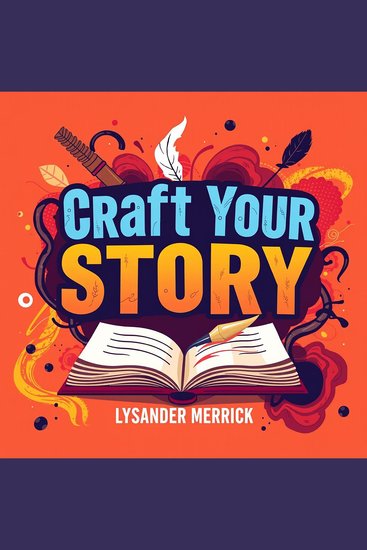
  • Craft Your Story: Secrets to Captivating and Engaging Audiences - "Revamp your narrative skills! Discover powerful audio lessons that captivate and connect with listeners" - cover

    Craft Your Story: Secrets to...

    Lysander Merrick

    • 0
    • 0
    • 0
    Craft Your Story: Secrets to Captivating and Engaging Audiences 
    ⭐⭐ Simplified Guide & Explanations Included ⭐⭐  
    Are you eager to advance in your career and enhance your skills to master storytelling?  
    Searching for a thorough guide that includes everything you need to unlock your narrative potential and engage your audience effectively?  
    Your quest ends here!  
    This audiobook serves as your ultimate resource for deepening your understanding, applying your skills, and participating in practical exercises. With this, you're set for success.  
    Updated for the 2024-2025 storytelling landscape.  
    Key features of this comprehensive guide: 
    - In-depth insights into captivating storytelling techniques  
    - Detailed explanations of engaging your audience  
    - Effective strategies for preparing and presenting your story  
    What sets our guide apart is its thoroughness, which is crucial for your storytelling success. Concepts are explored in depth, ensuring a clear understanding.  
    Crafted with a logical structure and clear language, our storytelling guide ensures seamless transitions between topics. Say goodbye to complicated jargon and embrace straightforward, accurate, and technically sound content.  
    So, why hesitate? Click the BUY NOW button, secure your guide, and start your journey towards mastering the art of storytelling!  
    Start your storytelling journey today!
    Show book
  • Obesity Unraveled - Exploring the Roots and Strategies for a Healthy Lifestyle - cover

    Obesity Unraveled - Exploring...

    MAX EDITORIAL

    • 0
    • 0
    • 0
    Obesity emerges as one of the challenges most influenced by global health in the 21st century. The growing number of people experiencing this complex health problem has raised concerns about their clinical quality of life, well-being and health systems. In this eBook , we'll dive deep into the topic of obesity, exploring its roots and unraveling the mysteries that surround it.
    Show book
  • Megalithic Temples of Malta The: The History and Legacy of Europe’s Oldest Standing Structures - cover

    Megalithic Temples of Malta The:...

    Editors Charles River

    • 0
    • 0
    • 0
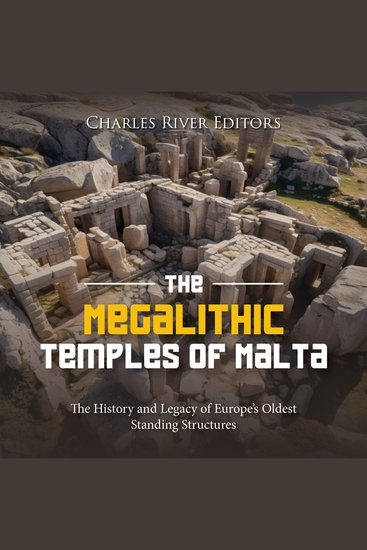
    Malta’s history goes back further than many know, which can be attested to by the numerous Neolithic and Bronze Age era megaliths that dot the island of Malta proper as well as the island of Gozo to the north. Naturally, when European archaeologists began unearthing the megaliths of Malta in the 19th century, they did not know what to think, which led to a plethora of theories, many of them quite fantastic. At least 23 of these temples were uncovered, but because the people who built them lacked the knowledge of writing, speculation over who built them and why remained well into the 20th century (Rountree 2003, 26). Some people theorized that the Malta megaliths were built by a race of giants, while others believed that it was the center of a “Mother Earth” cult that later spread through Neolithic Europe.  
    Early archaeologists were also perplexed about the physical origins of the Maltese megalith builders. Because Malta is such an isolated location, the builders had to have migrated there from elsewhere, but debates raged over the location. Equally confusing was when the megaliths were built. Although most legitimate historians believed from an early time that they were Neolithic structures, some argued that they were built much later and influenced by the Minoans and/or the Mycenaeans.  
    Even as some answers have arrived, scholars still debate the purpose of the megaliths. Although there is a near consensus that they served as religious temples, the deities that were worshiped as well as the rituals carried out in the structures remain a mystery and sources of further debate. As such, the ancient monuments remain enigmatic and serve as sources of pride for the modern Maltese people and awe-inspiring to all those who visit them.
    Show book
  • Soon - An Overdue History of Procrastination From Leonardo and Darwin to You and Me - cover

    Soon - An Overdue History of...

    Anonymous

    • 0
    • 0
    • 0
    “Well-researched…[Soon] argues that in many cases eminent figures have done great work while putting off work they were supposed to be doing. Procrastination might, for some people, be part of innovation and the creative process.” — Wall Street Journal 
    A fun and erudite celebration of procrastination  
    An entertaining, fact-filled defense of the nearly universal tendency to procrastinate, drawing on the stories of history’s greatest delayers, and on the work of psychologists, philosophers, and behavioral economists to explain why we put off what we’re supposed to be doing and why we shouldn’t feel so bad about it. 
    Like so many of us, including most of America’s workforce, and nearly two-thirds of all university students, Andrew Santella procrastinates. Concerned about his habit, but not quite ready to give it up, he set out to learn all he could about the human tendency to delay. He studied history’s greatest procrastinators to gain insights into human behavior, and also, he writes, to kill time, “research being the best way to avoid real work.” 
    He talked with psychologists, philosophers, and priests. He visited New Orleans’ French Quarter, home to a shrine to the patron saint of procrastinators.  And at the home of Charles Darwin outside London, he learned why the great naturalist delayed writing his masterwork for more than two decades. 
    Drawing on an eclectic mix of historical case studies in procrastination—from Leonardo da Vinci to Frank Lloyd Wright, and from Old Testament prophets to Civil War generals—Santella offers a sympathetic take on habitual postponement. He questions our devotion to “the cult of efficiency” and suggests that delay and deferral can help us understand what truly matters to us. Being attentive to our procrastination, Santella writes, means asking, “whether the things the world wants us to do are really worth doing.”
    Show book
  • In Their Own Words - Testimony from the Students of Canada’s Indigenous Residential School Program - cover

    In Their Own Words - Testimony...

    Darren Grimes

    • 0
    • 0
    • 0
    What is the cost of an education? 
    Is education an additive process or a reductive one? 
    How does one weigh the benefits of tradition against the threat of being at odds with the future? 
    How does one refuse the offer of a better life for their children? 
    What if the offer is compulsory? 
    What happens when the tree of knowledge bares rotten fruit? 
    While the history of Canada's Residential School program is only just beginning 
    to be unearthed, there are already enough first hand accounts to begin asking 
    some of these questions. The words of the individuals included in this book 
    offer just a glimpse of the results of the effort of one group of people to 
    educate people who were in many cases not seeking the knowledge being 
    offered. These are tales of lessons learned, languages lost, traditions 
    replaced, & charity corrupted.
    Show book
  • The Martians - The True Story of an Alien Craze that Captured Turn-of-the-Century America - cover

    The Martians - The True Story of...

    David Baron

    • 0
    • 0
    • 0
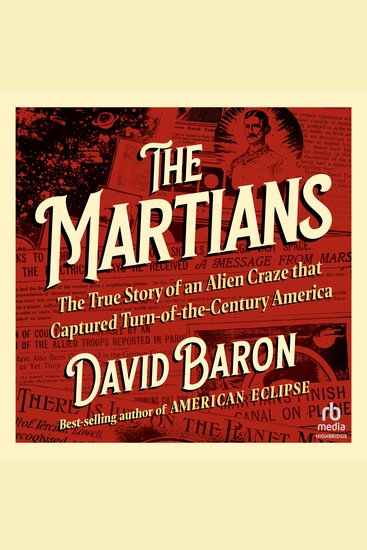
    In the early 1900s, many Americans actually believed we had discovered intelligent life on Mars, as bestselling science writer David Baron chronicles in The Martians, his truly bizarre tale of a nation swept up in Mars mania. 


    At the center of Baron's historical drama is Percival Lowell, the Boston Brahmin and Harvard scion, who observed "canals" etched into the surface of Mars. Lowell devised a grand theory that the red planet was home to a utopian society that had built gargantuan ditches to funnel precious meltwater from the polar icecaps to desert farms and oasis cities. The public fell in love with the ambitious amateur astronomer who shared his findings in speeches and wildly popular books. 


    While at first people treated the Martians whimsically―Martians headlining Broadway shows, biologists speculating whether they were winged or gilled―the discussion quickly became serious. Inventor Nikola Tesla announced he had received radio signals from Mars; Alexander Graham Bell agreed there was "no escape from the conviction" that intelligent beings inhabited the planet. Martian excitement reached its zenith when Lowell financed an expedition to photograph Mars from Chile's Atacama Desert, resulting in what newspapers hailed as proof of the Martian canals' existence.
    Show book