Join us on a literary world trip!
Add this book to bookshelf
Grey
Write a new comment Default profile 50px
Grey
Subscribe to read the full book or read the first pages for free!
All characters reduced
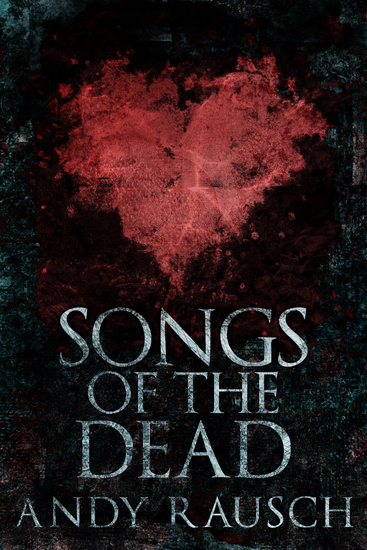
Songs Of The Dead - cover

We are sorry! The publisher (or author) gave us the instruction to take down this book from our catalog. But please don't worry, you still have more than 500,000 other books you can enjoy!

Songs Of The Dead

Andy Rausch

Publisher: Next Chapter

  • 0
  • 0
  • 0

Summary

Songs of the Dead is a collection of nineteen short stories with varying themes, ranging from creepy to the supernatural.
 
In "The Dinner Guests," a man finds himself experiencing an unusual hunger.
 
In "She Had a Good Heart," a young heart transplant survivor meets her donor's family for the first time. What could go wrong?
 
In "Dobie's Last Ride," a man finds himself at odds with a seemingly harmless black Lab, who turns out to be a bit less harmless as he first thought.
 
This book contains graphic sex and violence, and is not suitable for readers under the age of 18.
 
"Andy Rausch's tough, hard-hitting prose is married to thought-provoking concepts that make you question your own opinions, your own moral stance, and your own preconceptions of right and wrong." -John A. Russo, author of Night of the Living Dead
 
"The classic horror short story not only lives and breathes. In the imaginative brain of Andy Rausch, it's totally reanimated." - Herschell Gordon Lewis, director of Blood Feast
Available since: 01/06/2022.
Print length: 236 pages.

Other books that might interest you

  • attractive woman in apron smiling holding a spatula - cover

    attractive woman in apron...

    Mike DeFrench

    • 0
    • 0
    • 0
     He didn’t know how or why--it just...happened one day. 
    Jason Cole was working on finding a suitable picture for some newsletter or something. One of ten or twenty specific photos he would find that day. Same old thing he’d done a hundred times before. Looking through stock photos, this time for a cooking ad. 
    Then he found her. In a picture titled “attractive woman in apron smiling holding a spatula.” That was the first time he ever saw her. 
    And that first time was enough. It was her. He knew it. It was like a form a destiny or something. 
    He just...knew. 
    He was going to kill her. 
     
    Show book
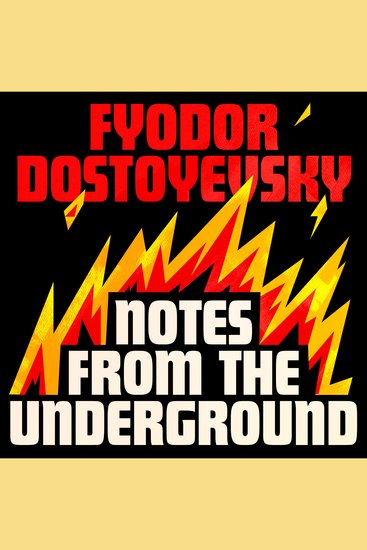
  • Notes From the Underground - cover

    Notes From the Underground

    Fyodor Dostoyevsky

    • 0
    • 0
    • 0
    Notes from the Underground is Dostoevsky's early masterpiece and is one of the first examples of existentialist literature.
    
    Dostoevsky's narrator is the anonymous voice of the masterful novella. Retired and isolated from society, he is bitter, contemptuous, and contemplative as he presents his anecdotes and philosophical outlooks. Presented as an extract from the narrator's memoirs, Notes from the Underground is divided into two parts. Opening with a monologue attacking Western philosophy, Dostoevsky follows this theoretical exploration with the anti-hero's accounts of various destructive and restorative life experiences.
    
    First published in 1864, Notes from the Underground is an analysis of human psychology and demonstrates Dostoevsky's sharp wit and keen understanding of the psyche.
    
    Fyodor Dostoyevsky was a Russian novelist, journalist, and short-story writer who had an immense influence on 20th-century fiction. He is commonly regarded as one of the finest novelists who ever lived, penning classics that include: Crime and Punishment, The Idiot, Demons, and The Brothers Karamazov. His ideas profoundly shaped literary modernism, existentialism, and various schools of psychology, theology, and literary criticism.
    Show book
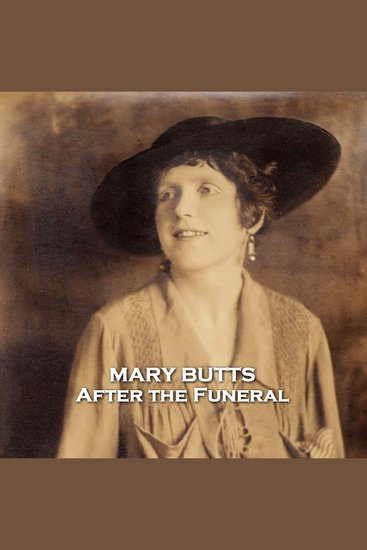
  • After the Funeral - From their pens to your ears genius in every story - cover

    After the Funeral - From their...

    Mary Butts

    • 0
    • 0
    • 0
    Mary Frances Butts was born on 13th December 1890 in Poole, Dorset. 
    Her early years were spent at Salterns, an 18th-century house overlooking Poole Harbour.  Sadly in 1905 her father died, and she was sent for boarding at St Leonard's school for girls in St Andrews. 
    Her mother remarried and, from 1909, Mary studied at Westfield College in London, and here, first became aware of her bisexual feelings.  She was sent down for organising a trip to Epsom races and only completed her degree in 1914 when she graduated from the London School of Economics.  By then Mary had become an admirer of the occultist Aleister Crowley and she was given a co-authorship credit on his ‘Magick (Book 4)’. 
    In 1916, she began the diary which would now detail her future life and be a constant reference point for her observations and her absorbing experiences. 
    During World War I, she was doing social work for the London County Council in Hackney Wick, and involved in a lesbian relationship.  Life changed after meeting the modernist poet, John Rodker and they married in 1918. 
    In 1921 she spent 3 months at Aleister Crowley's Abbey of Thelema in Sicily; she found the practices dreadful and also acquired a drug habit.  Mary now spent time writing in Dorset, including her celebrated book of short stories ‘Speed the Plough’ which saw fully develop her unique Modernist prose style. 
    Europe now beckoned and several years were spent in Paris befriending many artists and writing further extraordinary stories.   
    She was continually sought after by literary magazines and also published several short story collections as books. Although a Modernist writer she worked in other genres but is essentially only known for her short stories.  Mary was deeply committed to nature conservation and wrote several pamphlets attacking the growing pollution of the countryside. 
    In 1927, she divorced and the following year her novel ‘Armed with Madness’ was published.  A further marriage followed in 1930 and time was spent attempting to settle in London and Newcastle before setting up home on the western tip of Cornwall.  By 1934 the marriage had failed. 
    Mary Butts died on 5th March 1937, at the West Cornwall Hospital, Penzance, after an operation for a perforated gastric ulcer. She was 46.
    Show book
  • The Night Ocean - cover

    The Night Ocean

    H.P. Lovecraft, Robert H. Barlow

    • 0
    • 0
    • 0
    A quiet, contemplative tale steeped in atmosphere and artistic beauty. A painter retreats to a seaside cottage in search of rest and inspiration, but soon begins to sense strange presences along the shore and beneath the waves. Are they ghosts, sea ghouls, or beings older than time itself? The answers drift just out of reach, like mist over the ocean. 
    The story focuses on the sensations and intuitions of the main character, imbuing the whole narrative with an evocative taste of elusive dread, quite distinct from overt horror. The Night Ocean has long been part of the Lovecraftian canon, even though a manuscript discovered in the early 2000s, with Lovecraft’s revisions, reveals that only 10% of ‘The Night Ocean’ can be attributed to the writer from Providence. This realization underscores how sensitive and precocious the eighteen-year-old Robert H. Barlow was at the time. 
    It stands as the last existing work of fiction in which Lovecraft participated.
    Show book
  • The Adventure of the Beryl Coronet - cover

    The Adventure of the Beryl Coronet

    Arthur Conan Doyle

    • 0
    • 0
    • 0
    A banker asks Holmes to investigate after a "Beryl Coronet" entrusted to him is damaged at his home. Awakened by noise, he had found his son, Arthur, holding the damaged coronet. What makes Arthur refuse to speak, neither admit his guilt nor explaining himself ?
    Show book
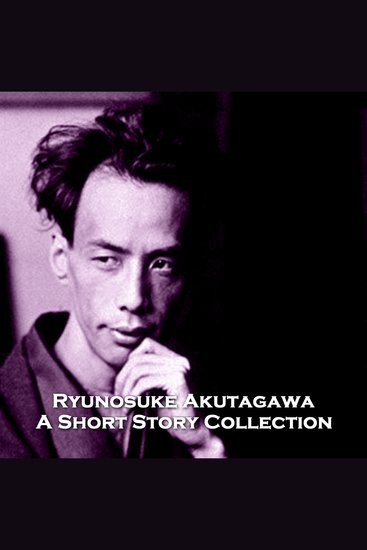
  • Ryūnosuke Akutagawa - A Short Story Collection - Iconic tales from the father of the Japanese short story - cover

    Ryūnosuke Akutagawa - A Short...

    Ryunosuke Akutagawa

    • 0
    • 0
    • 0
    Ryūnosuke Niihara was born in Kyōbashi, Tokyo in Japan on the 1st March 1892.  Sadly, his mother suffered severe mental illness after his birth and so, at only eight months old, he was sent to be raised by his maternal uncle and aunt, from whom he received the Akutagawa family name.  
     
    He was fascinated by classical Chinese literature from his early years and began writing after entering what was then the Tokyo Imperial University in 1913 to study English Literature.   
     
    The following year Akutagawa and his friends revived the literary journal ‘New Currents of Thought’ which published their own works and translations of such icons as W B Yeats and Anatole France. 
     
    Akutagawa published "Rashōmon" in 1915 and whilst it was disliked by his friends everyone else knew better.  As other short stories followed so did his growing literary reputation as the father of the Japanese short story. 
     
    Much of his work reinterpreted former classical works and incidents and this, melded with his strong dislike of naturalism, produced a writer of rare and genuine quality.  His character palette featured strong and domineering women, mainly based on his mother and the aunt who helped raise him. 
     
    In 1921, he spent four months in China as a reporter.  Whilst there his health was compromised by several illnesses and both his physical and mental health spiralled downwards.  He began to suffer from hallucinations and dreaded that he might have inherited his mother’s mental disorders.  
     
    Although he survived one suicide attempt Ryūnosuke Akutagawa died on the 24th July 1927 in Tokyo from an overdose of Veronal, a barbiturate.  He was 35. 
     
    1 - Ryunosuke Akutagawa - A Short Story Collection - An Introduction 
    2 - In A Grove by Ryunosuke Akutagawa 
    3 - Rashomon by Ryunosuke Akutagawa 
    4 - The Cold by Ryunosuke Akutagawa 
    5 - The Mine Cart by Ryunosuke Akutagawa 
    6 - The Socialist by Ryunosuke Akutagawa
    Show book