Rejoignez-nous pour un voyage dans le monde des livres!
Ajouter ce livre à l'électronique
Grey
Ecrivez un nouveau commentaire Default profile 50px
Grey
Abonnez-vous pour lire le livre complet ou lisez les premières pages gratuitement!
All characters reduced
Iceland Travel Guide 2023 - The ultimate travel guide with things to see and do Explore Reykjavik Tiki Blue Lagoon and more Where to Stay Eat and Drink Plan well and spend less - cover

Iceland Travel Guide 2023 - The ultimate travel guide with things to see and do Explore Reykjavik Tiki Blue Lagoon and more Where to Stay Eat and Drink Plan well and spend less

Andrew Newman

Maison d'édition: Alan Baker

  • 0
  • 0
  • 0

Synopsis

Embark on an epic adventure to the land of fire and ice with the ultimate Iceland Travel Guide 2023. From the stunning glaciers to the towering waterfalls, this comprehensive guidebook will lead you on a journey of a lifetime through the rugged and breathtaking landscapes of Iceland.
 
Discover the best local secrets, hidden gems, and must-see sights with detailed maps, insider tips, and stunning photography. Whether you're seeking adrenaline-pumping activities like ice climbing and glacier hiking or looking to soak in the country's natural hot springs and world-renowned spas, this guide has everything you need to plan your perfect trip.
 
Take a road trip around the Ring Road, hike through the rugged terrain of the Highlands, or explore the vibrant and bustling capital city of Reykjavik. With detailed itineraries and recommendations for every type of traveler, from solo adventurers to families and couples, this guidebook is your ultimate companion to Iceland in 2023.
 
Don't miss out on the chance to witness the awe-inspiring Northern Lights, taste the delicious local cuisine, and immerse yourself in the unique and fascinating culture of this Nordic island nation. Whether you're a seasoned traveler or a first-time visitor, the Iceland Travel Guide 2023 is the ultimate resource for planning an unforgettable journey to one of the most captivating destinations on the planet.

Here is a preview of what you'll learn:
 

	Guide to Iceland
	Getting to Iceland
	Budget and accommodation
	12 best attractions
	12 best natural attractions
	Guide to food
	And basically everything you need to know when you are visiting iceland

Download your copy today! Check Table of content for more details. And enjoy your trip, Hero!!
 
Take action today, and download this book now, price goes up in next week.
Disponible depuis: 28/03/2023.

D'autres livres qui pourraient vous intéresser

  • The Pharaohs of Ancient Egypt - Rulers of the Nile - cover

    The Pharaohs of Ancient Egypt -...

    Omar Khalil

    • 0
    • 0
    • 0
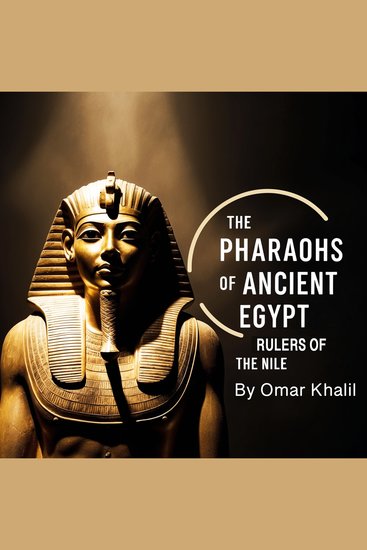
    The emergence of the pharaohs marked the beginning of one of history’s most iconic civilizations. In the early dynastic period around 3100 BCE, Egypt underwent a dramatic transformation as Upper and Lower Egypt were unified under a single ruler, traditionally identified as King Narmer or Menes. This unification not only established centralized rule but also laid the foundations for a dynastic tradition that would endure for millennia. The pharaoh, whose name means “great house,” came to be seen as both a political leader and a divine figure, embodying the will of the gods on earth. 
    As Egypt’s first kings consolidated power, they created administrative systems to manage resources, command armies, and oversee large-scale construction projects. Hierarchical governance emerged, with officials and scribes acting under the pharaoh’s authority to maintain order throughout the land. This new system allowed the pharaohs to centralize authority, control the fertile Nile Valley, and ensure the production and redistribution of grain and other goods, which became critical for sustaining a growing population and for asserting royal dominance. 
    Religious ideology played a key role in solidifying the power of the pharaohs. They were often depicted as the sons of deities, particularly associated with the sun god Ra and the sky god Horus. Temples were erected not just as places of worship, but as instruments of royal propaganda, showcasing the divine legitimacy of the ruler. Rituals, festivals, and monumental inscriptions reinforced the pharaoh’s sacred status and his role in maintaining ma’at, the cosmic order of balance and harmony.
    Voir livre
  • Mixtec Empire - Skilled Artisans and the Masters of Codices in Mesoamerica - cover

    Mixtec Empire - Skilled Artisans...

    Rolf Hedger

    • 0
    • 0
    • 0
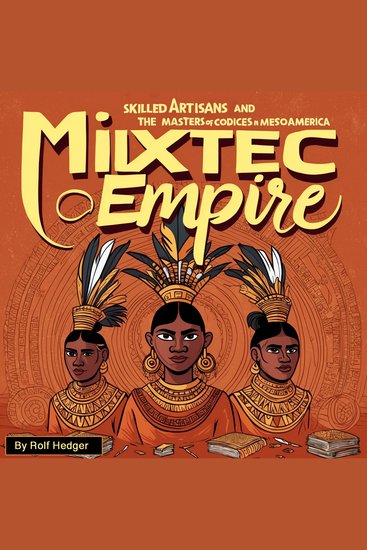
    The Mixtec civilization, known as the Ñuu Savi or "People of the Rain," emerged in the rugged mountains and fertile valleys of what is now Oaxaca, Mexico. Their origins date back to the Preclassic period, around 1500 BCE, when small agricultural communities began to flourish in the Mixteca Alta, Mixteca Baja, and Mixteca de la Costa regions. These early settlements were shaped by the challenging geography, with steep hills and limited arable land requiring innovative farming techniques. Over centuries, the Mixtec people developed sophisticated agricultural systems, including terracing and irrigation, which allowed them to sustain growing populations and establish permanent communities. 
    Mythology played a central role in Mixtec identity, reinforcing their connection to the land and legitimizing the rule of their elite class. The Mixtec creation story, recorded in their intricate codices, tells of divine ancestors emerging from a sacred place known as Apoala, a cave associated with the origins of humanity. These ancestors, believed to be both human and divine, established the first Mixtec lineages, which would later claim authority over the various city-states. This mythology was not just a story but a political tool that reinforced the power of Mixtec rulers, linking them directly to the gods and the forces of nature. 
    The early Mixtec communities were organized into small chiefdoms, each ruled by a hereditary elite. These leaders controlled land, resources, and religious ceremonies, ensuring stability and continuity within their societies. Over time, as populations expanded and rivalries grew, these chiefdoms evolved into larger political entities, forming the foundation for the powerful Mixtec city-states that would dominate the region in later centuries.
    Voir livre
  • Travels with a Donkey in the Cevennes - cover

    Travels with a Donkey in the...

    Robert Louis Stevenson

    • 0
    • 0
    • 0
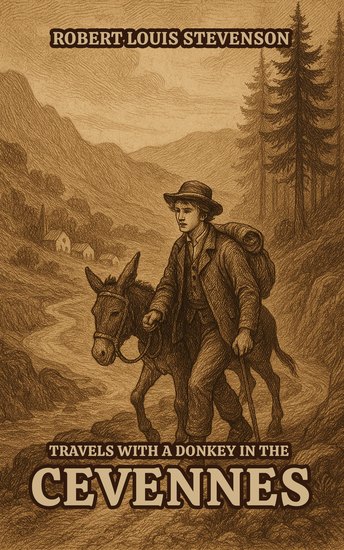
    First published in 1879, Travels with a Donkey in the Cévennes is a charming and deeply personal travel memoir that captures Robert Louis Stevenson's early literary voice and his enduring love of adventure, nature, and quiet reflection.
    
    In this delightful account, Stevenson sets out on a solitary walking tour through the rugged Cévennes mountains of south-central France, accompanied only by his stubborn yet endearing donkey, Modestine. What begins as a simple journey on foot soon becomes an intimate exploration of the landscape, the people he meets along the way, and his own inner thoughts.
    
    Through winding mountain paths, remote villages, and open countryside, Stevenson records his observations with warmth, humor, and poetic sensitivity. He describes nights spent camping under the stars, encounters with local farmers and innkeepers, and the small challenges of travel—weather, fatigue, and Modestine's famously independent spirit. Each episode offers insight into the pleasures of slow travel and the joy of experiencing the world at a human pace.
    
    Beyond its surface charm, the book is also a thoughtful meditation on solitude, freedom, and the restorative power of nature. Stevenson reflects on history, religion, and human character, blending personal anecdote with philosophical insight. His prose brings the Cévennes vividly to life, turning a modest walking tour into a timeless celebration of curiosity and independence.
    
    Travels with a Donkey in the Cévennes remains a beloved classic of travel literature, inspiring generations of readers, hikers, and writers. Gentle, humorous, and quietly profound, it is a perfect read for those who love travel memoirs, outdoor adventures, and the enduring pleasure of discovering both the world and oneself along the way.
    Voir livre
  • The Big Book of Illinois Ghost Stories - cover

    The Big Book of Illinois Ghost...

    Troy Taylor

    • 0
    • 0
    • 0
    More than 100 stories from haunted locales across the Prairie State. Compiled by Illinois's best-known author on the paranormal, Troy Taylor.
    Voir livre
  • Inca Mythology - Sacred Legends of the Inca Empire - cover

    Inca Mythology - Sacred Legends...

    Matthew Fillard

    • 0
    • 0
    • 0
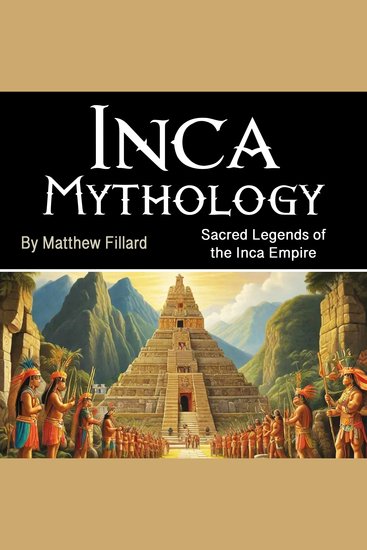
    The Inca Empire, at its zenith, spanned much of South America, including present-day Peru, Ecuador, Bolivia, and parts of Chile and Argentina. Known for its advanced architecture, agricultural systems, and administrative organization, the Inca civilization also possessed a deeply spiritual culture. Central to their worldview was a rich tapestry of mythology that explained the creation of the world, the origins of humankind, and the roles of the gods in the natural and spiritual realms. These sacred legends were not just stories; they were the very foundation upon which the Inca society was built, shaping everything from daily rituals to the governance of the empire.  
    Inca mythology was intricately connected to the natural world, with gods and deities representing various elements of the environment, such as the sun, the moon, the earth, and water. The Inca people believed that these deities were not distant, abstract beings but rather active forces that influenced their lives. The most important gods were thought to have a direct relationship with the ruler, often considered to be divine or descended from these gods. As such, the Inca king, or Sapa Inca, was revered as the son of the sun god, Inti, and his authority was considered sacred.  
    The role of mythology extended beyond the divine and into the social and political spheres. It was through myth that the Inca legitimized their rule, connected their empire to the divine order, and reinforced the unity of their vast territories. Legends of the first rulers, such as Manco Capac and Mama Ocllo, were tied to creation myths that depicted them as divine figures sent to bring civilization to the world. These stories were used to justify Inca conquests and to explain the hierarchical structure of society. 
    Voir livre
  • Travel Diaries of an Atypical Businessman - UNFILTERED - cover

    Travel Diaries of an Atypical...

    Malcolm Teasdale

    • 0
    • 0
    • 0
    Traveling the World in search of new business seems like a glamorous occupation, but in reality, it presents many complications, misunderstandings, misinterpretations, and plenty of opportunities to make mistakes. 
    Malcolm Teasdale is one of those fortunate people, who has been given the chance to experience the many wonderful places and people on our planet. Chilling out on vacation in a far off distant exotic place is a dream come true for most of us. However, when the primary reason for travel is to conduct business, the challenges caused by the competitiveness of the industry is compounded by the necessity to understand foreign cultures and mannerisms. 
    Flight delays, overcrowded planes, unscheduled hotel stays, language barriers, unfamiliar food, strange people with confusing dialects, bizarre social behavior, are just some of the day to day happenings when traveling overseas. 
    With an attitude of “I'll go to any place at least once”, Malcolm goes in search of business opportunities in emerging markets around the Globe, some of which bring success and others that can be classified as a waste of time and energy. 
    The negatives are completely outweighed by the positives. A bad experience becomes a learning experience. Bad luck relates to something that didn't go as planned, but as much as a good experience, it is forever etched in memory. 
    Malcolm decided to document everything, so that when he retires, and is too feeble to play golf, scuba dive, or even walk along a beach, he will have something to read, and maybe laugh at his past escapades. 
     
    Voir livre