Join us on a literary world trip!
Add this book to bookshelf
Grey
Write a new comment Default profile 50px
Grey
Subscribe to read the full book or read the first pages for free!
All characters reduced
The Story of Joan of Arc - cover

The Story of Joan of Arc

Andrew Lang

Publisher: Cervantes Digital

  • 0
  • 0
  • 0

Summary

"The Story of Joan of Arc" by Andrew Lang takes readers on an enthralling journey through the tumultuous pages of history, vividly portraying the awe-inspiring life of the Maid of Orleans. In this meticulously researched narrative, Lang masterfully weaves together the strands of Joan's extraordinary tale, emphasizing her pivotal role in the defense of France during the harrowing years of the Hundred Years' War.

As the English sought to tighten their grip on French territory, Joan emerged as a beacon of hope and an unlikely champion for her countrymen. Lang skillfully chronicles Joan's meteoric rise from a humble peasant girl to a fearless military leader, driven by her unwavering belief in divine visions that compelled her to rally the French forces and turn the tide of the war.

With a keen eye for historical detail, Lang captures the intensity of the battles, the political machinations, and the religious fervor that defined Joan's era. The narrative crescendos as Joan, guided by her unshakable faith and conviction, not only plays a pivotal role in securing France's liberation but also earns a place as a messenger of God in the hearts of her compatriots.

However, as the winds of war subside, the story takes a poignant turn, delving into Joan's tragic fate. Lang sensitively portrays her struggles against political intrigue, her capture by the English, and the heart-wrenching trial that ultimately led to her martyrdom. Through Joan's unyielding courage and sacrifice, readers witness the profound intersection of faith, duty, and destiny.

"The Story of Joan of Arc" is not merely a historical account but a deeply moving exploration of one woman's indomitable spirit in the face of adversity. As Joan ascends to the status of a saint in the Catholic Church, Lang's narrative leaves an indelible mark, inviting readers to reflect on the enduring legacy of this remarkable heroine who, against all odds, left an indelible imprint on the pages of both history and faith.
Available since: 01/16/2024.

Other books that might interest you

  • Tokugawa Shogunate - Peace Isolation and the Preservation of Samurai Culture - cover

    Tokugawa Shogunate - Peace...

    Rolf Hedger

    • 0
    • 0
    • 0
    The Tokugawa Shogunate, also known as the Edo period (1603–1868), was a time of unprecedented peace and stability in Japan, following centuries of war and political fragmentation. This era began with the victory of Tokugawa Ieyasu at the Battle of Sekigahara in 1600, a decisive conflict that allowed him to consolidate power over the warring daimyo. Three years later, in 1603, he was granted the title of shogun by the emperor, officially marking the beginning of Tokugawa rule. 
    Ieyasu’s triumph at Sekigahara was not merely a military success but also a demonstration of his strategic brilliance and political foresight. By carefully forging alliances and exploiting rivalries among the daimyo, he ensured that his Tokugawa clan would emerge as the dominant force in Japan. Once in power, Ieyasu took immediate steps to secure his family’s hold over the nation. He redistributed land among the daimyo, rewarding loyal vassals and weakening potential threats. This reorganization of landholdings laid the foundation for the centralized feudal system that would define the Tokugawa era. 
    Although Ieyasu formally retired in 1605, passing the title of shogun to his son Tokugawa Hidetada, he continued to wield significant influence from behind the scenes. His retirement was a strategic move designed to solidify the legitimacy of hereditary succession, ensuring that the Tokugawa family would maintain control for generations. This transition of power set a precedent for stability, preventing the kind of succession disputes that had plagued previous shogunates.
    Show book
  • Liberty and Crisis: The History of the American Revolution during 1776 - cover

    Liberty and Crisis: The History...

    Editors Charles River

    • 0
    • 0
    • 0
    Although the Declaration of Independence is now considered one of the most important political documents in history, the men that drafted it did not initially favor such a move at the start of the American Revolution. Despite its assumption of governing duties, the Second Continental Congress never intended, at least initially, to become the governing body of a new nation. Instead, it merely hoped to transform the relationship between Britain and her colonies to allow for greater self-government on their side of the Atlantic. Separation between the two was rarely favored, and this initial sentiment coalesced into the Olive Branch Petition, which sought a reasonable motion of reconciliation between George III and the colonies. It was drafted by one of Virginia’s delegates, Thomas Jefferson.  
    	By April of 1776, talk had heated up concerning independence, and a consensus was quickly growing in Congress. However, one problem was in the way: did the Congress have the authority to declare independence for its 13 member colonies? The process was riddled with confusion across the colonies. independence. And of course, simply declaring independence did not mean the British were going to grant it, and during that time, things were looking quite dire for the cause. After the siege of Boston forced the British to evacuate that city in March 1776, Continental Army commander George Washington suspected that the British would move by sea to New York City, the next logical target in an attempt to end a colonial insurrection. He thus rushed his army south to defend the city. 
    In the summer of 1776, the British conducted the largest amphibious expedition in North America’s history at the time, landing over 20,000 troops on Long Island. They easily captured Staten Island, which Washington was incapable of defending without a proper navy. Washington’s army attempted to fight, but Washington was badly outmaneuvered, and his army was nearly cut off from escape. 
    Show book
  • Infinite Mind - An exploration of psi and the capabilities of the human mind - cover

    Infinite Mind - An exploration...

    Kim Forrester

    • 0
    • 0
    • 0
    Relive incredible stories. Explore incredible possibilities. During the Boer War, a young journalist’s hunch leads him to safety in the midst of treacherous enemy territory. In urban USA, a young nurse obeys a voice in her head and narrowly escapes death. In downtown New York, a Wall Street magnate earns a fortune on a single, intuitive impulse. Throughout history, and around the world, millions of people have experienced psi (psychic) insights and inspiration. For centuries, these experiences have been ignored, ridiculed or, worse, condemned people to torture or death. But in recent decades scientists have begun to validate – and unravel – these elusive experiences. Infinite Mind is an award-winning collection of true psi experiences and the modern research that is beginning to explain these phenomena. It is written for the intelligent explorer; those who seek a greater truth about psi experience and how it fits into our modern world.
    Show book
  • Awkwardness - A Theory - cover

    Awkwardness - A Theory

    Alexandra Plakias

    • 0
    • 0
    • 0
    Awkwardness offers an account of the psychology and philosophical significance of a ubiquitous social phenomenon. Our aversion to awkwardness mirrors our desire for inclusion. This explains its power to influence and silence us: as social creatures, we don't want to mark ourselves as outsiders. As a result, our fear of awkwardness inhibits critique and conversation, acting as an impediment to moral and social progress. Even the act of describing people as "awkward" exacerbates existing inequities, by consigning them to a social status that gives them less access to the social goods (knowledge, confidence, social esteem) needed to navigate potentially awkward situations. 


    Awkwardness discusses how we ostracize and punish those who fail to fit into existing social categories; how we all depend on—and are limited by—social scripts and norms for guidance; and how these norms frequently let us down when we need them. But awkwardness has a positive side: it can highlight opportunities for moral and social improvement, by revealing areas where our social norms and scripts fail to meet our needs or have yet to catch up with changing social and moral realities. Awkwardness ultimately underscores the conflict between our moral motivations and our desire for social approval and conformity.
    Show book
  • Unbelievably Simple Wealth Hacks: Boost Your Income Today! - cover

    Unbelievably Simple Wealth...

    Orson Ryker

    • 0
    • 0
    • 0
    Unbelievably Simple Wealth Hacks: Boost Your Income Today! 
    ⭐⭐ Simplified Guide & Explanations Included ⭐⭐ 
    Are you ready to elevate your financial game and successfully implement effective wealth-building strategies in 2025? 
    Are you in search of an all-inclusive guide that covers everything you need to know to unlock financial freedom with simple, actionable wealth strategies? 
    Look no further! 
    This audiobook serves as your ultimate resource for enhancing your knowledge, applying practical techniques, and engaging in interactive exercises that will set you on the path to financial success. 
    Key features of this comprehensive guide include: 
    - In-depth insights into wealth creation strategies for 2025 
    - Comprehensive explanations of concepts that will help you gain financial freedom 
    - Proven techniques for effective preparation and implementation 
    Our audiobook stands out by offering thorough coverage that is crucial for your financial success. Concepts are explored in detail, ensuring a solid grasp of each idea. 
    Please note that this audiobook is an independent resource and is not affiliated with any official financial institution. 
    Crafted with a clear and accessible structure, our guide makes it easy to transition between topics. Say goodbye to convoluted jargon and welcome straightforward, precise, and technically reliable content. 
    So, why wait? Click the BUY NOW button, secure your copy, and embark on your journey to financial success in 2025! 
    Unbelievably Simple Wealth Hacks: Boost Your Income Today!
    Show book
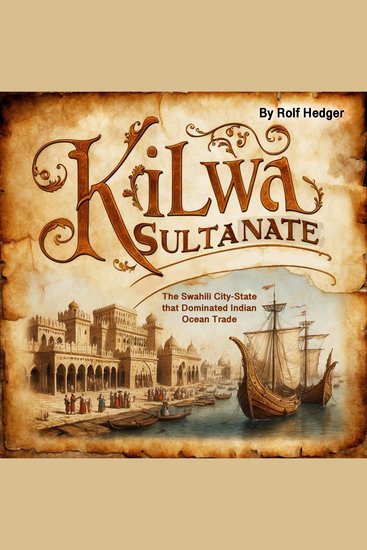
  • Kilwa Sultanate - The Swahili City-State That Dominated Indian Ocean Trade - cover

    Kilwa Sultanate - The Swahili...

    Rolf Hedger

    • 0
    • 0
    • 0
    Nestled along the shores of the Indian Ocean, Kilwa emerged as a vibrant cultural and trading hub whose origins can be traced back to the mingling of diverse peoples and traditions. Long before it became known as a dominant maritime power, the region was home to indigenous communities that thrived on the rich resources of the East African coast. The arrival of Arab and Persian traders introduced new goods, ideas, and cultural practices, setting in motion a transformation that would lay the groundwork for Kilwa’s future prominence. 
    The early formation of Kilwa was not the result of a single event but rather a gradual process influenced by its strategic geographic location. Its natural harbor provided an ideal meeting point for merchants navigating the vast Indian Ocean, linking the interior of Africa with the markets of Arabia, India, and even China. This advantageous position allowed Kilwa to evolve from a modest trading outpost into a bustling urban center, where economic opportunities attracted people from far and wide. 
    As the trade networks expanded, so did the cultural exchange. The integration of Islamic traditions played a significant role in shaping the identity of the nascent city-state. Early Muslim traders and scholars brought with them not only the teachings of Islam but also innovative approaches to governance, education, and law. This infusion of new perspectives blended with existing local customs, creating a unique cultural synthesis that became characteristic of the Swahili coast. Over time, the fusion of indigenous and foreign elements fostered a distinct identity, one that celebrated both its African roots and the influences of distant lands.
    Show book