Join us on a literary world trip!
Add this book to bookshelf
Grey
Write a new comment Default profile 50px
Grey
Subscribe to read the full book or read the first pages for free!
All characters reduced
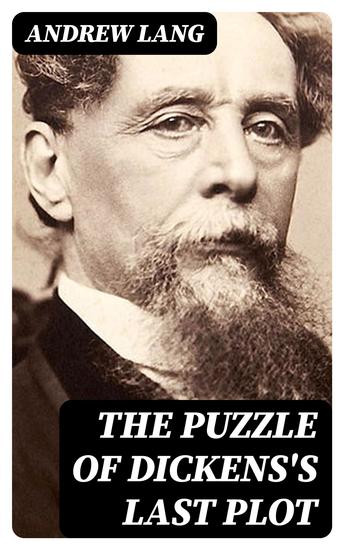
The Puzzle of Dickens's Last Plot - cover

The Puzzle of Dickens's Last Plot

Andrew Lang

Publisher: DigiCat

  • 0
  • 0
  • 0

Summary

In "The Puzzle of Dickens's Last Plot," Andrew Lang delves into the enigmatic final work of one of England's most celebrated novelists, Charles Dickens. Combining a narrative analysis with keen literary criticism, Lang meticulously examines the intricacies and unresolved threads woven throughout Dickens's unfinished manuscript, "The Mystery of Edwin Drood." Utilizing a rich tapestry of literary allusions and historical context, Lang situates Dickens within the Victorian literary landscape, illuminating the author's stylistic evolution while probing the cultural and psychological factors that may have influenced his final narrative choices. Andrew Lang, a renowned Scottish poet, novelist, and literary critic, possessed an intimate familiarity with Dickens's oeuvre, which undoubtedly informed his exploration of this complex text. His diverse academic background—spanning folklore, anthropology, and literary history—equipped him with the analytical tools necessary for deciphering the layers of meaning in Dickens's work. Lang's admiration for Dickens's artistry also renders this exploration a deeply personal endeavor, reflecting a scholar profoundly engaged with literary legacy and modern interpretation. For scholars, students, and avid readers alike, Lang's "The Puzzle of Dickens's Last Plot" serves as an indispensable guide to understanding the unresolved mysteries of Dickens's narrative ambitions. This thoughtful and analytical exploration provides fresh insights into the author's creative mind, making it a compelling read for anyone interested in Victorian literature or the intricacies of literary endings.
Available since: 09/05/2022.
Print length: 39 pages.
Other books that might interest you

  • The Message in the Teachings of Kamma Rebirth & Saṃsāra - A Gateway to Deeper Understanding - cover

    The Message in the Teachings of...

    Ashin Ottama

    • 0
    • 0
    • 0
    This essay is a revised and expanded version of a talk I gave to three American psychologists in March 1995 at the Mahāsi Training School in Yangon. To this written form of the talk I have added the sections on “solidity” and “objective matter” as well as some concluding reflections. 
    The essay is intended to preserve the direct and informal tone of a listener-oriented, interactive talk; hence doctrinal expressions are reduced to the minimum. Passages representing my own thoughts are clearly introduced as such. My explanations are supported by many parallels, comparisons, and analogies from daily life as well as from science. My predilection for examples from physics should not give the impression that I am an expert in the subject. I assure the reader I am not. 
    As the background to this essay I rely on the original Teaching of the Buddha and on the Theravāda Abhidhamma. I sometimes distinguish between the “original Teaching of the Buddha” and the Theravāda. When I make this distinction, by the former I mean the teachings found in the main Nikāyas of the Pali Canon, which were part of the general Buddhist heritage; by the latter I refer to the specific mode of interpretation found in the Pali Abhidhamma and the Commentaries. For people not yet familiar with the Buddha’s doctrine I have included some basic information from the ancient texts. The doctrinal points, however, are not my main concern here. 
    My object in discussing the three themes of the ancient Teaching is to invite all sincerely, seriously investigating people to question deeply the so-called “given realities” of our lives and to reflect thoroughly on the nature and predicament of our existence. 
    -Ashin Ottama
    Show book
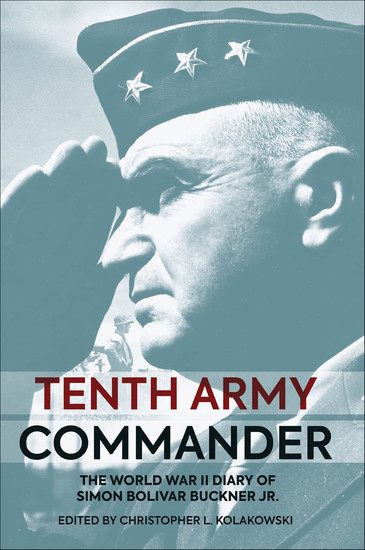
  • Tenth Army Commander - The World War II Diary of Simon Bolivar Buckner Jr - cover

    Tenth Army Commander - The World...

    Christopher L. Kolakowski

    • 0
    • 0
    • 0
    Finalist, 2024 Army Historical Foundation Distinguished Writing Awards"...an outstanding volume, which is extremely beneficial for two key reasons. First, it adds significantly to one’s understanding of the Battle of Okinawa and to the operations of the Alaska Defense Command. Second, it provides readers with an opportunity to become acquainted or to greatly improve their understanding of Buckner." — Military Review
    
    Simon Bolivar Buckner Jr. was a major figure of the Pacific War, both for his command in Alaska and in his key role heading Tenth Army during the Battle of Okinawa in the spring of 1945. Buckner was the senior U.S. officer killed by enemy fire in World War II when Japanese artillery cut him down on June 18, 1945, one month shy of his 59th birthday. The shelling ended a remarkable life – son of a Confederate Lieutenant General and governor of Kentucky, the “Child of the Democracy” in the 1896 Presidential election campaign, educated at West Point, myriad service as a student and instructor at various Army posts and schools from 1917 to 1936, command in Alaska from 1940 to 1944, and ultimately of Tenth Army from 1944 to his death.
    
    General Buckner kept a diary covering the period from January 1, 1944 to June 17, 1945, which has never been fully published until now. Buckner made notes every day, often in great detail; his chief of staff thought Buckner wanted to write a memoir after the war, but the papers were scattered after his death. In addition to the Okinawa material, Buckner’s diaries discuss his departure from Alaska and service in Hawaii as Tenth Army commander. Topics include his daily life in wartime Hawaii, troop training, comments on war events, gossip, notes on his travels to Guam and the Philippines, and his role in the Smith vs Smith controversy after the Battle of Saipan. The diary text is augmented by letters from General Buckner to his wife Adele during March to June 1945, and a letter from the Tenth Army Chief of Staff to Adele detailing Buckner's death.
    
    Tenth Army Commander is an important account from a too-long-silent voice among Pacific War leaders.
    Show book
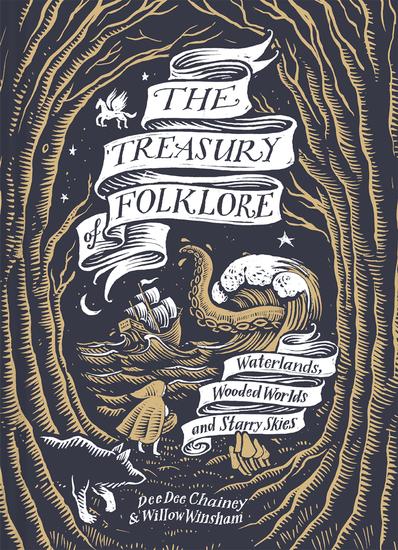
  • The Treasury of Folklore - Waterlands Wooded Worlds and Starry Skies - cover

    The Treasury of Folklore -...

    Willow Winsham, Dee Dee Chainey

    • 0
    • 0
    • 0
    An entertaining and enchanting collection of myths, tales and traditions surrounding the seas, skies and woodlands that make up our natural world. 
    Enter an enchanting world where the mysteries of the seas, skies and woodlands come alive through shared myths, legends and folk tales. From the majestic creatures that dance beneath the waves to the celestial beings that populate the heavens and the spirits that reside within the forests, The Treasury of Folklore offers a portal into the lore of the natural world that has been whispered through the generations.
    In this mesmerising compendium you'll embark on a journey through the rich tapestry of myths, legends, and tales that have been woven into the very fabric of our natural world. You'll tread mysterious waters and be beguiled by the sirens and sea monsters, soar to new heights with winged Pegasus and uncover stories of celestial beings, from thunder gods to constellations that have guided traveller's across the heavens. And as you wander through the ancient woods, you'll encounter spirits between the branches, insatiable cannibalistic children hewn from logs and the promise of the big, bad wolf.  
    The stories included here traverse countries and continents and have been carefully selected to highlight how humans are linked through time and place, with shared dreams, fears and ways of rationalising the unknown. Immerse yourself in the tapestry of tales collected in these pages, each story a testament to the enduring enchantment of the seas, skies, and woodlands.
    Show book
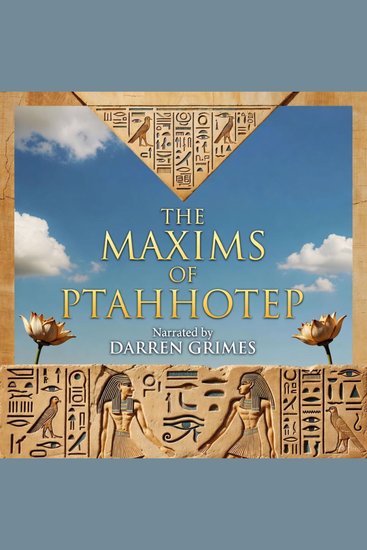
  • The Maxims of Ptahhotep - The Oldest Book in the World - cover

    The Maxims of Ptahhotep - The...

    Ptahhotep

    • 0
    • 0
    • 0
    Dive into the timeless wisdom of ancient Egypt with The Maxims of Ptahhotep: The Oldest Book in the World, now available as an captivating audiobook narrated by Darren Grimes. 
    Dating back to around 2400 BCE, this profound collection of teachings from the vizier Ptahhotep offers invaluable insights on ethics, leadership, family life, and personal conduct. Often hailed as one of the earliest surviving works of literature, these maxims provide a blueprint for living a balanced, honorable life—lessons that resonate just as powerfully today as they did in the courts of the pharaohs. From advice on humility and justice to the art of wise speech and self-control, Ptahhotep’s words guide listeners toward moral excellence and practical success. 
    Brought to life by the dynamic narration of Darren Grimes, whose clear, engaging voice captures the depth and gravity of this ancient text, this audiobook makes these eternal principles accessible and inspiring for modern audiences. Whether you’re a history enthusiast, a seeker of self-improvement, or simply curious about the roots of human wisdom, Grimes’ delivery ensures every maxim lands with impact, blending reverence for the past with relevance for the present. 
    Perfect for commutes, workouts, or quiet reflection, this audiobook is more than a listen—it’s a journey through history that could transform your perspective on life. Unlock the secrets of the ancients today. Available now—don’t miss your chance to own a piece of eternity!
    Show book
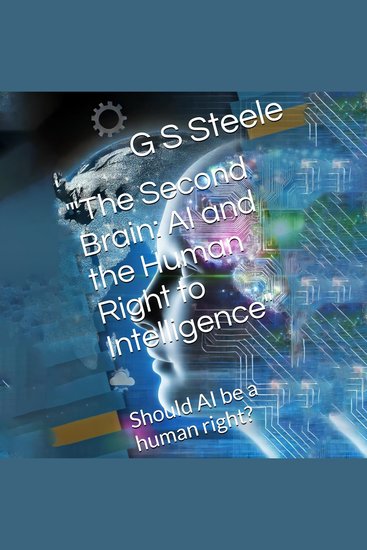
  • The Second Brain - AI and the Human Right to Intelligence - cover

    The Second Brain - AI and the...

    G S Steele

    • 0
    • 0
    • 0
    Discover The Second Brain: AI and the Human Right to Intelligence, a groundbreaking audiobook by author and narrator G S Steele, published by Audiobook Publishing Services. In a world where artificial intelligence (AI) is transforming every aspect of life, this thought-provoking work argues that access to AI should be a fundamental human right. 
    As the divide between those who control advanced technology and those left behind grows, The Second Brain exposes the risks of AI monopolization, warning against its potential to become a tool of exploitation rather than empowerment. Drawing on historical examples of technological inequality, G S Steele reveals how societies have long been divided by access to knowledge and power. 
    With AI now acting as a "second brain," capable of enhancing human intelligence beyond natural limits, the stakes have never been higher. This visionary audiobook explores how equitable access to AI could liberate individuals, offering a pathway to global intelligence that transcends economic, social, and political barriers. 
    Narrated by the author himself, G S Steele, this compelling audiobook challenges listeners to envision a future where intelligence is not a privilege of the elite but a right for all. The Second Brain is a call to action, providing a bold framework for harnessing AI's potential to uplift humanity and create a just, equitable future. 
    Perfect for fans of AI ethics, technology, and social justice, this audiobook is a must-listen for anyone passionate about the future of intelligence and equality. Published by Audiobook Publishing Services, The Second Brain is your guide to understanding why the right to intelligence is essential for a fair and empowered world.
    Show book
  • Selected Short Stories - cover

    Selected Short Stories

    Rabindranath Tagore

    • 0
    • 0
    • 0
    'The poem I had planned to write on the banks of the Ganga was never written. But it materialized in my life.'Rabindranath Tagore (1861–1941), Nobel laureate and polymath, is one of the most eminent Indian writers of world literature. This volume presents new English translations of twenty of his short stories. Taking in a wide variety of registers (comedies, tragedies, the mundane and the fantastical), the selection showcases Tagore as one of the earliest practitioners of the short story genre in the Bengali language, influenced by both Indian and Western traditions. In particular, Tagore added a unique style of his own to Western conventions of the short story form, allowing him to present the everyday in literary vignettes, seamlessly weaving in the rhythms of daily life, rural landscapes. The stories also offer social critiques—of colonialism, dowry, and immolation of widows. A highly sensitive and thoughtful observer of life, Tagore's vision transcends regional boundaries, embracing a universal humanity that resonates across cultures, while never denouncing a deep indigeneity.These authoritative translations by a team of expert scholars are accompanied by Sumit Chakrabarti's introduction, reflecting on the literary and historical implications of Tagore's stories.
    Show book