¡Acompáñanos a viajar por el mundo de los libros!
Añadir este libro a la estantería
Grey
Escribe un nuevo comentario Default profile 50px
Grey
Suscríbete para leer el libro completo o lee las primeras páginas gratis.
All characters reduced
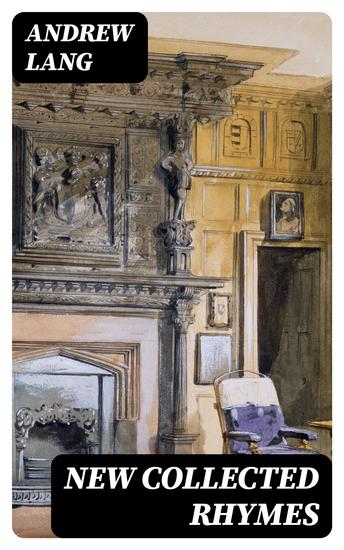
New Collected Rhymes - cover

New Collected Rhymes

Andrew Lang

Editorial: DigiCat

  • 0
  • 0
  • 0

Sinopsis

In 'New Collected Rhymes,' Andrew Lang presents a rich tapestry of poetry that celebrates the nuances of human experience through whimsical yet poignant verse. Lang's literary style is marked by his unique blend of storytelling and lyricism, drawing readers into his imaginative world where folklore, nature, and the exploration of moral themes intertwine. This collection reflects the late Victorian literary context, responding to both an appreciation for traditional forms and a burgeoning interest in childhood and its enchantments, revealing Lang's deft handling of meter and rhyme that engages a wide spectrum of readers. Andrew Lang, a Scottish poet, novelist, and critic, was not only an influential figure in the literary circles of his time but also a pioneering folklorist. His extensive background in collecting and retelling folk tales, as evidenced in his earlier works such as 'The Blue Fairy Book,' deeply informs the whimsical tone and childlike wonder found in this poetry collection. Lang's passion for storytelling and cultural mythology led him to craft rhymes that resonate with readers' inherent curiosity and sense of nostalgia. For those seeking a delightful, reflective read, 'New Collected Rhymes' is a must. Lang's enchanting verses are perfect for both children and adults alike, inviting them to immerse themselves in a world where fantasy and reality blur. This collection not only entertains but also prompts readers to ponder deeper truths about life and imagination.
Disponible desde: 16/09/2022.
Longitud de impresión: 23 páginas.

Otros libros que te pueden interesar

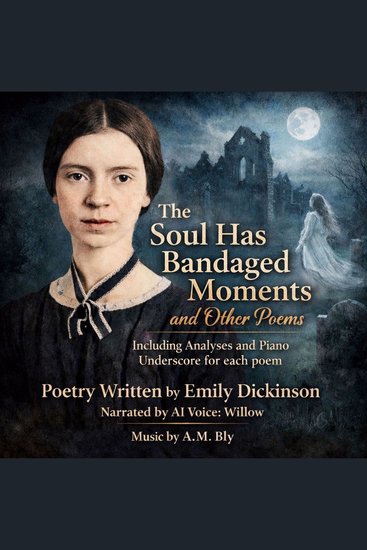
  • The Soul Has Bandaged Moments and Other Poems - Including Analyses and Piano Underscore for each poem - cover

    The Soul Has Bandaged Moments...

    Emily Dickinson, A. M. Bly

    • 0
    • 0
    • 0
    This audiobook is narrated by an AI Voice.   
    Emily Dickinson’s poetry is intimate, daring, and unmistakably her own—compressed lyrics that probe death, faith, love, terror, and transcendence with startling precision. Her idiosyncratic punctuation, slant rhymes, and abrupt turns of thought mirror the mind’s hidden corridors, where revelation and dread often meet. In "The Soul Has Bandaged Moments and Other Poems," Dickinson’s voice emerges as both austere and electric, capable of piercing insight within the smallest compass of words. 
    This audiobook pairs each poem with a clear, thoughtful analysis that illuminates Dickinson’s imagery, symbolism, and psychological depth without diminishing her mystery. Every poem is further accompanied by an original piano underscore, specially composed to reflect its emotional temperature—whether hushed, ominous, ecstatic, or serene—deepening the listener’s immersion. Narrated by AI voice Willow, with music by A. M. Bly, this collection offers a richly layered encounter with one of literature’s most haunting and enduring minds.
    Ver libro
  • A Midsummer Night’s Dream - cover

    A Midsummer Night’s Dream

    Pierre Arthur Laure, William...

    • 0
    • 0
    • 0
    Shakespeare’s most imaginative and merry play is set in an enchanted wood amidst fairies and sprites. 
    When Oberon, King of the Fairies, uses his magic upon four runaway lovers in a midsummer wood outside Athens, chaos ensues. Who really loves whom? Meanwhile, a band of well-meaning but bungling local actors have their rehearsal sabotaged by the mischievous Puck, who bewitches their leader, Bottom, and Titania, the Fairy Queen. The result is a lively and anarchic comedy which can only be resolved by an elaborate disentangling of spells. 
    Hermia is played by Amanda Root, Oberon by David Harewood, and Bottom by Roy Hudd. 
    ACT IScene 1. In Athens, preparations are underway for the wedding of Duke Theseus to Hippolyta, Queen of the Amazons. An angry father, Egeus, comes to the ducal palace and accuses Lysander of bewitching his daughter Hermia, even though she is already betrothed to Demetrius. Hermia confesses her love for Lysander, and Theseus tells her that according to the law, she must either die or enter a nunnery if she refuses to marry the man chosen by her father. He gives her until the new moon to decide. Hermia and Lysander decide to run away; they agree to meet the following night in a wood outside the city. They tell Helena, Hermia’s childhood friend, of their plan; she, however, is in love with Demetrius, who has rejected her for Hermia, and she hopes to regain his favor by telling him of the lovers’ intentions.Scene 2. A group of Athenian workmen, “rude mechanicals,” are preparing an entertainment to be performed at the Duke’s wedding. They have chosen “the most lamentable comedy and most cruel death of Pyramus and Thisby.” 
    ACT IIScene 1. In a wood near Athens, Oberon and Titania, King and Queen of the Fairies, argue over a changeling boy. Titania has adopted him, but Oberon wants him for an attendant. When Titania refuses to give in, Oberon summons his servant, the mischievous sprite Puck. Oberon instructs him to find an enchanted flower, the juice of which, when laid on a sleeper’s eyelid, will cause him or her to fall in love with the first creature seen on awaking. He thus hopes to force her into giving him the boy. While Puck is gone, Oberon observes Helena and Demetrius, who have followed Hermia and Lysander into the wood. Demetrius rejects Helena peremptorily. When Puck returns with the flower, Oberon tells him to lay some of its juice on the eye of the “disdainful youth,” whom he will know by his Athenian clothes.Scene 2. Oberon squeezes the juice of the magic flower on Titania’s eyelids. Lysander and Helena fall asleep nearby. Puck mistakes Lysander for Demetrius and drops the juice on his eye. Demetrius and Helena arrive and Lysander awakes, promptly falling in love with Helena. Hermia wakes to find herself left alone. 
    ACT IIIScene 1. Near where Titania lies sleeping, the “rude mechanicals” rehearse their play. Puck, who has been watching the rehearsal with amusement, places the head of an ass on Bottom’s shoulders. His fellow actors run away terrified. Titania awakes and falls instantly in love with Bottom.Scene 2. Oberon is delighted at what has happened to Titania, but angered when he realizes that the sprite has mistaken Lysander for Demetrius. To right the error, he lays juice on the lids of the sleeping Demetrius. When the young man wakes, the first person he sees is Helena, and he duly falls in love with her. Helena, now beloved of both the youths, is certain they are teasing her cruelly. Hermia is distraught when Lysander rejects her and accuses Helena of stealing her beloved. Lysander and Demetrius leave to settle their quarrel over Helena by combat, but Oberon orders Puck to send them to sleep. Puck then lays an antidote to the love juice on Lysander’s eyelids. Meanwhile Helena and Hermia fall asleep beside their lovers. 
    ACT IVScene 1. Oberon sees Titania sleeping beside Bottom. He pities her and, on undoing the spell, they are reconciled. Puck removes Bottom’s
    Ver libro

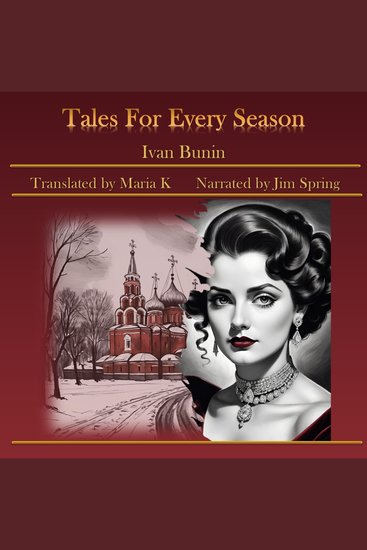
  • Tales For Every Season - cover

    Tales For Every Season

    Ivan Bunin

    • 0
    • 0
    • 0
    One of the last true classics of Russian literature and 1933 Nobel Laureate for literature, Ivan Bunin brings you a series of relationship tales as diverse as the seasons and far more engrossing.
    Ver libro
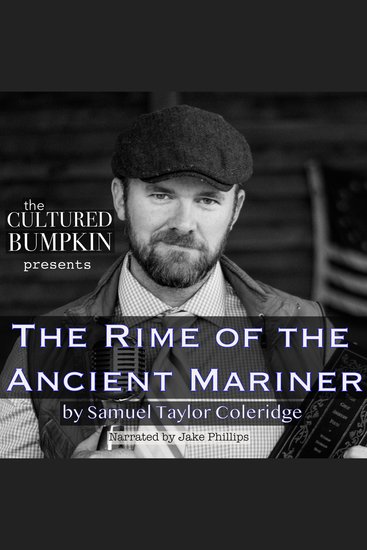
  • Cultured Bumpkin Presents The: The Rime of the Ancient Mariner - cover

    Cultured Bumpkin Presents The:...

    Samuel Taylor Coleridge

    • 0
    • 0
    • 0
    Samuel Taylor Coleridge's classic poem about a sailor who shot an albatross and the woe that followed him afterwards. Narrated by professional voice actor Jake Phillips, host of The Cultured Bumpkin literature podcast.
    Ver libro
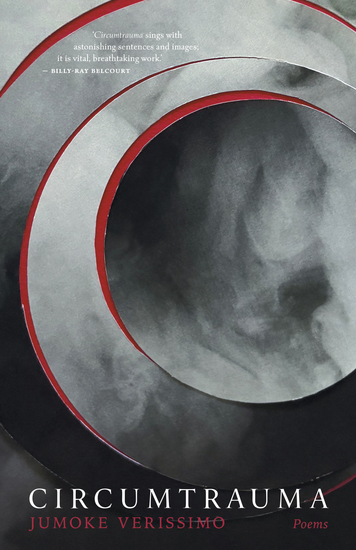
  • Circumtrauma - cover

    Circumtrauma

    Jumoke Verissimo

    • 0
    • 0
    • 0
    From one of Africa’s most acclaimed writers, poetry about the Nigeria-Biafra war 
    Everyone carries a piece of the war within them: what happens when we neglect to consider each individual’s story? The Nigeria-Biafra War (1967–70) erupted when the southeastern region of Nigeria, known as Biafra, declared independence. It was a major conflict; however, this war remains largely absent from official historical accounts. While victims have passed down their experiences across generations, the official silence and the dominance of narratives from larger ethnic groups have perpetuated stereotypes that diminish the suffering of some victims. The differing narratives that are absent from history books continue to divide and polarize social groups within Nigeria and beyond.  
    Weaving together cut-ups and redactions from personal narratives, historical accounts, and reflections on the enduring impact of war, and with raw language and searing imagery, the poems in Circumtrauma grapple with loss, resilience, and the search for healing amidst the fractures of deep-seated divisions.  
    This collection compels readers to confront the profound and often-silenced complexities of history, the intergenerational weight of inherited suffering, and the urgent need to acknowledge the diverse experiences and perspectives of all those impacted by the tragedy of war. It is a testament to the enduring power of art to bear witness to the human condition, offering a path towards healing and reconciliation.
    Ver libro
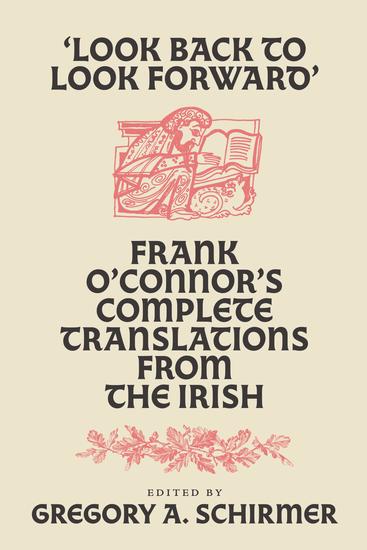
  • 'Look Back to Look Forward' - Frank O'Connor's Complete Translations from the Irish - cover

    'Look Back to Look Forward' -...

    Frank O'Connor

    • 0
    • 0
    • 0
    While Frank O'Connor was known primarily as one of Ireland's finest short-story writers, he was also an accomplished translator. In the long line of Irish writers given to translating poems in Irish into poems written in English – a tradition stretching back at least as far as Jonathan Swift – he stands out above all the rest.
    Between the mid-1920s and the mid-1960s, O'Connor published 121 translations that give voice to the full range of this centuries-old tradition. Collected here in full for the first time, O'Connor's work shows an uncanny aptitude for carrying over into English verse many of the riches to be found in the originals – the ancient voice of the Hag of Beare lamenting her decline into old age; the voices of the early monks describing the Irish landscape, Irish weather, their religious faith, and, in at least one instance, their cat; the voice of Hugh O'Rourke's wife torn between loyalty to her husband and a rising desire for her seducer. All these voices haunted O'Connor throughout his career, whatever else he was doing. The collection includes the Irish-language sources for all 121 translations along with literal translations, enabling the reader to see what O'Connor started from.
    O'Connor's translations sprang from a compulsive desire to breathe life into Ireland's past, to 'look back to look forward,' as he once put it; for him the Irish-language tradition was not for scholars and archives alone, but formed a living body of work vitally relevant to an Ireland that seemed puzzlingly indifferent to it.
    Thanks to O'Connor's profound love of his country's language and its rich, literary subsoil – 'a literature of which no Irishman need feel ashamed', he once said – these voices from Ireland's past can still be heard. Strikingly modern in tone, they conjoin flesh and spirit, the sacred and the secular, in a way that speaks to humankind.
    Ver libro