Join us on a literary world trip!
Add this book to bookshelf
Grey
Write a new comment Default profile 50px
Grey
Subscribe to read the full book or read the first pages for free!
All characters reduced
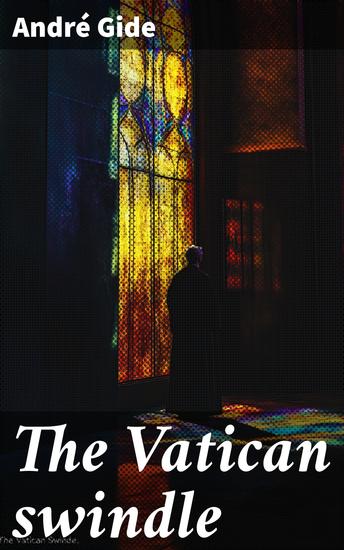
The Vatican swindle - Les caves du Vatican - cover

The Vatican swindle - Les caves du Vatican

André Gide

Publisher: Good Press

  • 0
  • 0
  • 0

Summary

In "The Vatican Swindle," André Gide presents a provocative exploration of faith, morality, and the intricate webs of deception surrounding religious institutions. Written in a modernist style that blends keen psychological insight with biting satire, the narrative delves into the intersection of spiritual aspiration and worldly corruption. Gide constructs a vivid tableau filled with complex characters, each a reflection of the era's existential dilemmas and questions regarding authenticity in belief. The book's literary context situates it within debates of early 20th-century Europe, where disillusionment with traditional values was rampant, and the moral landscape was undergoing radical transformations. André Gide, a seminal figure in French literature and a Nobel laureate, often challenged societal norms through his works. His exploration of themes like hypocrisy and the search for truth can be traced to his own experiences with the Church and his tumultuous grapple with personal faith. Gide's own life — marked by a rejection of conventions and an embrace of individuality — greatly informs the sharp critique embedded in this narrative, showcasing his unflinching engagement with pressing moral questions. "The Vatican Swindle" is essential reading for anyone interested in the complexities of faith and the human condition. Gide's incisive prose and unrelenting examination of institutional power invite readers to reflect critically on their beliefs and the often fraught relationship between spirituality and authenticity. This work remains relevant today, offering timeless insights into the nature of belief and the ambiguities of human motives.
Available since: 03/02/2025.
Print length: 110 pages.

Other books that might interest you

  • The Blank Wall - cover

    The Blank Wall

    Elizabeth Sanxay Holding

    • 0
    • 0
    • 0
    Not Yet Available
    Show book
  • Little Gretchen and the Wooden Shoe - cover

    Little Gretchen and the Wooden Shoe

    Elizabeth Harrison

    • 0
    • 0
    • 0
    "Little Gretchen and the Wooden Shoe", written by Elizabeth Harrison in the late 1880's, is about a young girl and her old grandmother and a special Christmas gift that surprises them both.
    Little Gretchen and the Wood Shoe by Elizabeth Harrisonis a classic holiday tale of hope and love.
    Show book
  • Ivan Turgenev - A Short Story Collection - The hugely popular author that helped connect Russian literature to the West - cover

    Ivan Turgenev - A Short Story...

    Ivan Turgenev

    • 0
    • 0
    • 0
    Ivan Sergeyevich Turgenev was born on 9th November 1818 in Oryol, Russia to parents from the nobility.  He and his two brothers were raised by their mother on the family estate.  Surrounded by foreign governesses he became fluent in French, German, and English.  Their father spent little time with them and this undoubtedly had an effect on him and his brothers.  When he was nine the family moved to Moscow to give their children a proper education. 
     
    Turgenev studied for a year at the University of Moscow and then at the University of St Petersburg to study Classics, Russian literature, and philology.  During that time his father died from kidney stone disease.  In 1838 Turgenev studied philosophy and history at the University of Berlin for 3 years before returning to St Petersburg for his master's. 
     
    He started his career with the Russian Civil Service and it was only in 1852 that he made his name with his short story collection, ‘A Sportsman's Sketches’, based on his observations of peasant life and nature. 
     
    That same year he wrote an obituary for Nikolai Gogol: "Gogol is dead!... What Russian heart is not shaken by those three words?... He is gone, that man whom we now have the right (the bitter right, given to us by death) to call great."  The St Petersburg censor banned publication but the Moscow censor allowed it.  He was dismissed but Turgenev was held responsible and imprisoned for a month, and then exiled to his country estate. 
     
    Along with many other Russian intellectuals Turgenev left and settled in Paris in 1854.  During this period he wrote his finest stories and four novels. 
     
    Alexander II ascended the Russian throne in 1855, and the political climate became more relaxed, Turgenev returned home. 
     
    ‘Fathers and Sons’, Turgenev's most famous and enduring novel, appeared in 1862. Its leading character is considered the first ‘Bolshevik’ in Russian literature. But the hostile reaction prompted Turgenev's decision to again leave Russia. 
     
    His health declined during his later years. In January 1883, an aggressive malignant tumor was removed but by then it had metastasized in his upper spinal cord, causing him intense pain in his final few months of life. 
     
    Ivan Turgenev died on 3rd September 1883 of a spinal abscess, a complication of the metastatic liposarcoma, in his house near Paris.  He was buried in St Petersburg. 
     
    1 - Ivan Turgenev - A Short Story Collection - An Introduction 
    2 - A Strange Story by Ivan Turgenev 
    3 - Mumu by Ivan Turgenev 
    4 - The District Doctor by Ivan Turgenev 
    5 - The Jew by Ivan Turgenev 
    6 - The Rendezvous by Ivan Turgenev 
     -  
     -  
     -  
    1 - Leonid Andreyev - A Short Story Collection - An Introduction 
    2 - Silence by Leonid Nikolaevich Andreyev 
    3 - Lazarus by Leonid Andreyev 
    4 - The City by Leonid Andreyev 
    5 - The Friend by Leonoid Andreyev 
    6 - The Lie by Leonid Andreyev 
    7 - The Marseillaise by Leonid Andreyev
    Show book
  • The Tragedy Of Macbeth - cover

    The Tragedy Of Macbeth

    William Shakespeare

    • 0
    • 0
    • 0
    “By the pricking of my thumbs, something wicked this way comes.”“More is thy due than more than all can pay.”"What’s done cannot be undone."The Tragedy of Macbeth is a play by William Shakespeare. It is thought to have been first performed in 1606. It dramatizes the damaging physical and psychological effects of political ambition on those who seek power. Of all the plays that Shakespeare wrote during the reign of James I, Macbeth most clearly reflects his relationship with King James, patron of Shakespeare's acting company. It was first published in the Folio of 1623, possibly from a prompt book, and is Shakespeare's shortest tragedy.A brave Scottish general named Macbeth receives a prophecy from a trio of witches that one day he will become King of Scotland. Consumed by ambition and spurred to action by his wife, Macbeth murders King Duncan and takes the Scottish throne for himself. He is then wracked with guilt and paranoia. Forced to commit more and more murders to protect himself from enmity and suspicion, he soon becomes a tyrannical ruler. The bloodbath and consequent civil war swiftly take Macbeth and Lady Macbeth into the realms of madness and death.Shakespeare's source for the story is the account of Macbeth, King of Scotland, Macduff, and Duncan in Holinshed's Chronicles (1587), a history of England, Scotland, and Ireland familiar to Shakespeare and his contemporaries, although the events in the play differ extensively from the history of the real Macbeth. The events of the tragedy are usually associated with the execution of Henry Garnet for complicity in the Gunpowder Plot of 1605.In the backstage world of theatre, some believe that the play is cursed, and will not mention its title aloud, referring to it instead as "The Scottish Play". The play has attracted some of the most renowned actors to the roles of Macbeth and Lady Macbeth, and has been adapted to film, television, opera, novels, comics, and other media.
    Show book
  • Sun and Moon - cover

    Sun and Moon

    Katherine Mansfield

    • 0
    • 0
    • 0
    "Sun and Moon" is a 1920 short story by Katherine Mansfield. It was first published in the Athenaeum on 1 October 1920, and later reprinted in Bliss and Other Stories.
    The children, Sun and Moon, are hanging around the house while a party is being prepared. They play games, then are sent off to bed. The party wakes them up; their parents find them out of their beds and instead of scolding them, they let them go downstairs for a bite - but Sun starts sobbing because Moon has eaten the nut from the centerpiece (the moment of ruined perfection, a recurring theme in Mansfield's work), and they are sent off to bed again.
    Show book
  • Shakespeare for Every Night of the Year - cover

    Shakespeare for Every Night of...

    Colin Salter

    • 0
    • 0
    • 0
    Immerse yourself in the sublime words of the Bard with this sumptuous anthology of Shakespeare, with one entry for every night of the year.
    Chosen especially by a Shakespeare fanatic to reflect the changing seasons and daily events, the entries in this glorious book include:
    Romeo and Juliet on Valentine's Day.
    A Midsummer Night's Dream in Midsummer.
    The witches of Macbeth around their cauldron on Halloween.
    Also featured is one of Shakespeare's only two mentions of football for the anniversary of the first FA cup final. 
    Beautifully illustrated with favourite scenes from Shakespeare's best-loved plays, this magnificent volume is a fun introduction to the well-known work and lesser known plays and poetry and is designed to be accessible to both adults and curious children.
    Keep this book by your bedside and luxuriate in the rich language of the greatest writer the world has ever known, for entertainment, relaxation and timeless wisdom every night of the year.
    Show book