Join us on a literary world trip!
Add this book to bookshelf
Grey
Write a new comment Default profile 50px
Grey
Subscribe to read the full book or read the first pages for free!
All characters reduced
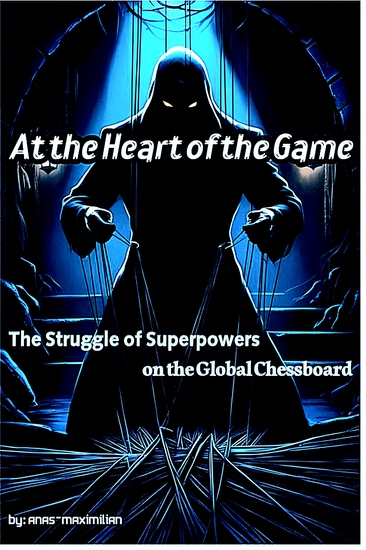
At the Heart of the Game - The Struggle of Superpowers on the Global Chessboard - cover

At the Heart of the Game - The Struggle of Superpowers on the Global Chessboard

Anas Maximilian

Publisher: Publishdrive

  • 0
  • 0
  • 0

Summary

At the Heart of the Game: The Great Power Struggle on the Global Chessboard
 
"Behind every global decision... there’s a hidden game moving the pieces!"
 
In a world dominated by superpowers, nothing happens by chance. At the Heart of the Game goes beyond the headlines, diving into the unseen corridors of power where the U.S., Russia, and China engage in an unrelenting battle for dominance. But this struggle isn’t confined to these three giants—Europe, the Middle East, and rising powers are also entangled in the web of global influence.
 
From military confrontations to economic warfare, from backroom diplomacy to intelligence operations, this book uncovers the real battles shaping the modern world. Through sharp analysis and strategic insights, it reveals how nations manipulate events to serve their agendas.
 
"The greatest battles aren’t fought on battlefields but in boardrooms, financial markets, and secret negotiations."
 
What drives the endless clashes between these global powers? Are we on the brink of a third world war? What role do regional players like Europe and the Middle East have in this grand game? And who truly holds the reins of power—politicians, corporations, or unseen forces operating in the shadows?
 
"Power is never given; it is taken, negotiated, and strategically positioned."
 
This book doesn’t just expose hidden strategies—it takes you on a journey into the future, exploring potential scenarios that could reshape the world as we know it. Will the U.S. succeed in breaking the Russian-Chinese alliance? Can Europe withstand the coming shifts in the global balance of power? Will the Middle East become the next epicenter of global conflict?
 
More than just a geopolitical analysis, this is a deep dive into the minds of the world’s top strategists—where every move is calculated, and every decision carries consequences. If you want to understand the forces shaping our future, this is your ultimate guide to the global chessboard.
 
⬇️ Read now and uncover the hidden truths.
Available since: 03/24/2025.
Print length: 30 pages.

Other books that might interest you

  • The Lady in the Front - The Inspiring Story of Rosa Parks - cover

    The Lady in the Front - The...

    B.B. Owl

    • 0
    • 0
    • 0
    Join us on a journey through the life of Rosa Parks, the woman who changed history with a single act of courage. From her childhood in Alabama to her role as a leader in the civil rights movement, Rosa Parks' story is one of determination, resilience, and a deep commitment to justice. Along the way, you'll learn about the segregation laws of the time, the Montgomery Bus Boycott, and the impact of the civil rights movement on the world we live in today. With engaging storytelling and interactive elements, this audiobook is a must-listen for any young learner interested in history, social justice, and making a difference in the world.
    Show book
  • A Rare Recording of Ezra Pound - cover

    A Rare Recording of Ezra Pound

    Ezra Pound

    • 0
    • 0
    • 0
    Ezra Weston Loomis Pound (October 30, 1885 - November 1, 1972), born in what is now Hailey, Idaho, was a major American figure in the early modernist poetry movement, and a fascist collaborator in Italy during World War II. Angered by the carnage of World War I, Pound blamed the war on finance capitalism, which he called "usury". He moved to Italy in 1924, and through the 1930s and 1940s promoted an economic theory known as social credit, wrote for publications owned by the British fascist Sir Oswald Mosley, embraced Benito Mussolini's fascism, and expressed support for Adolf Hitler. During World War II and the Holocaust in Italy, he made hundreds of paid radio broadcasts for the Italian government attacking the United States, Franklin D. Roosevelt and, above all, Jews. He was arrested in 1945 by American forces in Italy on charges of treason, spending months in a U.S. military camp in Pisa--including three weeks in an outdoor steel cage. Deemed unfit to stand trial, he was incarcerated in St. Elizabeth's psychiatric hospital in Washington, D.C., for over 12 years. After a campaign by his fellow writers, he was released from St. Elizabeth's in 1958 and lived in Italy until his death in 1972.
    Show book
  • Janissaries The: The History and Legacy of the Ottoman Empire’s Elite Infantry Units - cover

    Janissaries The: The History and...

    Editors Charles River

    • 0
    • 0
    • 0
    Among those who were responsible for the projection of Ottoman power, few deserve as much credit as the Janissaries. Established by Murad I, the Janissaries became an elite infantry force that was loyal only to the sultan. Their mission was to protect only him and in battles they were always the closest to him, forming a human shield. Originally, they consisted of non-Muslim slaves, mainly Christian boys from Byzantium. Jewish boys were not taken as soldiers and Muslims could not, by law, be enslaved. Murad had instituted a tax of one fifth on all the slaves taken in war, and the idea of only taking boys fit for fighting was called Devshirme, or blood tax. The slaves went through a very strict training, first learning to speak Turkish and practicing Ottoman traditions by living with a family chosen by the sultan. The boys also were forcibly converted to Islam, forbidden from wearing a beard and lived under monastic circumstances in celibacy. They were overseen by eunuchs and trained in special schools, enhancing their personal abilities. The main difference between these and other slaves was that they were being paid for their services. This served as a motivator and kept the soldiers loyal. 
    The Janissary corps was the first of its kind and a groundbreaking contributor to the success of Ottoman warfare. At the time of Murad’s reign, they were fewer and less respected than what they would become at a later stage, but they were quite significant for Ottoman victories in the Balkans, and as such, they became notorious in Europe. One of the first major battles in which the Janissaries participated occurred when Murad's successor, Bayazid, managed to inflict a decisive defeat on a European army near Nikopol. In general, the Janissaries were positioned at the front lines of the Ottoman army and were armed with various weapons, including bows and arrows, swords, spears, and shields.
    Show book
  • Revolution and Terror - cover

    Revolution and Terror

    Graeme Gill

    • 0
    • 0
    • 0
    This book is a study of the relationship between revolution and terror. Historically many have claimed that revolution inevitably devolves into terror, best reflected in the way in which after coming to power the revolutionary elite turns on itself, and one section of it uses terrorist means to eliminate another section. Graeme Gill argues that in order to understand the relationship between revolution and terror, it is necessary to distinguish between different types of terror. There are three such types: revolutionary terror, in which the aim is to destroy enemies and thereby consolidate the regime; transformational terror, designed to drive the politico-socio-economic transformation of society that is the purpose of the 'great' revolutions; and inverted terror, which is when terror is turned against part of the elite and regime more broadly. The analysis explains how these different types of terror are related to the revolutionary seizure of power, showing that revolutionary and transformational terror are organically connected to revolution while for inverted terror the connection is mediated through the leader. The argument is prosecuted through detailed analysis of the French, Russian, and Chinese revolutions. The study ends by assessing the contemporary salience of the lessons of the great revolutions in the light of the low level of violence in the negotiated revolutions of 1989.
    Show book
  • Fidel Castro - Quotes Biography Life and Death of a Cuban Leader - cover

    Fidel Castro - Quotes Biography...

    Kelly Mass

    • 0
    • 0
    • 0
    Fidel Castro is probably the most famous person in Cuba. His life was devoted to what he perceived to be a righteous cause for equality and freedom from erroneous ideologies. 
      
    He led people in the revolution, made a difference in the Cold War in decisions that concerned communism, Marxism, and other economic structures, and he finally became the president of Cuba, until he passed away not too long ago. 
      
    Whether you like him or not, it’s definitely interesting to learn more about what made Fidel Castro so influential, and why he remained the president of his home country for so long. Different opinions about him exist. In order to form your own, it would be helpful to base it on the correct information. And you can find that in this book.
    Show book
  • Horseplay - My Time Undercover on the Granville Strip - cover

    Horseplay - My Time Undercover...

    Norm Boucher

    • 0
    • 0
    • 0
    Shortlisted for the Brass Knuckles Award for Best Nonfiction Crime Book at the Crime Writers of Canada Awards of Excellence! 


    In his first true crime memoir, undercover operator Norm Boucher recounts eight months spent infiltrating Vancouver's heroin scene, a world of paranoia, ripoffs, and violence. It is 1983 and the War on Drugs is intensifying. From his barroom observer's seat, Boucher candidly reveals the lives of heroin addicts who spend each day looking for their next hit. Their dangerous subculture, centered around three gritty hotels on the Granville Strip, becomes Boucher's domain as he attempts both to gain acceptance in a world far removed from his own and to keep himself safe. 


    With Horseplay, decorated RCMP officer Norm Boucher takes listeners back to the assignment that shaped his outlook on the role of criminal law enforcement and the human side of addiction as it collides with the ruthlessness of the drug business.
    Show book