Join us on a literary world trip!
Add this book to bookshelf
Grey
Write a new comment Default profile 50px
Grey
Subscribe to read the full book or read the first pages for free!
All characters reduced
Worth Seeing - Viewing Others Through God's Eyes - cover

Worth Seeing - Viewing Others Through God's Eyes

Amy L. Williams

Publisher: IVP

  • 0
  • 0
  • 0

Summary

"We are in the business of seeing others, seeing them the way God sees them, and letting them know they have value."
Amy L. Williams has spent three decades doing ministry with youth in gangs and prisons. While most of society sees high-risk youth through lenses of fear or disregard, she has come to see them through God's eyes as having tremendous value and potential. Worth Seeing provides an up-close look at her work—successes, losses, lessons, and embarrassing mistakes. Through personal narrative, Amy reveals the lives of youth who are often pushed to the margins of society. Her storytelling both challenges perceptions and increases compassion and understanding, not just with youth, but all people. Practical tips equip you to take action to see others the way God sees them.
Available since: 06/25/2024.
Print length: 232 pages.

Other books that might interest you

  • Mithras - The Fictional God Who Was Worshipped by the Romans - cover

    Mithras - The Fictional God Who...

    Kelly Mass

    • 0
    • 0
    • 0
    Mithraism was a Roman mystery religion centered around the god Mithras, also referred to as the Mithraic mysteries. While the Roman version of Mithras was inspired by the Iranian worship of the Zoroastrian god Mithra, the iconography and practices associated with Roman Mithras diverged significantly from their Persian counterparts. The degree of continuity between Persian and Greco-Roman rituals is a subject of ongoing debate among scholars. Mithraism flourished from the 1st to the 4th century CE, particularly among the soldiers of the Roman Empire. 
    The worship of Mithras involved a complex system of initiation, with seven distinct levels that initiates progressed through. This initiation process was accompanied by ceremonial feasts, and those who joined the religion were called *syndexioi*, meaning "joined by the handshake." These initiates gathered in vast numbers within underground shrines known as *mithraea*. The religion likely originated in Rome, but its influence spread throughout the western Roman Empire, reaching as far as Roman Africa, Numidia, and Roman Britain. Mithraism also had a lesser presence in Roman Syria in the east, though it was never as widespread in that region. 
    In the early centuries of the Roman Empire, Mithraism and early Christianity were seen as competing religious systems, with Christians later persecuting Mithraists during the 4th century. Over time, Mithraism was gradually repressed and eventually eradicated from the Roman Empire by the end of the 4th century.
    Show book
  • Famine of Fear - The Holodomor and Soviet Suppression - cover

    Famine of Fear - The Holodomor...

    Sarah Willards

    • 0
    • 0
    • 0
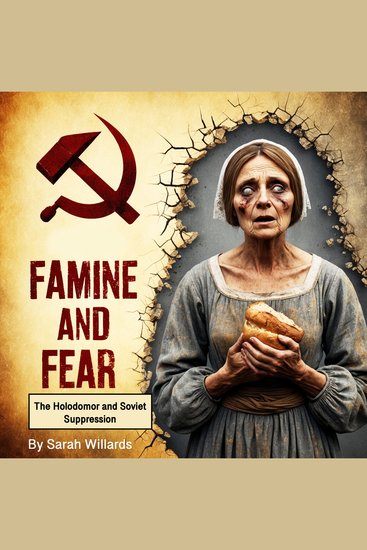
    The Holodomor, one of the most devastating famines in modern history, cannot be understood without first examining the upheaval that gave rise to the Soviet Union. The collapse of the Russian Empire in 1917 marked the beginning of radical change across Eastern Europe, and Ukraine found itself at the center of a volatile political landscape. The chaos of World War I, followed by the Bolshevik Revolution, dismantled centuries-old institutions, replacing them with a new, ideologically driven regime determined to reshape society. 
    Ukraine’s struggle for autonomy intensified during this transitional period. After the fall of the Romanovs, various Ukrainian factions attempted to establish an independent nation, but their efforts were short-lived. The Bolsheviks, intent on consolidating power, saw Ukraine not as a sovereign entity but as a key agricultural region vital to the survival and success of the Soviet state. By the early 1920s, Ukraine was forcibly incorporated into the USSR, and its political identity was subordinated to Moscow's vision of a unified socialist republic. 
    The Bolsheviks, led initially by Vladimir Lenin, promised land to peasants and equality for all workers, which won them temporary support. However, these promises quickly dissolved into policies that centralized power and suppressed regional identities. The Soviet leadership viewed Ukrainian nationalism as a threat to their authority, prompting efforts to erase cultural distinctions and eliminate opposition. Lenin’s New Economic Policy offered some relief and flexibility to rural communities, but this period of relative leniency ended with his death and Joseph Stalin’s rise to power.
    Show book
  • The Big Ride At The Musical Fair - Come Join Our Musical Journey - cover

    The Big Ride At The Musical Fair...

    Julie Kirchhubel

    • 0
    • 0
    • 0
    The Big Ride At The Musical FairIt’s Fair time for the animals today, and they are all ready in their seats and really looking forward to the Big Ride starting. But the Ride can’t begin just yet. What – or who – are they waiting for?
    Show book
  • How is One to Be Aware? - Ojai 1949 - Public Talk 5 - cover

    How is One to Be Aware? - Ojai...

    Jiddu Krishnamurti

    • 0
    • 0
    • 0
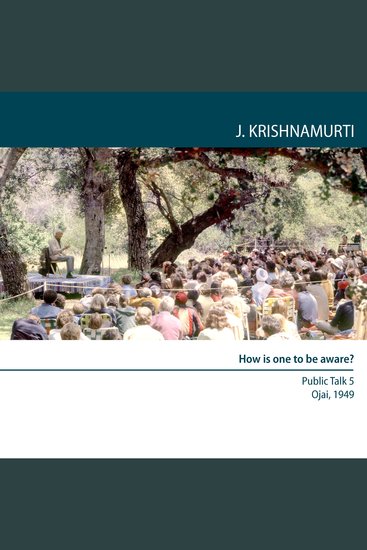
    How is one to be aware? - 30 July 1949 
    • Does the understanding of ourselves demand a specialization? • What is it that we need capacity for? 
    • How is one to be capable of meeting life as a whole? 
    • How are we aware of something? 
    • To understand relationship there must be an awareness which is not aggressively positive. 
    • Q: All religions have insisted on some kind of self-discipline to moderate the instincts of the brute in man. You seem to imply that such disciplines are a hindrance to the realization of God. Who is right in this matter?
    Show book
  • Australian Citizenship Test - 200 Practice Questions to Ensure You Pass First Time - cover

    Australian Citizenship Test -...

    Ray Aldous

    • 0
    • 0
    • 0
    Becoming an Australian citizen is a significant milestone and the Australian Citizenship Test is a crucial step in this journey, assessing your knowledge of Australia’s history, culture, laws, and government. 
    This audiobook has been carefully designed to help you prepare for the Australian Citizenship Test. By working through the practice test questions, you will gain a deeper understanding of the key topics covered in the test. This will not only increase your chances of passing but also help you become a well-informed and active member of the Australian community. 
    Key Features:In-depth practice questionsInsights into Australia’s culture, laws, and historyTips for effective studying and test-taking strategies 
    Whether you’re a new immigrant, a long-time resident, or simply looking to broaden your understanding of Australia, this audiobook equips you with the tools to succeed. Embrace your future as a well-informed and active member of Australian society, ready to contribute to the diverse tapestry that is Australia. 
    Prepare for the Australian Citizenship Test with confidence and clarity—your journey to belonging starts here!
    Show book
  • The Tang Dynasty - Cultural Flourishing and Expansion - cover

    The Tang Dynasty - Cultural...

    Jun Liu

    • 0
    • 0
    • 0
    The Tang Dynasty (618–907 CE) emerged after the collapse of the short-lived Sui Dynasty, which had failed due to internal strife, heavy taxation, and forced labor projects that drained the empire’s resources. The fall of the Sui created a power vacuum, allowing various factions to vie for control. Amid this turmoil, Li Yuan, a former Sui general, led a successful rebellion and established the Tang Dynasty in 618 CE, taking the throne as Emperor Gaozu. His leadership set the foundation for one of China’s most influential and prosperous dynasties. 
    Emperor Gaozu focused on stabilizing the empire by reforming the government, lowering excessive taxes, and restoring order to a nation weakened by years of misrule. However, his reign was relatively short-lived as his son, Li Shimin, proved to be a more capable leader. In 626 CE, Li Shimin forced his father to abdicate and took the throne as Emperor Taizong. His ascension marked the true consolidation of Tang power and the beginning of an era of expansion, reform, and cultural advancement. 
    Under Emperor Taizong’s rule, the Tang Dynasty established a strong centralized government based on Confucian principles. He refined the imperial examination system, ensuring that officials were chosen based on merit rather than birthright. This system allowed for the creation of a competent and efficient bureaucracy, which would become a hallmark of Tang governance. Additionally, Taizong worked to solidify China’s borders by engaging in strategic military campaigns. His army pushed westward into Central Asia, securing control over key trade routes and strengthening the empire’s influence along the Silk Road. These military victories, combined with diplomatic relations with neighboring states, positioned the Tang Dynasty as a dominant force in East Asia.
    Show book