Join us on a literary world trip!
Add this book to bookshelf
Grey
Write a new comment Default profile 50px
Grey
Subscribe to read the full book or read the first pages for free!
All characters reduced
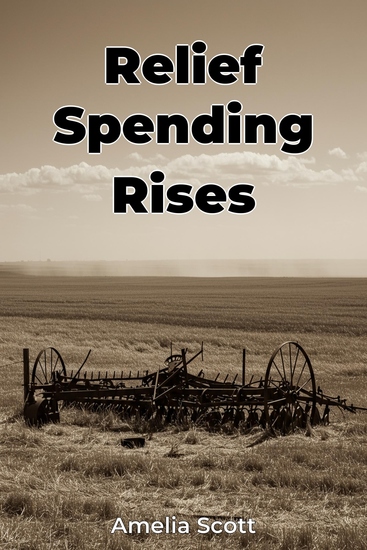
Relief Spending Rises - cover

Relief Spending Rises

Amelia Scott

Translator A AI

Publisher: Publifye

  • 0
  • 0
  • 0

Summary

Relief Spending Rises examines the surge in U.S. federal relief spending during the Great Depression, particularly up to 1935, offering a crucial perspective on the New Deal era and its implications for modern U.S. fiscal policy. The book meticulously analyzes congressional budget records to quantify this unprecedented fiscal expansion.

 
One intriguing insight is how the Hoover administration's initial, limited interventions inadvertently paved the way for Roosevelt's more expansive social safety nets. Understanding this transition illuminates current debates about government intervention in economic crises and the role of federal aid.

 
The book adopts a balanced quantitative and qualitative approach, dissecting specific expenditure categories and tracing the growth of programs like FERA and PWA across chapters. It explores the evolving political ideologies that shaped the New Deal, contrasting conservative laissez-faire approaches with interventionist stances.

 
By analyzing digitized budget records alongside congressional debates and contemporary accounts, Relief Spending Rises argues that the dramatic increase in federal relief spending fundamentally reshaped the relationship between the government and its citizens, establishing a precedent for ongoing federal responsibility in providing a safety net.
Available since: 02/27/2025.
Print length: 58 pages.

Other books that might interest you

  • Food Politics - What Everyone Needs to Know - cover

    Food Politics - What Everyone...

    Robert Paarlberg

    • 0
    • 0
    • 0
    This authoritative primer lays out everything you need to know to understand today's global food landscape. 


    The third edition of Food Politics has been updated to reflect the latest developments and research on today's global food landscape, including the realities of food markets, farm production methods, food manufacturing, and dietary health challenges. New material covers the rise of China in world food markets and global food politics, the unabated and increasing risks to farming from climate change, the impact COVID-19 had on incomes and hunger, the equally shocking impact from the war in Ukraine on food prices and trade, and surprising scientific and technical breakthroughs such as the genome editing of crops (CRISPR) and the marketing of cell-cultured (animal-free) meats. Each chapter has been updated with new data on population growth, hunger and food security, trade conflicts, humanitarian aid, carbon farming, regenerative agriculture, holistic grazing, animal welfare, genetically engineered food, and more. 


    Discussing the politics and policies that continue to shape our contemporary food system, Robert Paarlberg challenges myths and critiques more than a few of today's fashionable beliefs about farming and food. A must-listen for those ready to have their thinking about food politics informed, but also challenged.
    Show book
  • Cromwell's Spy - From the American Colonies to the English Civil War: The Life of George Downing - cover

    Cromwell's Spy - From the...

    Dennis Sewell

    • 0
    • 0
    • 0
    The remarkable story of George Downing—savvy soldier, politician, diplomat, spy, and one of the most scandalous figures of his era.Judged by contemporaries to be a "perfidious rogue," Sir George Downing rose to prominence during the English Civil War as Oliver Cromwell's chief of military intelligence. In the Interregnum he proved himself a double–dealer who bribed and blackmailed his way to diplomatic success across Europe (pioneering the practice of judicial kidnapping and starting two major wars in the process), before spectacularly betraying his friends to horrifically violent deaths by defecting to Charles II's court.Always at the center of events, Downing engaged with the most illustrious men and women of his times: Samuel Pepys was his clerk; John Milton prepared his letters and dispatches; William of Orange was godfather to his son; his next–door neighbor was Queen Elizabeth of Bohemia; and when Downing finally built his street, his surveyor was Sir Christopher Wren.Cromwell's Spy tells George Downing's story for the very first time, following him from the asceticism of Puritan New England, across English battlefields, through courts, chancelleries and parliaments, to the heart of wealth and power in Restoration London.
    Show book
  • The Psychology of Christian Nationalism - Why People Are Drawn In and How to Talk Across the Divide - cover

    The Psychology of Christian...

    Pamela Cooper-White

    • 0
    • 0
    • 0
    How do we overcome polarization in American society? How do we advocate for justice when one side won't listen to the other and cycles of outrage escalate? 


    These questions have been pressing for years, but the emergence of a vocal, virulent Christian nationalism have made it even more urgent that we find a way forward. 


    In three brief, incisive chapters Pamela Cooper-White uncovers the troubling extent of Christian nationalism, explores its deep psychological roots, and discusses ways in which advocates for justice can safely and effectively attempt to talk across the deep divides in our society.
    Show book
  • Pandemic Diaries - The inside story of Britain’s battle against Covid - cover

    Pandemic Diaries - The inside...

    Isabel Oakeshott, Matt Hancock

    • 0
    • 0
    • 0
    Matt Hancock served as Secretary of State for Health and Social Care from 2018 to 2021, leading the UK government’s response to the coronavirus pandemic, the biggest health crisis the country, and the world, has faced for generations. 
     
    This unique book, based on the author’s contemporaneous records of those extraordinary months, candidly recounts first-hand the most important events and decisions as they unfolded throughout this unprecedented global emergency. 
     
    Pandemic Diaries provides the definitive account of Britain’s battle to turn the tide against Covid-19. 
     
    For the first time, Hancock reveals the crucial moments of the struggle to save lives and the race to develop the vaccine. The MP for West Suffolk gives his unique perspective on how the NHS rose to the challenge, recognising the incredible hard work and sacrifice of so many, and offers an honest assessment of the lessons we need to learn for next time – because there will be a next time.
    Show book
  • Sophist - cover

    Sophist

    Plato

    • 0
    • 0
    • 0
    Sophist (Ancient Greek: S?f?st??) discusses being and not-being while drawing a distinction between the philosopher and the sophist. - Summary by Geoffrey Edwards
    Show book
  • Kingdoms of Israel and Judah The: The History and Legacy of the Sovereign Israelite Kingdoms in Antiquity - cover

    Kingdoms of Israel and Judah...

    Editors Charles River

    • 0
    • 0
    • 0
    Before any type of unified political entity named Israel existed, the Jewish groups whose descendants would later form Israel identified themselves by their particular tribe. If asked their nationality or country of origin, they would likely identify themselves as Danites (from the tribe of Dan; Ex. 31:6) or Ephraimites (from the tribe of Ephraim; Judg. 12:5), etc. The main way to differentiate these tribes from other tribes in Canaan was their common worship of the deity YHWH, but in terms of language or other cultural characteristics, it would have been difficult to tell a Canaanite from an Israelite.  
    	Eventually, these separate tribes united together as a type of confederation, allies who made a treaty (covenant) to provide military aid for one another when threatened by an enemy state. But it was only under the charismatic leadership of David that the 12 tribes united into a single political entity. Scholars refer to the period encompassing the reign of David and his son Solomon as the United Monarchy. This period, spanning only two generations, was the only time when all of the tribes were politically united, and after a contentious schism that resulted because the northern tribes felt exploited by the Judean kings, the northern tribes seceded from the “United Kingdom” and reverted back to the ancient northern versus southern division of the tribes. The main difference this time was that the southern kingdom now incorporated the tribe of Benjamin, located at the border between these two new nations, within its political borders. The tribe of Simeon (south of Judah) had already ceased to maintain a separate existence. The new northern kingdom adopted the name Israel, while the southern kingdom took their regional name of Judah.
    Show book