Join us on a literary world trip!
Add this book to bookshelf
Grey
Write a new comment Default profile 50px
Grey
Subscribe to read the full book or read the first pages for free!
All characters reduced
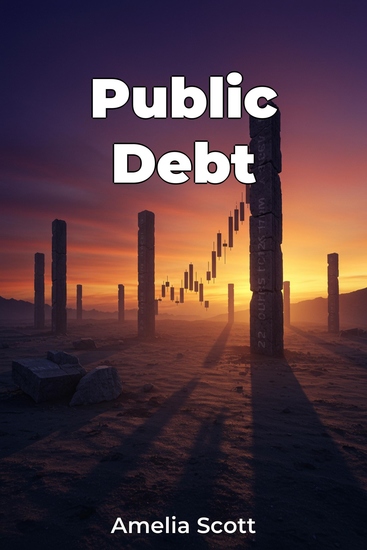
Public Debt - cover

Public Debt

Amelia Scott

Translator A AI

Publisher: Publifye

  • 0
  • 0
  • 0

Summary

Public Debt explores the complex relationship between government borrowing, fiscal policy, and economic stability, a vital topic for understanding today's economic landscape. The book argues that while public debt can stimulate economies, unchecked accumulation poses risks to national sovereignty. It delves into the historical evolution of debt, from ancient public works financing to modern financial instruments, revealing recurring challenges governments face.

 
The book analyzes factors driving national borrowing, such as fiscal deficits and recessions, and their consequences on economic growth and inflation. Case studies from various countries illustrate successful and unsuccessful debt management strategies. For example, political factors like electoral cycles often influence fiscal policy decisions, impacting debt levels.

 
The book emphasizes responsible fiscal management and transparent debt policies. The book's structure provides a comprehensive overview, beginning with fundamental concepts and progressing through causes, consequences, and policy options for managing public debt. It uniquely integrates economics with political science, sociology, and international relations, offering an interdisciplinary approach.

 
By drawing on data from organizations like the IMF and the World Bank, Public Debt arms policymakers, economists, and interested citizens with actionable insights for informed decision-making.
Available since: 02/28/2025.
Print length: 81 pages.
Other books that might interest you

  • Rise of Classical Greece The: The History of the People and Events that Brought Ancient Greece to the Peak of Its Power - cover

    Rise of Classical Greece The:...

    Editors Charles River

    • 0
    • 0
    • 0
    When people think of ancient Greece, images of philosophers such as Plato or Socrates often come to mind, as do great warriors like Pericles and Alexander the Great, but hundreds of years before Athens became a city, a Greek culture flourished and spread its tentacles throughout the western Mediterranean region via trade and warfare. Scholars have termed this pre-Classical Greek culture the Mycenaean culture, which existed from about 2000-1200 B.C., when Greece, along with much of the eastern Mediterranean, was thrust into a centuries long Dark Ages. Before the Mycenaean culture collapsed, it was a vital part of the late Bronze Age Mediterranean system and stood on equal footing with some of the great powers of the region, such as the Egyptians and Hittites. 
    If anything, the collapse of the Mycenaeans was a drawn-out affair, and while the early centuries of the Dark Ages might be seen as a continuation of this trend, even in the worst years, there was a degree of continuity and even some innovations. These changes including the beginnings of the use of iron as an alternative to bronze and some religious practices that continued to be observed. Furthermore, enough remained to form the basis of a recovery in economic, cultural, and artistic aspects of life in the later stage of the era, and in the political sphere, changes necessitated by the collapse in the economic system certainly paved the way for the rise of the polis 
    During the Greek Renaissance of the 8th century the Greek alphabet developed and the earliest surviving Greek literature was composed, while in terms of art and architecture, sculptures and red-figure pottery began. Warfare changed significantly as well when the hoplite became the core infantry. Put simply, none of these developments could have occurred if the basis for these changes had not been secured during what came to be known as the Greek Renaissance.
    Show book
  • Balkans The: A Captivating Guide to the History of the Balkan Peninsula Starting from Classical Antiquity through the Middle Ages to the Modern Period - cover

    Balkans The: A Captivating Guide...

    Captivating History

    • 0
    • 0
    • 0
    Did you know that the Balkans is home to some of the oldest cities in the world? 
    Many have heard the term “Balkans” tossed about but likely don’t know a whole lot about the region. The saga of the Balkans is profound yet incredibly complicated. Bordered by both the Balkan Mountains of southeastern Europe and the Mediterranean Sea, this region holds a strong place in the history of Western civilization and is also a major crossroads of Eastern civilization as well. 
    The Balkans have been the stomping grounds of both Byzantine emperors and Ottoman sultans. And both Christianity and Islam call this place home. Sadly, it was this clash of culture and religion that would lead to much of the struggles in the history of the Balkans. 
    Similar fault lines of conflict occurred in more recent years, especially when the Balkans erupted in bloodshed in the 1990s. The Balkans had just thrown off the fetters of decades of communism to embrace an uncertain future, only to be haunted by terrible demons from its past. 
    This audiobook takes a look at both the ancient past of this important part of the world, as well as more recent events. 
    In this audiobook, you will learn about:The people who first called the Balkans home;The role and impact Alexander the Great had on the region;What life was like for the people of the Balkans during the Roman and Byzantine Empires;What changes did the Ottoman administration bring to the Balkans;The interesting roles the Balkans played during the two world wars;How communism penetrated into the Balkans and its influence today;What the Balkan states have been up to in more recent years;And much more! 
    Scroll up and click the “add to cart” button to learn more about the Balkans!
    Show book
  • From Revolution to Republic: The History and Legacy of the Founding of the United States - cover

    From Revolution to Republic: The...

    Charles River Editors

    • 0
    • 0
    • 0
    The American Revolution is replete with seminal moments that every American learns in school, from the “shot heard ‘round the world” to the Declaration of Independence, but the events that led up to the fighting at Lexington & Concord were borne out of 10 years of division between the British and their American colonies over everything from colonial representation in governments to taxation, the nature of searches, and the quartering of British regulars in private houses. From 1764 - 1775, a chain of events that included lightning rods like the Townshend Acts led to bloodshed in the form of the Boston Massacre, while the Boston Tea Party became a symbol of nonviolent protest.  
    	The political and military nature of the Revolutionary War was just as full of intrigue. While disorganized militias fought the Battles of Lexington & Concord, George Washington would lead the Continental Army in the field while men like Thomas Jefferson drafted the Declaration of Independence in Philadelphia and Benjamin Franklin negotiated overseas in France. Benedict Arnold would become one of his nation’s most vital war heroes and its most notorious traitor, French forces would play a crucial role at the end of the war, and the Treaty of Paris would conclude the Revolution with one last great surprise.  
    	After the Revolution, the new United States attempted to operate under the Articles of Confederation, which had been drafted in a time of war by men who were wary of Parliamentary abuses of power. Given that context, it should not be surprising that the national government the Continental Congress crafted during the Revolutionary War was particularly weak. Thus, the Constitution would be a decisive move away from the Articles of Confederation, which the proponents of the Constitution claimed promoted dissonance by giving the States too much autonomy. They argued that a strong federal government ought to be empowered to maintain standing armies and be able to levy direct taxes.
    Show book
  • Stop Procrastinating & Get Rid of Laziness - Manage Time Wisely and Boost Your Productivity - cover

    Stop Procrastinating & Get Rid...

    360K Pro Publishing

    • 0
    • 0
    • 0
    Goal of this Book is to help you recognize these flaws in the first place, pinpoint which areas are being affected by them, and then go over the methods we provide in order to get over the bad habit. You can use practical mind tricks in order to stop procrastinating, and force yourself to work on the things you know you have pending, instead of pushing them over and over to a side until they start to pile up and cause a mess. Practicing positive affirmations on a daily basis will boost your overall confidence and will help you feel motivated to get things done in less time than before, gradually helping you go from being a lazy mess, to an utterly productive person who is proud of themselves and confident in their abilities and decisions every single day. 
    You must be wondering what’s inside this book, before buying it. This audiobook consists of 6 chapters. Let’s have a look at the table of contents. 
    Table of Contents 
    Chapter 1 : Reasons for Laziness and Procrastination 
    Chapter 2 : How to Stop Being Lazy and Procrastinating In the Long Run 
    Chapter 3 : Quick Tips to Stop Procrastinating Right Now 
    Chapter 4 : Psychology of Bad Habits and Addictions 
    Chapter 5 : How to Break Bad Habits and Addictions Faster 
    Chapter 6 : Affirmations Section 
    This book is a worthy investment for your life, if you can change your habits and be more productive, that will worth Billions. 
    Why are you waiting? Go ahead and click the buy button now!
    Show book
  • Mystics of the Empire - Magic and Rule in Ancient Rome - Volume 2 - cover

    Mystics of the Empire - Magic...

    Davis Truman

    • 0
    • 0
    • 0
    In Mystics of the Empire, this groundbreaking study delves into the often-overlooked relationship between Roman emperors and magic, offering a fresh perspective on how sorcery and power intersected in the ancient world. While the lives and reigns of emperors have long captivated scholars, the fascinating role of magic in their rule remains a largely unexplored area of historical inquiry. This book examines how emperors were depicted as patrons of magical practices and as victims and persecutors of sorcery, revealing the complex political, social, and religious ramifications of magic in the Roman Empire. 
    From the mystical associations of the early emperors to the later, more controversial reigns of figures like Elagabalus, Mystics of the Empire analyzes the twofold nature of magic’s role — whether it was used as a tool for imperial authority or as a threat to Roman stability. The book explores how emperors employed magicians for their purposes and how their engagement with magic could be a source of political intrigue and downfall. Drawing on ancient sources and case studies, the narrative illuminates how these magical associations shaped the representation of emperors while also addressing the motivations behind these portrayals. 
    By offering a detailed examination of the magical context from the establishment of the Principate to the end of the Severan dynasty, Mystics of the Empire reveals the intricate interplay between the mystical and the political in ancient Rome. This work challenges traditional understandings of Roman governance, providing readers with a deeper appreciation of how magic was used as a tool of power, control, and subversion in one of history’s most enduring empires.
    Show book
  • Bisexual Married Men - Stories of Relationships Acceptance and Authenticity - cover

    Bisexual Married Men - Stories...

    Robert Cohen

    • 0
    • 0
    • 0
    How much do you know about the lives of bisexual men who are married to women? Bisexual people make up a majority of the LGBT+ community, but they are still relatively hidden and misunderstood. Robert Brooks Cohen aims to address this invisibility by sharing a collection of interviews with Bi+ men who are or were married to women, helping listeners find connection, understanding, and community. 


    Their experience is often erased as "not queer enough," but these men are queer, and they are challenging societal norms in important and innovative ways. Written by the host of Two Bi Guys, this book intersperses Robert's bisexual journey with the diverse stories of other Bi+ men to help normalize sexual fluidity and create more awareness and compassion. This book shares interviews with men and a few of their wives from a wide array of cultural and regional backgrounds, religious family structures, and more, helping bisexual men find pride, validation, and joy in their sexual identity. 


    This book is written about and for bisexual and questioning men so they can see their experience represented. However, it is also for their partners, family, and friends—as well as students, researchers, clinicians with bisexual clients, and allies—so that they can better understand the unique challenges of this identity and provide meaningful support.
    Show book