Join us on a literary world trip!
Add this book to bookshelf
Grey
Write a new comment Default profile 50px
Grey
Subscribe to read the full book or read the first pages for free!
All characters reduced
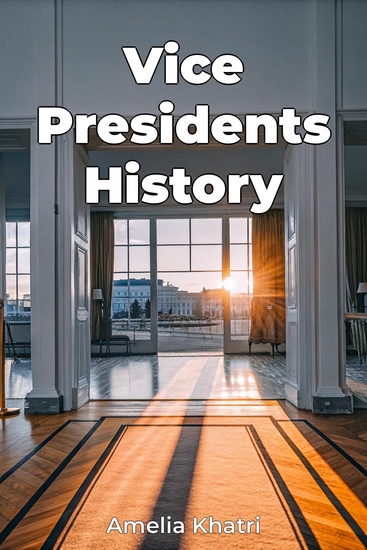
Vice Presidents History - cover

Vice Presidents History

Amelia Khatri

Translator A AI

Publisher: Publifye

  • 0
  • 0
  • 0

Summary

Vice Presidents History explores the evolution of the U.S. Vice Presidency, challenging the notion of it being a merely ceremonial role. It argues that the office has grown into a significant force in American governance, influenced by the individual holding the position, their relationship with the President, and the political climate. The book highlights intriguing facts, such as how some Vice Presidents, like Theodore Roosevelt, ascended to the presidency and dramatically reshaped national policy. Another key insight involves understanding how the Vice President serves as a vital link between the executive and legislative branches, impacting policy formation and legislative strategy. 

 
The book progresses chronologically and thematically, starting with the constitutional origins and early iterations of the office. It examines the tenures of various Vice Presidents across the 19th and 20th centuries, analyzing their roles in crisis management and their influence within presidential administrations. Modern Vice Presidencies are also explored, focusing on their advisory roles and policy initiatives. 

 
This historical survey incorporates primary source documents, scholarly biographies, and quantitative data to provide a comprehensive and nuanced understanding of the Vice Presidency, making it valuable for anyone interested in American politics and history.
Available since: 02/15/2025.
Print length: 53 pages.

Other books that might interest you

  • Violette Szabo - The Life That I Have - cover

    Violette Szabo - The Life That I...

    Susan Ottaway

    • 0
    • 0
    • 0
    The story of Violette Szabo is one of the most extraordinary in the annals of World War II espionage and covert operations. 


    Totally fearless and a dead shot, Violette Szabo volunteered to become part of the Special Operations Executive, Britain's premier sabotage and subversion organization of the time. On June 7, 1944, Violette left behind a two-year-old daughter to parachute into France on a special mission. 


    Szabo and other British agents were assigned to organize French resistance fighters to hinder the advance of the SS Das Reich Division to the Normandy beaches. Unfortunately, Szabo's party was soon ambushed by the SS. 


    Unable to walk due to a twisted ankle, Szabo covered the retreat of her comrades with machine-gun fire. Captured, she went through a series of interrogations and changes of confinement before ending up at Ravensbruck, the German all-women's concentration camp. She was finally executed on January 26, 1945. She was twenty-three years old. 


    This exceptional work has been written with the assistance of Violette Szabo's daughter Tanya and unravels fact and fiction about one of the most fascinating characters of World War II.
    Show book
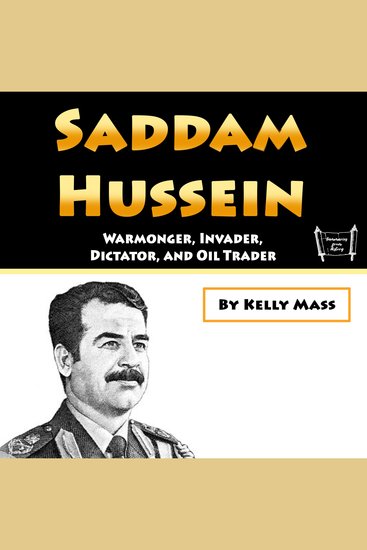
  • Saddam Hussein - Warmonger Invader Dictator and Oil Trader - cover

    Saddam Hussein - Warmonger...

    Kelly Mass

    • 0
    • 0
    • 0
    Saddam Hussein, the sixth president of Iraq, held power from July 16, 1979, until his downfall on April 9, 2003. A central figure in Iraq's political history, Saddam was a founding member of the Arab Socialist Ba'ath Party, which advocated for a fusion of Arab nationalism and socialism, known as Ba'athism. The party's rise to power in Iraq was marked by the 1968 coup, often referred to as the 17 July Revolution, which saw the Ba'ath Party assume control. Saddam, a key figure in the party, was instrumental in establishing its dominance in Iraq. 
    Saddam's path to the presidency was shaped by his political astuteness and ruthless consolidation of power. He became vice president under General Ahmed Hassan al-Bakr, who was severely weakened by ill health. At a time when numerous factions within the country threatened to destabilize the government, Saddam focused on building and strengthening the security forces that would enable him to suppress dissent. He carefully navigated the complexities of power struggles between the administration and the military, ensuring his influence over both the party and the state apparatus. His careful maneuvering eventually led to his formal assumption of power in 1979, though he had already been Iraq's de facto leader for several years. 
    In the early 1970s, Saddam took aggressive steps to nationalize Iraq's most important industries, including the Iraq Petroleum Company and various independent banks. This move, though initially successful in securing Iraq's economic independence, led to long-term financial instability. The nationalization policies, combined with inflation and a series of bad loans, contributed to the eventual collapse of Iraq's financial sector. Nevertheless, Saddam's regime was buoyed by the economic boom fueled by Iraq's oil exports, which provided the government with significant wealth and the ability to fund state projects.
    Show book
  • The Maid and the Socialite - The Brave Women Behind Green Bay's Scandalous Minahan Trials - cover

    The Maid and the Socialite - The...

    Lynda Drews

    • 0
    • 0
    • 0
    In the shadows of progress, two women's stories were erased. Until now. 


    What if a respected surgeon could destroy your life with just one diagnosis? 


    In early twentieth century Green Bay, Wisconsin, this terrifying reality was all too true for two women. Mary, an illiterate maid, and Mollie, a college-educated socialite, fell victim to the physical violence and mental abuse of celebrated surgeon Dr. John R. Minahan. To silence them, he claimed they had the shameful and dreaded disease of syphilis. 


    This is the first full account ever written about Dr. Minahan, whose wealth built a college stadium, science hall, and six-story office building—all named for him—while history lost, or perhaps erased, Mary's and Mollie's heroic stories. Until now. 


    Eerily mirroring contemporary debates around gender equality, misinformation, and wealth disparity, this tale remains alarmingly relevant. It is a story of power, abuse, and the tireless pursuit of justice. Delve into this haunting yet inspiring historical tale to uncover the forgotten stories of Mary and Mollie, two courageous women who dared to stand up against a powerful adversary.
    Show book
  • Revolutionary Algorithms - A TikTok Manifesto - cover

    Revolutionary Algorithms - A...

    Torey Akers

    • 0
    • 0
    • 0
    From an artist and TikTok creator, a critical look at the controversial app and its effect on cultural heritage, artificial intelligence, community organizing, and digital censorship. In Revolutionary Algorithms, Torey Akers approaches TikTok with a deep understanding of the app, as both a prolific creator and consumer of its content. In these essays, she interrogates how the TikTok ban and the multiple genocides happening around the world are deeply intertwined; how the app can empower creators, amplify social movements, and document abuses of power. She addresses the good, bad, and sometimes uncanny parts of maneuvering and communicating in a digital space.  As a new era of social media looms, Akers makes the case for techno-progressivism, looking toward a future where TikTok continues to connect, inspire, and create space for more intersectionality, equity, and joy.
    Show book
  • A Rare Recording of Film Icon Charlie Chaplin - cover

    A Rare Recording of Film Icon...

    Charlie Chaplin

    • 0
    • 0
    • 0
    Sir Charles Spencer Chaplin (April 16, 1889 to December 25, 1977), born in London, was an English actor, filmmaker, and composer who rose to fame in the era of silent film. He became a worldwide icon through his screen persona, the Tramp, and is considered one of the film industry's most important figures. His career spanned more than 75 years, from childhood in the Victorian era until a year before his death in 1977. The following three recordings are from a speech at the Variety Club in 1952, discussing the re-release of his film The Circus in 1969, and from the 1972 Academy Awards ceremony when Chaplin received an Honorary Oscar.
    Show book
  • Eastern Han Dynasty - Rebuilding and Decline in Ancient China's Heartland - cover

    Eastern Han Dynasty - Rebuilding...

    Rolf Hedger

    • 0
    • 0
    • 0
    The Eastern Han Dynasty emerged from the chaos and turmoil that followed the collapse of Wang Mang’s Xin Dynasty. After usurping the Han throne in 9 CE, Wang Mang attempted radical reforms, including land redistribution and changes to the currency system. However, his policies destabilized the empire, leading to widespread discontent, natural disasters, and peasant uprisings. Among these, the most significant was the Red Eyebrows Rebellion, which contributed to the downfall of Wang Mang’s rule. In 23 CE, rebel forces stormed the capital, Chang’an, killing Wang Mang and leaving the empire in a state of disarray. 
    In the wake of this collapse, Liu Xiu, a distant relative of the former Han imperial family, seized the opportunity to restore Han rule. He first distinguished himself as a military leader, defeating rival factions and consolidating power. In 25 CE, he declared himself Emperor Guangwu and established the Eastern Han Dynasty, with Luoyang as its new capital. Unlike the Western Han, which had ruled from Chang’an, the relocation of the capital symbolized a fresh start, one that aimed to correct the failures of the past. 
    Emperor Guangwu’s early reign was marked by efforts to stabilize the empire and reestablish Han authority. He adopted a cautious approach to governance, reducing taxes and reviving Confucian principles to strengthen the legitimacy of his rule. Unlike Wang Mang’s drastic policies, Guangwu relied on gradual reforms to restore economic stability. He also worked to rebuild the imperial bureaucracy, appointing competent officials who could help him govern effectively. By reinforcing Confucianism as the guiding philosophy of the state, he sought to restore order and unity among the people.
    Show book