Join us on a literary world trip!
Add this book to bookshelf
Grey
Write a new comment Default profile 50px
Grey
Subscribe to read the full book or read the first pages for free!
All characters reduced
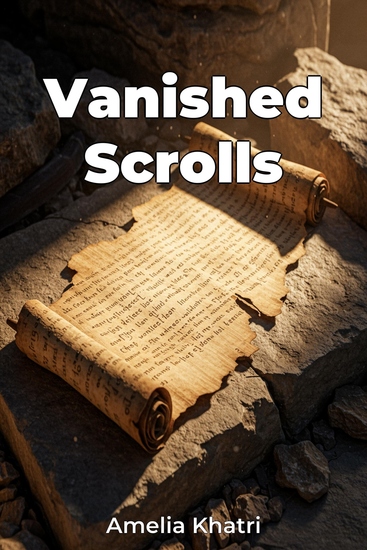
Vanished Scrolls - cover

Vanished Scrolls

Amelia Khatri

Translator A Ai

Publisher: Publifye

  • 0
  • 0
  • 0

Summary

Vanished Scrolls explores the profound impact of lost texts on our understanding of history and religion. It delves into manuscripts, religious texts, and mystical writings erased from public view, examining how their disappearance has shaped our perception of the past. The book highlights the fragility of cultural heritage and the power of information, questioning conventional narratives by piecing together fragments of lost knowledge. For example, the destruction of the Library of Alexandria resulted in the irretrievable loss of philosophical and scientific knowledge.

 
The book progresses through three sections, beginning with methods for textual recovery, including digital restoration, then presenting case studies of lost texts like the Gnostic Gospels and Indigenous texts of the Americas, and concluding with the ethical implications of textual loss.

 
By focusing on the absence of information, Vanished Scrolls offers a unique perspective, challenging readers to consider what has been deliberately or accidentally omitted. Understanding why these texts vanished is as crucial as understanding their content, revealing biases that influence our interpretation of history and religious thought.
Available since: 02/27/2025.
Print length: 62 pages.

Other books that might interest you

  • Modernization of American Guns The: The History of the Gunsmiths and Weapons that Revolutionized the Country’s Firearms - cover

    Modernization of American Guns...

    Charles River Editors

    • 0
    • 0
    • 0
    The Industrial Revolution that unfolded in Western societies at the dawn of the 19th century altered daily life as a rapidly developing paradigm. One historian suggests that in Europe and America, the highest known form of technology was the pipe organ before the rise of factories, steam drive combustion, and railway and communication breakthroughs built upon the mastery of electricity and transformed the standard processes of society. Such a rapid alteration of the prevailing world seemingly took place in a historical instant that propelled technology all the way to the age of powered flight.  
    	No less affected were the technological accomplishments that cast their influence over the wars so rampant in Europe through the past centuries. Military weapons benefited from various upgrades and innovations, even as the soldiers and generals remained confined within Napoleonic tactics while struggling to learn about the new principles of physics and engineering. 
    	For Americans who were recently embroiled in the Revolution and were obsessed with ownership and development of the West, the search for a major shift in military weaponry was the same. Whatever the refinements, the state of national arms lay within the confines of single-shot firearms and lumbering artillery pieces, and with no standardization in the building of portable arms, reliability was forever a battle liability. While America continued to fight multiple enemies, including Europeans, Mexicans, and indigenous natives intent on preserving their lands, other military tides were on the rise. The Chinese, inventors of gunpowder, spread through Asia, and the Ottoman Empire reached the gates of Vienna. In subsequent years, non-Western powers such as India began to hold their own against would be occupiers. Established and emerging powers around the world craved a technological advantage as the globe began to obtain parity. 
    Show book
  • Understanding Nietzsche - cover

    Understanding Nietzsche

    Romain Sarnel

    • 0
    • 0
    • 0
    Who was Nietzsche? What did he think? What was his journey, from his youth to his maturity?
    If we had to describe Nietzsche's philosophy, we would call it the philosophy of joy. Contrary to the clichés that weigh on his name, Nietzsche is the philosopher of creativity and life. From an aesthetic point of view, he revolutionized the theory of form. From the point of view of the theory of knowledge, he introduced creativity into the heart of the processes of knowledge. And from the point of view of the theory of being, he revived the movement of reality. 
    Nietzsche developed a true philosophical system, perspectivism, which is open, dynamic and fertile. These are assets that make Nietzsche's thinking all the more fundamental and relevant.
    Show book
  • Irrationality - A History of the Dark Side of Reason - cover

    Irrationality - A History of the...

    Justin Smith-Ruiu

    • 0
    • 0
    • 0
    This audiobook narrated by Jeff Harding reveals the surprising ways the pursuit of rationality leads to an explosion of irrationality
    
    It's a story we can't stop telling ourselves. Once, humans were benighted by superstition and irrationality, but then the Greeks invented reason. Later, the Enlightenment enshrined rationality as the supreme value. Discovering that reason is the defining feature of our species, we named ourselves the "rational animal." But is this flattering story itself rational? In this sweeping account of irrationality from antiquity to today—from the fifth-century BC murder of Hippasus for revealing the existence of irrational numbers to the rise of Twitter mobs and the election of Donald Trump—Justin Smith says the evidence suggests the opposite. From sex and music to religion and war, irrationality makes up the greater part of human life and history.
    
    Rich and ambitious, Irrationality ranges across philosophy, politics, and current events. Challenging conventional thinking about logic, natural reason, dreams, art and science, pseudoscience, the Enlightenment, the internet, jokes and lies, and death, the book shows how history reveals that any triumph of reason is temporary and reversible, and that rational schemes, notably including many from Silicon Valley, often result in their polar opposite. The problem is that the rational gives birth to the irrational and vice versa in an endless cycle, and any effort to permanently set things in order sooner or later ends in an explosion of unreason. Because of this, it is irrational to try to eliminate irrationality. For better or worse, it is an ineradicable feature of life.
    
    Illuminating unreason at a moment when the world appears to have gone mad again, Irrationality is fascinating, provocative, and timely.
    Show book
  • 25+ The Collected Works of Vladimir Lenin - The Dreamer in the Kremlin State and Revolution What Is to Be Done? Imperialism: The Final Stage of Capitalism and others - cover

    25+ The Collected Works of...

    Vladimir Lenin, H. G. Wells

    • 0
    • 0
    • 0
    Vladimir Ilyich Ulyanov, better known as Vladimir Lenin, was a Russian revolutionary, politician, and political theorist. He served as the first and founding head of government of Soviet Russia from 1917 to 1924 and of the Soviet Union from 1922 to 1924. Under his administration, Russia, and later the Soviet Union, became a one-party socialist state governed by the Communist Party. Ideologically a Marxist, his developments to the ideology are called Leninism.
    Russia in the Shadows is a book by H. G. Wells published early in 1921, which includes a series of articles previously printed in The Sunday Express in connection with Wells's second visit to Russia (after a previous trip in January 1914 to St. Petersburg and Moscow) in September and October 1920.
    During his visit to Russia he visited his old friend Maxim Gorky, whom he had first met in 1906 on a trip to the United States, and who arranged Wells's meeting with Lenin.
    In a chapter (The Dreamer in the Kremlin) devoted to an interview with Lenin at the Kremlin Wells describes the leader and founder of Russian communism. Wells portrays Lenin as a pragmatic leader who "has recently stripped off the last pretence that the Russian revolution is anything more than the inauguration of an age of limitless experiment."
     
    Vladimir Lenin:
    State and Revolution
    What Is to Be Done?
    Imperialism: The Final Stage of Capitalism
    The State and Revolution
    The Three Sources and Three Component Parts of Marxism
    To the Citizens of Russia!
    To Workers, Soldiers, and Peasants!
    Report on Peace
    Report on Land
    Decree on Abolishment of Capital Punishment
    Decree on Transfer of Power to the Soviets
    Decree on Establishment of the Workers' and Peasants' Government
    Decree on Elections for the Constituent Assembly
    Decree on Suppression of Hostile Newspapers
    Decree on Transfer of Food Control to Municipalities
    Decree on an Eight-Hour Working Day
    Decree on the Right to Issue Laws
    Resolution on the Right of Sovnarkom to Issue Decrees
    Decree on Social Insurance
    Declaration of the Rights of the People of Russia
    Decree on Organization of Volost Land Committees
    Decree on Transfer of Power and the Means of Production to the Toilers
    Decree Proclaiming Advertising a State Monopoly
    Decree Abolishing Classes and Civil Ranks
    Decree on Workers' Control
    Resolution on Relation of the Central Executive Committee to the Sovnarkom
    Decree on the Right to Call for Re-Elections
    Decree on Establishment of the Extraordinary Commission to Fight Counter-Revolution
    V. I. Lenin Note To F. E. Dzerzhinsky with a Draft of A Decree On Fighting Counter-Revolutionaries And Saboteurs
     
    H. G. Wells:
    The Dreamer in the Kremlin
    Show book
  • Tour Wars - cover

    Tour Wars

    Carla Luna

    • 0
    • 0
    • 0
    Ten days, two rivals, and a busload of tourists. How bad could it be? 
    For archaeologist Emilia Flores, landing a fellowship to work at the ancient ruins of Pompeii in Italy is a dream come true. The only catch? She’ll be digging alongside her infuriating nemesis, TJ Mayer, who’s been a constant thorn in her side. 
    TJ isn’t about to pass up the Pompeii project. Sure, he’ll be stuck working with Emilia, but he thrives on challenging her. And he hasn’t forgotten that secret kiss they shared at an archaeology conference last winter. 
    Though unearthing Pompeii’s treasures might be a dream, student debt is a nightmare that never takes a vacation. So, when TJ and Emilia are offered a lucrative side job to lead a ten-day tour through southern Italy, they grudgingly agree to tackle it together. 
    Forced to set aside their animosity and work as a team, they forge an unexpected camaraderie. As the sparks between them ignite, their rivalry gives way to passion, making it easy to forget their years of fierce competition. But what happens when the tour ends and the real world steps in? 
    Tour Wars is a rivals-to-lovers, grumpy/sunshine romance featuring a nerdy cinnamon roll hero, a strong-willed Latina heroine, and plenty of hotel hijinks. It can be read as a standalone.
    Show book
  • Trust Signals - cover

    Trust Signals

    Scott Baradell

    • 0
    • 0
    • 0
    What is a trust signal?Let’s say you’re interested in a book you aren’t familiar with—this book, for example. Before you buy it, you wonder, “Can I trust this author?” Can you trust that their book will be worth your money and your time?The author, in turn, tries to prove their trustworthiness in a number of ways:An accomplished and relevant biographyGlowing praise from well-known people on the coverFive-star reviews on AmazonAcclaim on social media by people you followCoverage in news media outlets you know and respectThese are examples of trust signals, the points of evidence that individuals, companies, and brands use to win one another’s trust.Mastering these signals is the single best way to build, grow, and protect your brand in today’s post-truth world—where trust is the most precious commodity of all.
    Show book