Join us on a literary world trip!
Add this book to bookshelf
Grey
Write a new comment Default profile 50px
Grey
Subscribe to read the full book or read the first pages for free!
All characters reduced
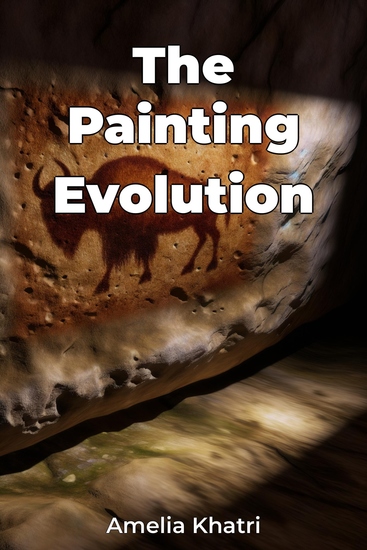
The Painting Evolution - cover

The Painting Evolution

Amelia Khatri

Translator A AI

Publisher: Publifye

  • 0
  • 0
  • 0

Summary

"The Painting Evolution" explores the long and fascinating journey of painting, from prehistoric cave paintings to modern digital art. It examines how artistic techniques, cultural contexts, and technological advancements have shaped this enduring art form. One intriguing insight is how the availability of materials, like the invention of oil paint during the Renaissance, drastically altered artistic possibilities and styles. Furthermore, the book highlights painting's role not just as a reflection of its time but as an active agent in shaping cultural narratives, expressing religious beliefs, and political ideologies.

 
The book approaches its subject by considering the interplay of artistic innovation, cultural context, and technological change, moving chronologically from ancient civilizations through the art movements of the Baroque, Rococo, and beyond. It emphasizes the scientific understanding of pigments and the social conditions that supported artists.

 
Readers will gain a deeper appreciation for how art has evolved alongside human history and technological progress, understanding the importance of cave paintings to digital painting.
Available since: 02/12/2025.
Print length: 55 pages.
Other books that might interest you

  • More than a Glitch - Confronting Race Gender and Ability Bias in Tech - cover

    More than a Glitch - Confronting...

    Meredith Broussard

    • 0
    • 0
    • 0
    The word "glitch" implies an incidental error, as easy to patch up as it is to identify. But what if racism, sexism, and ableism aren't just bugs in mostly functional machinery—what if they're coded into the system itself? Meredith Broussard demonstrates in More Than a Glitch how neutrality in tech is a myth and why algorithms need to be held accountable. 


    Broussard, a data scientist and one of the few Black female researchers in artificial intelligence, masterfully synthesizes concepts from computer science and sociology. She explores a range of examples: from facial recognition technology trained only to recognize lighter skin tones, to mortgage-approval algorithms that encourage discriminatory lending, to the dangerous feedback loops that arise when medical diagnostic algorithms are trained on insufficiently diverse data. Even when such technologies are designed with good intentions, Broussard shows, fallible humans develop programs that can result in devastating consequences. 


    Broussard argues that the solution isn't to make omnipresent tech more inclusive, but to root out the algorithms that target certain demographics as "other" to begin with. With sweeping implications for fields ranging from jurisprudence to medicine, More Than a Glitch is a must-listen for anyone invested in building a more equitable future.
    Show book
  • One-Click to Give - Future Proof Your Fundraising with Social Media - cover

    One-Click to Give - Future Proof...

    Jeremy Berman, Nick Black

    • 0
    • 0
    • 0
    The world of fundraising is changing.In an increasingly digital world, traditional in-person fundraising events are not enough to support a thriving nonprofit. People want to be able to donate to causes conveniently and on the social platforms where they spend their time. Through their donation, they wish to share in a nonprofit’s mission and connect with a community of supporters. This–and much more–is possible through social giving–a new mode for fundraising.Every nonprofit can leverage social giving to maximize their fundraising potential, energizing their nonprofit to do good. In One-Click to Give, Jeremy Berman and Nick Black, founders of GoodUnited, share how they’ve partnered with nonprofits from across the U.S. to raise over $1 billion through social giving. You’ll learn how to create a future-proof social giving strategy that lays the foundation for a thriving community of supporters.
    Show book
  • Circus Maximus and the Colosseum The: The History of Ancient Rome’s Most Famous Sports Venues - cover

    Circus Maximus and the Colosseum...

    Editors Charles River

    • 0
    • 0
    • 0
    The ambitious and fearless emperors that built the legendary Roman Empire from scratch, the broad-shouldered and bronzed gladiators with their iconic plume helmets and glinting swords, and elaborate parties attended by toga-wearing Romans fueled by alcohol, violence, orgies, and other godless acts all paint a picture of Roman life. 
    At the Circus Maximus, the guttural cheers of the spectators reverberated across the enormous open space, but their cries could hardly be heard over the rumble of the ground. On the ellipse-shaped track, 5 charioteers would skew their bodies and steer their magnificent vehicles around the curves. Gusts of sand and dirt flew up from the whizzing wheels and encircled the pounding hooves of the stunning stallions. Distracted personnel and guards dragging their feet were considered fair game. As one chariot careened to the side, preparing to collide with another chariot, a row of guards might have to try to duck out of the way in the nick of time. Some would be trampled by hooves. Chariot races were dangerous for participants too. A charioteer could become disoriented and fail to position himself as his horses moved instinctively, sending his body catapulting forward out of the chariot. Needless to say, chariot racing in Rome was a nail-biting spectacle. 
    When the Colosseum was built in the late 1st century A.D., the Romans, a people known for their architectural acumen, managed to amaze themselves. Martial believed the Colosseum was so grand a monument that it was even greater than the other Wonders of the Ancient World, which had been written about and visited endlessly by the Romans and Greeks in antiquity. The Colosseum was a spectacular achievement in architecture, something new and innovative, and therefore an amazing “Wonder” in its own way. The Colosseum is a large stadium even by today’s standards, and its great size conveys the power of the empire as it dominates the landscape and towers over nearby buildings.
    Show book
  • Know Better Do Better: Teaching Comprehension - cover

    Know Better Do Better: Teaching...

    David Liben, Meredith Liben

    • 0
    • 0
    • 0
    In this companion to their bestselling first book, David and Meredith Liben move beyond foundational skills to explore how the mind comprehends texts. They translate research in clear terms to help teachers understand what students truly need to read deeply for pleasure and with purpose.  Focusing on vocabulary, knowledge building, and language structures, they provide cutting-edge instructional ideas and ready-to-use tools to help teachers put their understanding into action immediately.
    Show book
  • Transform Your Mind: Secrets to Conquer Anxiety and Embrace Calm - "Unlock serenity with our audiobook—master anxiety and cultivate calm for a more peaceful life!" - cover

    Transform Your Mind: Secrets to...

    Cyrus Waverly

    • 0
    • 0
    • 0
    Transform Your Mind: Secrets to Conquer Anxiety and Embrace Calm 
    ⭐️⭐️ Simplified Guide & Explanations Included ⭐️⭐️ 
    Are you ready to take charge of your mind and conquer anxiety? 
    Looking for a thorough resource that equips you with the essential tools to reclaim your mental well-being? 
    Your journey starts here! 
    This guide is your essential partner for enhancing your understanding, implementing effective techniques, and engaging in practical exercises. With this resource, you are set on a path to tranquility. 
    Updated to reflect the latest insights on managing anxiety. 
    Key features of this insightful guide: 
    - In-depth understanding of anxiety management techniques 
    - Detailed exploration of strategies to regain control over your mind 
    - Effective methods for preparing to face challenges and overcoming anxiety 
    Our guide stands out with its comprehensive approach, ensuring you have all the information you need to succeed in transforming your mental state. Concepts are thoroughly examined, ensuring clarity and understanding. 
    Please note that this guide operates independently and is not affiliated with any official mental health organization—it is designed solely for your benefit. 
    Crafted with a clear structure and accessible language, our guide ensures smooth navigation between topics. Say goodbye to complex jargon and embrace straightforward, precise, and technically sound content. 
    So, why hesitate? Click the BUY NOW button, secure your guide, and embark on your journey towards mental empowerment! 
    Start your path to conquering anxiety and embracing calm today!
    Show book
  • The United States of English - The American Language from Colonial Times to the Twenty-First Century - cover

    The United States of English -...

    Rosemarie Ostler

    • 0
    • 0
    • 0
    The story of how English became American—and how it became Southern, Bostonian, Californian, African American, Chicano, elite, working-class, urban, rural, and everything in between 


    By the time of the Revolution, the English that Americans spoke was recognizably different from the British variety. Americans added dozens of new words to the language, either borrowed from Native Americans (raccoon, persimmon, caucus) or created from repurposed English (backwoods, cane brake, salt lick). Americans had their own pronunciations (bath rhymed with hat, not hot) and their own spelling (honor, not honour), not to mention a host of new expressions that grew out of the American landscape and culture (blaze a trail, back track, pull up stakes). Americans even invented their own slang, like stiff as a ringbolt to mean drunk. American English has continued to grow and change ever since. 


    The United States of English tells the engrossing tale of how the American language evolved over four hundred years, explaining both how and why it changed and which parts of the "mother tongue" it preserved (I guess was heard in the British countryside long before it became a typical Americanism). Plentiful examples of the American vernacular, past and present, bring the language to life and make for an engaging as well as enlightening listen.
    Show book