Join us on a literary world trip!
Add this book to bookshelf
Grey
Write a new comment Default profile 50px
Grey
Subscribe to read the full book or read the first pages for free!
All characters reduced
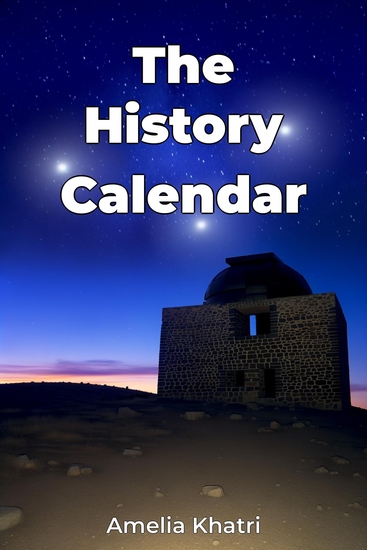
The History Calendar - cover

The History Calendar

Amelia Khatri

Translator A AI

Publisher: Publifye

  • 0
  • 0
  • 0

Summary

"The History Calendar" unveils the captivating story of how calendars have shaped human civilization. From early lunar observations driving agricultural practices to complex global timekeeping, the book explores how time measurement has influenced societies worldwide. Intriguingly, calendars aren't just neutral tools; they actively mold our perception of reality, impacting religious practices and social structures. Discover the evolution of calendars across cultures, from Mesopotamia's lunar systems to the sophisticated Maya calendar, and understand their astronomical underpinnings.

 
The book examines the origins of calendars in response to societal needs, the development of sophisticated timekeeping methods, and the standardization of global time. It begins with the basics of timekeeping and early lunar calendars, progresses through diverse cultural systems, and culminates in the Gregorian calendar. The latter portion tackles synchronizing calendars globally, the impact of technology, and debates on calendar reform, offering readers a deep dive into the philosophical implications of time measurement.

 
This unique perspective emphasizes calendars as cultural artifacts reflecting beliefs about time and the universe.
Available since: 02/12/2025.
Print length: 59 pages.


Other books that might interest you

  • How to Talk Dirty - cover

    How to Talk Dirty

    Eva Harmon

    • 0
    • 0
    • 0
    Do you want to spice up your sex life?Are you tired of a boring bedroom?Do you feel like something is missing in your relationship? If so, then keep reading...Sometimes, you can feel like that spark, that passion that kept your bed burning with red-hot desire, is starting to fade. You can feel like your partner is losing interest, or worse-losing attraction for you. When the bedroom starts to feel dull, after all, how much fun can bedroom time actually be?That is where dirty talk comes in. When you are able to bring dirty talk into the room and into your life, you can reignite that spark. You can get the juices flowing, the blood pumping, and the desire burning hotter than ever. All you have to do is learn how to use it. After all, there is a dramatic difference between asking someone to insert their genitalia into your genitalia repeatedly and forcefully versus saying something sexy and dirty enough to make even a porn star blush. If you know what you are doing, you can make your partner practically drool for you.No matter if you are a man or a woman, or if your partner is a man or a woman, this book is for you-you can learn what to expect, how to talk to your partner to make him or her all hot and bothered and desperate to rip your clothes off of you. Whether you have never said a naughty word in your life or if you are already well versed in talking dirty but want to take it a step further, this book can help you.Dirty talk is meant to be inherently sexual, highly erotic, and able to turn you and your partner on. Of course, this will vary from person to person-but you can make it work for you, no matter what your fetishes. Whether you want to be slapped across the face and choked, or you just want a little bit of excitement in your bedroom life, this book will teach you everything you need to know. In particular, you can expect to find:An understanding of what dirty talk is and why it is not inherently disrespectful-but it can beHow to use dirty ta
    Show book
  • The Emergence of I - How the Universe Woke Up - cover

    The Emergence of I - How the...

    John H. Payne

    • 0
    • 0
    • 0
    The universe wakes up through you. 
    We see history as an unceasing flow of causality and time; an endless series of past events leading up to the present. We feel ourselves as the detached observers of it, somehow standing on the outside watching the world go by. But the truth is we’re not on the outside. We’re at the very center of it all. 
    Interweaving history, mythology, psychology, and mystical experience, author John Payne charts the journey of I from its Paleolithic origins through the emergence of language and literacy, forward through the worldviews of the Greeks and Hebrews, and on to the present time. 
    The premise of this book is that the Universe’s most sincere project is the creation of a self-reflection point called I. Climbing up out of the universe’s primordia using the rungs of matter, animal biology and cultural enterprises such as myth, religion, literacy and science, Consciousness has constricted itself to a place two inches behind your forehead. 
    And it has been waiting for you to wake up.
    Show book
  • Shaheedi Saka Bhai Taru Singh Ji - Bhai Taru Singh Ji Da Upkari Jeewan - cover

    Shaheedi Saka Bhai Taru Singh Ji...

    Swarn Singh

    • 0
    • 0
    • 0
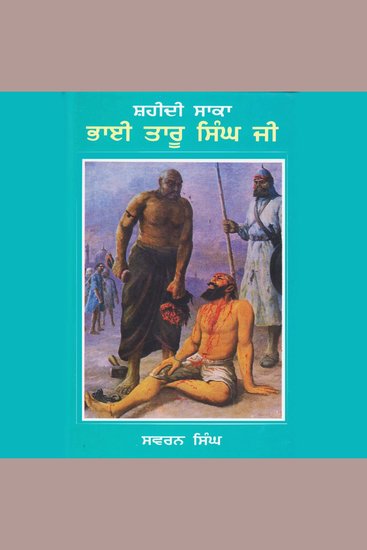
    Shaheedi Saka Bhai Taru Singh Ji by Swaran Singh 
    In this book, the author gives a detailed account of Bhai Taru Singh Ji's martyrdom. It also talks about two important phases of his life before his sacrifice. These phases show his deep devotion to God, his selfless and helpful nature as a Khalsa, and his dedication to serving the Sikh community. 
    Before becoming a martyr, Bhai Taru Singh was known for his spiritual practices, including prayer and meditation. He was a brave, fearless warrior who cared about the well-being of others. The book explains how these qualities of courage and sacrifice emerged, especially in the fight for the freedom of the country and religion. Understanding these earlier parts of his life helps to better understand the significance of his martyrdom. 
    You can order it from Sikh Siyasat and get it delivered anywhere in the world.
    Show book
  • Impasse - Climate Change and the Limits of Progress - cover

    Impasse - Climate Change and the...

    Roy Scranton

    • 0
    • 0
    • 0
    A Next Big Idea Club "Must Read" for August 2025! 
     
    Extreme heat, fires, floods, and storms are transforming our planet. Yet we get increasing emissions, divisive politics, and ersatz solutions that offer more of the same: more capitalism, more complexity, more "progress." 
     
    The impasse we face is not only political and institutional, but cognitive, existential, and narrative. We're incapable of grasping the scale, speed, and impact of global warming. And we optimistically cling to a narrative that promises a better tomorrow if we just keep doing what we're doing. 
     
    It's past time to free ourselves from our dangerous and dogmatic faith. Such unwarranted optimism will accelerate our disintegration. If we want to have hope for the future, it must be grounded in a recognition of human limits—a view Scranton calls ethical pessimism. 
     
    Scranton describes the challenges we face in making sense of our predicament, from problems in communication to questions of justice, from the inherent biases in human perception to the difficulties of empirical knowledge. What emerges is a challenging but hopeful proposition: if we have the courage to accept our limits, we may find a way to embrace our future.
    Show book
  • Japan and World War II: The History of the Imperial Japanese Empire during the War - cover

    Japan and World War II: The...

    Anonymous

    • 0
    • 0
    • 0
    All Americans are familiar with the “day that will live in infamy.” At 9:30 a.m. on Sunday, December 7, 1941, Pearl Harbor, the advanced base of the United States Navy’s Pacific Fleet, was ablaze. It had been smashed by aircraft launched by the carriers of the Imperial Japanese Navy. All eight battleships had been sunk or badly damaged, 350 aircraft had been knocked out, and over 2,000 Americans lay dead. Indelible images of the USS Arizona exploding and the USS Oklahoma capsizing and floating upside down have been ingrained in the American conscience ever since. In less than an hour and a half the Japanese had almost wiped out America’s entire naval presence in the Pacific. 
    Despite fighting in North Africa and the Atlantic, the United States still had the resources and manpower to fight the Japanese in the Pacific. Though the Japanese had crippled the American fleet at Pearl Harbor, its distance from Japan made an invasion of Pearl Harbor impossible, and Japan had not severely damaged important infrastructure. Thus, the United States was able to quickly rebuild a fleet, still stationed at Pearl Harbor right in the heart of the Pacific. This forward location allowed the United States to immediately push deeply into the Pacific theater. 
    In fact, the turning point in the Pacific theater took place in 1942 near Midway Island. The Japanese had moved a sizable fleet intending to occupy Midway Island and draw the American navy near. Instead, American aircraft flying from three aircraft carriers that had been away from Pearl Harbor in December 1941 got a bearing on the Japanese fleet and sunk four Japanese aircraft carriers, permanently crippling Japan’s navy. The Battle of Midway was one of the first naval battles in history where the enemy fleets never saw or came into contact with each other.
    Show book
  • The Alamo - The Fight for Texas - cover

    The Alamo - The Fight for Texas

    Nova Ashford

    • 0
    • 0
    • 0
    The Battle of the Alamo, fought in 1836, is one of the most iconic events in American history. Situated in the heart of modern-day Texas, the Alamo has come to symbolize sacrifice, courage, and defiance. To understand the significance of the battle, it is essential to first explore the events that led to this dramatic confrontation. The road to the Alamo was shaped by a series of political, social, and military tensions that spanned several years. 
    The conflict between Mexico and the growing population of Anglo settlers in Texas began with the Mexican War of Independence (1810-1821), which freed Mexico from Spanish rule. However, the new Mexican government struggled to control its vast northern territories, including Texas. In the early 1820s, Mexico encouraged settlement in Texas to help secure the region and promote economic development. Anglo settlers, many from the United States, flocked to Texas, hoping for fertile land and opportunities for growth. Over time, these settlers outnumbered the native Mexican population, and cultural tensions began to rise. 
    In 1829, Mexico, under President Vicente Guerrero, passed laws to curb slavery, which greatly alarmed many of the settlers who depended on slave labor. By the mid-1830s, tensions had escalated, as settlers pushed for greater autonomy from the central government in Mexico City, which they felt was increasingly distant and unresponsive to their needs. Meanwhile, Mexico’s leadership was determined to maintain control over Texas and prevent it from slipping into rebellion.
    Show book