Join us on a literary world trip!
Add this book to bookshelf
Grey
Write a new comment Default profile 50px
Grey
Subscribe to read the full book or read the first pages for free!
All characters reduced
Slave Coast - cover

Slave Coast

Amelia Khatri

Translator A AI

Publisher: Publifye

  • 0
  • 0
  • 0

Summary

Slave Coast explores the West African slave trade, a transformative process that shaped global demographics and economic systems. The book examines the mechanics of this brutal system, the societal ruptures it caused in West Africa, and the courageous resistance movements it provoked. From the 15th to the 19th centuries, the forced migration of millions had devastating impacts and long-lasting legacies. This history is crucial for comprehending the modern world, as the slave trade created enduring inequalities and shaped cultural identities. The book delves into the economic, social, and political forces that fueled the trade, challenging readers to confront its uncomfortable truths. For example, the rise of plantation economies in the Americas directly correlates to the intensification of the slave trade. By examining the trade from multiple perspectives – African, European, and enslaved – Slave Coast offers a more nuanced understanding of its complexities. It begins by exploring pre-existing systems of slavery within Africa and progresses to detailing the capture, transportation, and sale of enslaved Africans. The central chapters of Slave Coast focus on the devastating consequences for West African societies, including demographic collapse and economic disruption. The book also highlights the diverse forms of resistance employed by enslaved Africans, demonstrating their agency. Concluding sections examine the long-term effects of the transatlantic slave trade on both Africa and the African diaspora, tracing its impact on contemporary issues such as racial inequality and social justice.
Available since: 03/19/2025.
Print length: 56 pages.
Other books that might interest you

  • A World Rewritten - cover

    A World Rewritten

    Santiago Machain

    • 0
    • 0
    • 0
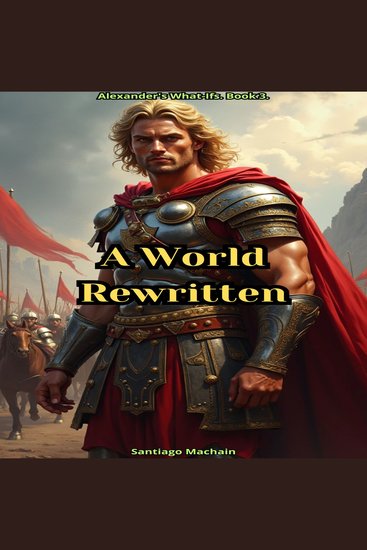
    In the aftermath of ideological collapse and technological overreach, humanity stands at a critical crossroads. The old empires have fallen, the myths of progress lie shattered, and yet a new vision begins to rise from the ashes. In this sweeping narrative of political reinvention, cultural restoration, and cognitive evolution, Book Three: A World Rewritten explores a world where history is rewritten, myth and memory merge, and a new civilization struggles to define itself. 
    Through alternate histories, radical diplomacy, decentralized knowledge systems, and deeply human questions, this book challenges readers to confront what it means to belong in a world unmoored from its past—but alive with possibility. 
    From the fall of Athens to the simulated mind of Alexander the Great, from a world without Columbus to the emergence of unified languages and fractured technologies, this book is both a cautionary tale and a hopeful blueprint. Could a better future still be possible? The answer lives in the stories we choose to tell.
    Show book
  • The Ripple Effect - China's Complex Presence in Southeast Asia - cover

    The Ripple Effect - China's...

    Enze Han

    • 0
    • 0
    • 0
    Many studies of China's relations with and influence on Southeast Asia tend to focus on how Beijing has used its power asymmetry to achieve regional influence. Yet, scholars and pundits often fail to appreciate the complexity of the contemporary Chinese state and society, and just how fragmented, decentralized, and internationalized China is today. 


    In The Ripple Effect, Enze Han argues that a focus on the Chinese state alone is not sufficient for a comprehensive understanding of China's influence in Southeast Asia. Instead, we must look beyond the Chinese state, to non-state actors from China, such as private businesses and Chinese migrants. These actors affect people's perception of China in a variety of ways, and they often have wide-ranging as well as long-lasting effects on bilateral relations. Looking beyond the Chinese state's intentional influence reveals many situations that result in unanticipated changes in Southeast Asia. Han proposes that to understand this increasingly globalized China, we need more conceptual flexibility regarding which Chinese actors are important to China's relations, and how they wield this influence, whether intentional or not.
    Show book
  • Great Kingdoms of Africa - cover

    Great Kingdoms of Africa

    David Adjaye

    • 0
    • 0
    • 0
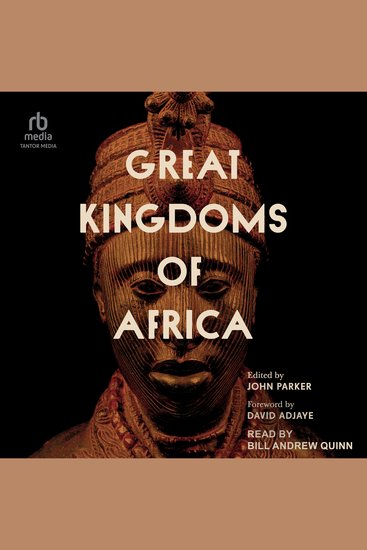
    A groundbreaking, sweeping overview of the great kingdoms in African history and their legacies, written by world-leading experts. 


    This is the first book for nonspecialists to explore the great precolonial kingdoms of Africa that have been marginalized throughout history. Great Kingdoms of Africa aims to decenter European colonialism and slavery as the major themes of African history and instead explore the kingdoms, dynasties, and city-states that have shaped cultures across the African continent. 


    This groundbreaking book offers an innovative and thought-provoking overview that takes us from ancient Egypt and Nubia to the Zulu Kingdom almost two thousand years later. Each chapter is written by a leading historian, interweaving political and social history and drawing on a rich array of sources, including oral histories and recent archaeological findings. Great Kingdoms of Africa is a timely and vital book for anyone who wants to expand their knowledge of Africa's rich history.
    Show book
  • The Engines of Evil - Inside The Waffen SS The Holocaust And Nazi Genocide - cover

    The Engines of Evil - Inside The...

    Davis Truman

    • 0
    • 0
    • 0
    The Engines of Evil is an intelligent and comprehensive exploration of the Waffen SS's pivotal role in World War II and the Holocaust. It sheds light on how this formidable military organization not only fought battles on the front lines but also became the vanguard of Nazi terror and genocide. 
    Key Features of the Book:In-Depth Analysis: The book provides a thorough examination of the Waffen SS's evolution from Hitler's elite personal guard to a multifaceted force intricately involved in Nazi atrocities.Ideological Insights: It explores the National Socialist ideology that fueled the SS's actions and justified its atrocities, offering a deep dive into the mindset that enabled ordinary men to commit extraordinary crimes.Mechanisms of Genocide: The book meticulously details the operational and bureaucratic systems that facilitated the Holocaust and other genocidal acts, exposing the cold efficiency with which these atrocities were carried out.Personal Narratives: Through firsthand accounts and historical records, the experiences of both perpetrators and victims are brought to life, providing a human dimension to the historical narrative.Broader Context: The work places the Holocaust within the wider spectrum of Nazi genocidal policies, including the conquest and racial reshaping of Eastern Europe. 
    Understanding the origins and execution of the Holocaust and Nazi genocide is crucial for preventing future atrocities. The Engines of Evil provides a critical and timely examination of the forces that led to one of the darkest chapters in human history. It serves as a stark reminder of the capacity for evil that exists within society and the importance of maintaining vigilance against the ideologies and systems that foster hatred and violence. 
    We invite you to read The Engines of Evil and join the ongoing conversation about the lessons of the past and the path to a more just and humane future.
    Show book
  • A Rare Recording of Navajo Code Talker Dan Akee - cover

    A Rare Recording of Navajo Code...

    Dan Akee

    • 0
    • 0
    • 0
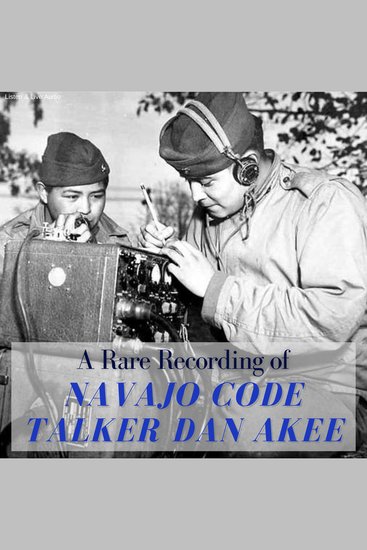
    Dan Akee was part of the Navajo code talker units of the US Marine Corps that relayed radio and phone messages in their native dialect during World War II operations.
     
    The method was fast and indecipherable to enemy eavesdroppers, as Navajo is an unwritten language of extreme complexity - with its syntax, tonal qualities, and various dialects - making it unintelligible to anyone without extensive exposure and training. It has no alphabet or symbols, and is spoken only on the Navajo lands of the American Southwest. By one estimate, at the time of World War II, the Navajo language was understood by fewer than 30 non-Navajos.
     
    Approximately 400 Navajo code talkers took part in every assault the US Marines conducted in the Pacific from 1942 to 1945. They served in all six Marine divisions, Marine Raider battalions, and Marine parachute units, transmitting messages by telephone and radio in their native language. The code was never broken by the Japanese, and its security has been credited with contributing significantly to the capture of Iwo Jima in 1945.
     
    The following are two recordings from code talker Dan Akee.
    Show book
  • Principia Ethica - cover

    Principia Ethica

    G. E. Moore

    • 0
    • 0
    • 0
    Principia Ethica, written in 1903, was a groundbreaking work of moral philosophy. Its author, G.E. Moore, questioned a fundamental pillar of ethics—specifically, what the definition of "good" is. As influential now as it was in its own time-period, Principia Ethica represented an advance in human thinking and is a worthy work for current and future generations to study to gain a better understanding of values and ethics.
    Show book