
Join us on a literary world trip!
Add this book to bookshelf
Grey
Write a new comment Default profile 50px
Grey
Subscribe to read the full book or read the first pages for free!
All characters reduced
Sewing Needle - cover

Sewing Needle

Amelia Khatri

Translator A AI

Publisher: Publifye

  • 0
  • 0
  • 0

Summary

"Sewing Needle" unveils the captivating history of a simple yet transformative tool, examining its profound impact on fashion history, textile production, and global economies. From its humble beginnings in the Paleolithic era, crafted from bone and ivory, the sewing needle catalyzed societal and technological advancements. It's intriguing to discover how something as basic as a needle influenced trade routes and economic structures.

 
The book traces the evolution of needle technology, its relationship with fashion development, and its influence on the textile industry. Exploring archaeological findings and the advancements of the Bronze Age and Industrial Revolution, the book emphasizes the needle's role in enabling complex textile production. It highlights how this seemingly mundane object has been a critical driver of cultural and economic change, particularly in the rise of fast fashion.

 
The book unfolds chronologically, starting with early needle forms and progressing through key innovation periods, with the chapters shifting to the needle's role in shaping fashion across cultures and its impact on globalization. By focusing on the sewing needle, the book offers a unique lens to understand broader historical and societal trends, making it a valuable resource for those interested in historical crafts, textile industry, and the material culture shaped by the needle.
Available since: 02/12/2025.
Print length: 59 pages.

Other books that might interest you

  • Lily of the Valley - cover

    Lily of the Valley

    by Vilma Di Nardo

    • 0
    • 0
    • 0
    Lily of the Valley is a suspenseful and addictive #1 Amazon Bestseller 
    Step into a world of sex, violence, murder and deception... 
    In 1941 Germany, seventeen- year-old Anna Goldberg finds herself confined to her home as the Nazi regime tightens its grip on her homeland. 
    When her father, Josef, learns of his impending arrest by the Gestapo, he fakes Anna's death and entrusts her to a mysterious friend who conceals her in the unlikeliest of places- right under the Nazis' noses. 
    As Anna navigates this perilous game of hide and seek, she must summon unparalleled courage to confront her enemies, armed only with the delicate yet potent Lily of the Valley. 
    ⭐⭐⭐⭐⭐ 
    Vilma Di Nardo's 'Lily of the Valley' is a gripping historical fiction novel that delves into themes of resilience, identity, and the extraordinary lengths one will go to survive. 
    (Goodreads) 
    ⭐⭐⭐⭐⭐ 
    A hauntingly powerful tale of resilience and vengeance. 
    (Amazon)
    Show book
  • Black Grief White Grievance - The Politics of Loss - cover

    Black Grief White Grievance -...

    Juliet Hooker

    • 0
    • 0
    • 0
    This audiobook narrated by Joana Garcia reveals how race shapes expectations about whose losses matter
    
    In democracies, citizens must accept loss; we can't always be on the winning side. But in the United States, the fundamental civic capacity of being able to lose is not distributed equally. Propped up by white supremacy, whites (as a group) are accustomed to winning; they have generally been able to exercise political rule without having to accept sharing it. Black citizens, on the other hand, are expected to be political heroes whose civic suffering enables progress toward racial justice. In this book, Juliet Hooker, a leading thinker on democracy and race, argues that the two most important forces driving racial politics in the United States today are Black grief and white grievance. Black grief is exemplified by current protests against police violence—the latest in a tradition of violent death and subsequent public mourning spurring Black political mobilization. The potent politics of white grievance, meanwhile, which is also not new, imagines the U.S. as a white country under siege.
    
    Drawing on African American political thought, Hooker examines key moments in U.S. racial politics that illuminate the problem of loss in democracy. She connects today's Black Lives Matter protests to the use of lynching photographs to arouse public outrage over post–Reconstruction era racial terror, and she discusses Emmett Till's funeral as a catalyst for the civil rights struggles of the 1950s and 1960s. She also traces the political weaponization of white victimhood during the Obama and Trump presidencies. Calling for an expansion of Black and white political imaginations, Hooker argues that both must learn to sit with loss, for different reasons and to different ends.
    Show book
  • Makes Me Wanna Holler - A Young Black Man in America - cover

    Makes Me Wanna Holler - A Young...

    Nathan McCall

    • 0
    • 0
    • 0
    NATIONAL BESTSELLER 
     
    One of our most visceral and important memoirs on race in America, this is the story of Nathan McCall, who began life as a smart kid in a close, protective family in a black working-class neighborhood. Yet by the age of fifteen, McCall was packing a gun and embarking on a criminal career that five years later would land him in prison for armed robbery. 
     
    In these pages, McCall chronicles his passage from the street to the prison yard—and, later, to the newsrooms of The Washington Post and ultimately to the faculty of Emory University. His story is at once devastating and inspiring, at once an indictment and an elegy. Makes Me Wanna Holler became an instant classic when it was first published in 1994 and it continues to bear witness to the great troubles—and the great hopes—of our nation. Includes the 2016 afterword by the author. 
     
    "Not since Claude Brown's Manchild in the Promised Land has there been such an honest and searching look at the perils of growing up a black male in urban America....A compelling depiction of the toll that racism and misguided notions of manhood have taken in the life of one black man–and, by implication, many others."–The San Francisco Chronicle 
     
    This audiobook is masterfully read by Leon Nixon, and was produced and published by Echo Point Books & Media, an independent bookseller in Brattleboro, Vermont. Audio engineering by Allie McSwain.
    Show book
  • Axum Empire - The African Kingdom That Controlled the Red Sea Trade - cover

    Axum Empire - The African...

    Rolf Hedger

    • 0
    • 0
    • 0
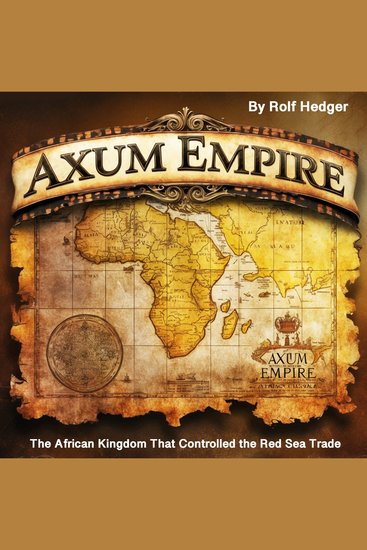
    This audiobook is narrated by an AI Voice. The Axum Empire was one of the most influential civilizations in ancient Africa, flourishing between the 4th and 7th centuries AD. It was located in what is today northern Ethiopia and parts of Eritrea, strategically positioned along the Red Sea trade routes. This placement not only allowed Axum to thrive economically but also made it a key player in global trade between Africa, the Middle East, and Asia. The kingdom of Axum’s rise to prominence marked a pivotal moment in African history, shaping the culture, economy, and politics of the region for centuries. 
     
    The origins of the Axum Empire are somewhat shrouded in mystery, but its establishment is often linked to the rise of the city of Axum (also spelled Aksum) around the 1st century AD. According to various historical accounts, Axum was originally a small kingdom that grew in power through trade, conquest, and political alliances. It eventually became one of the most advanced civilizations of its time, possessing advanced knowledge of agriculture, architecture, and metallurgy. 
     
    At its height, the Axum Empire was an extraordinary political and economic entity. The kingdom controlled an extensive territory that stretched from modern-day Ethiopia and Eritrea to parts of Sudan and Arabia. Axum became a major center for trade, exporting goods such as ivory, gold, frankincense, and myrrh, while also importing luxury goods from Roman, Indian, and Arabian merchants. The city of Axum itself was known for its monumental obelisks, palaces, and sophisticated urban planning.
    Show book
  • Knights and Chivalry - The Warrior Code - cover

    Knights and Chivalry - The...

    Harris Ropes

    • 0
    • 0
    • 0
    Chivalry, a code of conduct and a set of ideals, emerged during the early Middle Ages, forming the backbone of the knightly order and defining the conduct of warriors across Europe. The origins of chivalry can be traced back to the feudal system, where the role of the knight was essential in maintaining the social and political structure of the time. Knights were initially seen as mounted warriors serving a lord or king, and their duties were deeply intertwined with the political and military landscapes of medieval society. 
    The concept of chivalry grew from various sources, including the martial traditions of early medieval Europe, the influence of the church, and the rising importance of courtly love in literature. Early codes of conduct, though not uniform, emphasized qualities such as bravery, loyalty, and honor. These ideals were primarily martial in nature, as knights were expected to protect their lords and lands from invaders. Over time, however, the influence of Christianity began to shape the code of chivalry, adding elements of piety, mercy, and the protection of the weak. 
    One of the key influences in the development of chivalry was the rise of feudalism. As the Roman Empire fell and Europe entered a period of fragmentation, the feudal system became the dominant form of social and economic organization. Lords granted land to vassals in exchange for military service, and knights became essential for the protection of these lands. This system encouraged the development of a warrior class that was bound by loyalty and honor, principles that would later become central to chivalric codes.
    Show book
  • How To Fix Northern Ireland - cover

    How To Fix Northern Ireland

    Malachi O'Doherty

    • 0
    • 0
    • 0
    In this thought-provoking and engaging book, Malachi O'Doherty argues that division in Northern Ireland is fundamentally not about whether the country should be governed as part of Ireland or as part of Britain - as presumed by the Good Friday Agreement - but rather is entirely sectarian, an inter-ethnic stress comparable to racism. 
    Part memoir, part history and part polemic, How to Fix Northern Ireland shows how the split between catholics and protestants infests everyday life - from education and segregated housing, from street protests, bonfires and parades to the high politics of power sharing and Brexit - and asks what can be done to solve a centuries-old social rift and heal the relationship at the heart of the problem.
    Show book