Join us on a literary world trip!
Add this book to bookshelf
Grey
Write a new comment Default profile 50px
Grey
Subscribe to read the full book or read the first pages for free!
All characters reduced
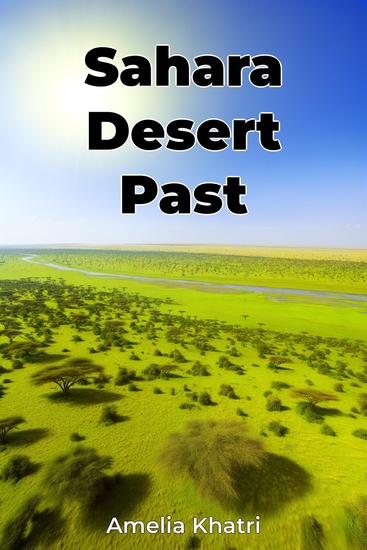
Sahara Desert Past - cover

Sahara Desert Past

Amelia Khatri

Translator A AI

Publisher: Publifye

  • 0
  • 0
  • 0

Summary

Sahara Desert Past explores the captivating history of the Sahara Desert, revealing its transformation from a fertile landscape to the arid expanse we know today. Contrary to its current state, the Sahara was once a Green Sahara, supporting diverse ecosystems and human settlements. The book unveils the intricate interplay between environmental change, human adaptation, and the rise and fall of ancient civilizations in Saharan Africa.

 
The book examines the geological history and climate fluctuations of the Holocene period, alongside archaeological evidence, to understand the desertification process. Sahara Desert Past highlights the crucial role of Trans-Saharan Trade in connecting North Africa, Sub-Saharan Africa, and the Mediterranean world, facilitating the exchange of goods, ideas, and cultural practices. It further explores the impact of these trade networks on the societies that traversed the area.

 
The book adopts an interdisciplinary approach, blending Earth Sciences, Geography, and History to present a comprehensive narrative. Beginning with the Sahara's geographical setting, the book progresses through the era of the Green Sahara, the rise of trans-Saharan trade, and concludes with an examination of ancient Saharan cities. This approach offers readers a nuanced understanding of the Sahara's past and its relevance to modern-day environmental challenges.
Available since: 02/12/2025.
Print length: 64 pages.

Other books that might interest you

  • Word Nerds Unite! - The Fascinating Stories Behind 200 Words and Phrases - cover

    Word Nerds Unite! - The...

    Webb Garrison

    • 0
    • 0
    • 0
    Why are spectacularly successful movies called blockbusters? Why does "putting your best foot forward" mean you hope to make a good impression? Why is rowdy and prankish behavior called horseplay and what does it have to do with the rarity of horses? Word Nerds Unite! shares 200 fascinating word meanings for fans of Wordle, Scrabble, and other word games. 
    You've probably used words or phrases like these without giving them a second thought. But you'll be surprised and interested to discover the fascinating and sometimes curious origins to these fun sayings! 
    In Word Nerds Unite! you'll find:200 quirky, interesting words, phrases, and colloquial termsBackstory for these colorful sayings still used todayHow some of our favorite expressions have evolved through the years 
    You'll discover such fascinating word and phrase origins for:handwriting on the wallplay for keepsraining cats and dogsbreak the icebull's eyeand many more! 
      
    Word Nerds Unite! is perfect for word lovers, Wordle enthusiasts, homeschoolers, and anyone curious about the illuminating history of 200 words that pepper our everyday dialogue and how they gained contemporary use. Organized by subject, each chapter begins with a quote, an introductory paragraph, and a list of what you'll discover!
    Show book
  • Incidents in the Life of a Slave Girl - cover

    Incidents in the Life of a Slave...

    Harriet Ann Jacobs

    • 0
    • 0
    • 0
    Incidents in the Life of a Slave Girl, written by herself is an autobiography by Harriet Ann Jacobs, a young mother and fugitive slave, published in 1861 by L. Maria Child, who edited the book for its author. Jacobs used the pseudonym Linda Brent. The book documents Jacobs's life as a slave and how she gained freedom for herself and for her children. Jacobs contributed to the genre of slave narrative by using the techniques of sentimental novels "to address race and gender issues." She explores the struggles and sexual abuse that female slaves faced on plantations as well as their efforts to practice motherhood and protect their children when their children might be sold away.In the book, Jacobs addresses white Northern women who fail to comprehend the evils of slavery. She makes direct appeals to their humanity to expand their knowledge and influence their thoughts about slavery as an institution.Jacobs began composing Incidents in the Life of a Slave Girl after her escape to New York, while living and working at Idlewild, the Hudson River home of writer and publisher Nathaniel Parker Willis. Portions of her journals were published in serial form in the New-York Tribune, owned and edited by Horace Greeley. Jacobs's reports of sexual abuse were deemed too shocking for the average newspaper reader of the day, and publication ceased before the completion of the narrative.Notable works Harriet Ann Jacobs: Incidents in the Life of a Slave Girl (1861).
    Show book
  • I love to pray - cover

    I love to pray

    LADONNA J HITE

    • 0
    • 0
    • 0
    Introduce your child to Jesus and help them discover how easy praying can be.
    Show book
  • A 1940s Childhood - From Bomb Sites to Children's Hour - cover

    A 1940s Childhood - From Bomb...

    James Marsh

    • 0
    • 0
    • 0
    Do you remember collecting shrapnel and listening to Children's Hour? Carrying gas masks or sharing your school with evacuees from the city? The 1940s was a decade of great challenge for everyone who lived through it. The hardships and fear created by a world war were immense. Britain's towns and cities were being bombed on an almost nightly basis, and many children faced the trauma of being parted from their parents and sent away to the country to live with complete strangers. For just over half of this decade the war continued, meaning food and clothing shortages became a way of life. But through it all, and afterwards, the simplicity of kids shone. From collecting bits of shot-down German aircraft to playing in bomb-strewn streets, kids made their own fun. Then there was the joy of the second half of the 1940s, when fathers came home and the magic of 'normal life' returned. 
     
    This trip down memory lane will take you through the most memorable and evocative experiences of growing up in the 1940s.
    Show book
  • Great Escapes during the World Wars: The History of the Most Legendary Prisoner Breakouts in World War I and World War II - cover

    Great Escapes during the World...

    Editors Charles River

    • 0
    • 0
    • 0
    War has always led to prisoners. In ancient times, many were turned into slaves by the victorious armies, while in medieval Europe, they were often returned to their families in return for a ransom, leading to fortune or poverty depending upon which side one was on. By the Napoleonic era, as armies grew in size and professionalism, many were kept in camps for the duration of the fighting, their captors not wanting to restore their enemies' manpower while the fate of nations hung in the balance. 
    Prisoners were taken across the world, and prisoners of war were typically comprised of two classes: officers and other ranks. Officers were often treated well, as there was still a sort of aristocratic courtesy among officers, particularly among the Germans, British, French, and somewhat less so for the Russians, Italians, and Turks. Concepts such as honor still held considerable currency, and bravery was greatly admired. Enemy officers as a class often had more in common with each other than with the millions of draftees in their armies, so enlisted men as POWs generally were not as well treated. 
    	Regardless of rank though, throughout the war, many of these men did not sit idle. Many spent their time preparing elaborate escape plans in the hopes of returning to their home nations and back to the fight.  
    The Second World War was full of escape stories, some bold, some tragic, and most filled with courage and ingenuity. The greatest number of successful escapes was made by Allied troops in Europe, including soldiers left behind after the fall of France and airmen shot down in bombing raids, but escapes happened across the world, from Canadian trains to German castles, and from the mountains of Italy to the wilds of Australia. Axis as well as Allied troops made their bids for freedom, keeping both sides on their toes. Everybody was looking to make the next great escape.
    Show book
  • Carmine and the 13th Avenue Boys - Surviving Brooklyn's Colombo Mob - cover

    Carmine and the 13th Avenue Boys...

    Craig McGuire, Carmine Imbriale

    • 0
    • 0
    • 0
    Now in hiding, a former wiseguy teams up with a veteran true-crime writer to take you inside Brooklyn’s gangland at the height of its violence.   This is the true story of Carmine Imbriale—a gambler, a brawler, a bandit, a bookie, an enforcer. For two decades, Imbriale was a street-level operative in one of the most violent crews in the Colombo Family, and he endeared himself to some of the major figures of organized crime while developing deadly disputes with others. Carmine and the 13th Avenue Boys is the jarring account of his lawless lifestyle culminating in a gang war in South Brooklyn, from which he emerges a survivor.   From his first arrest at fifteem for robbing a Coney Island pimp to surviving multiple assassination attempts, Imbriale offers up dozens of too-good-to-be-true tales featuring some of the most notorious gangsters, including Joe Colombo, Christie Tick, Jimmy Ida, Joe Waverly, Sammy “The Bull” Gravano, Johnny Rizzo, as well as other lions and lackeys of La Cosa Nostra, and details a beef with none other than Greg “The Grim Reaper” Scarpa Sr.   A young streetwise hustler, Imbriale thought he found loyalty, a brotherhood. Instead, he descended into a world of treachery and deceit, where your best friend is your executioner, and no one gets out alive. But no one expected him to become the domino that helped bring it all down.
    Show book