Join us on a literary world trip!
Add this book to bookshelf
Grey
Write a new comment Default profile 50px
Grey
Subscribe to read the full book or read the first pages for free!
All characters reduced
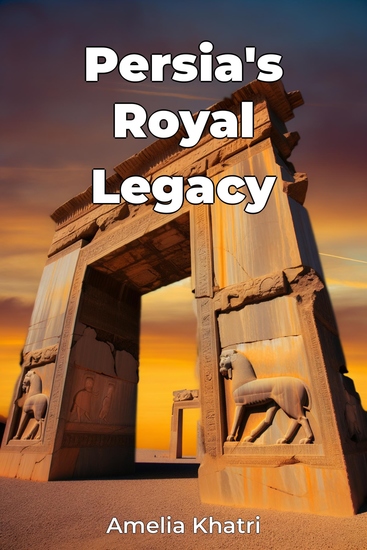
Persia's Royal Legacy - cover

Persia's Royal Legacy

Amelia Khatri

Translator A AI

Publisher: Publifye

  • 0
  • 0
  • 0

Summary

"Persia's Royal Legacy" offers a compelling exploration of how three major Persian dynasties—the Achaemenids, Parthians, and Sassanids—fundamentally shaped world civilization through their sophisticated approaches to governance, architecture, and cultural development.Spanning nearly 1,200 years of history, the book reveals how these empires successfully managed vast territories from India to Egypt through innovative administrative systems, particularly the Achaemenid model of satrapal governance, which expertly balanced central authority with regional autonomy. The narrative progresses chronologically from the rise of Cyrus the Great, examining how Persian ingenuity manifested in various spheres of imperial administration.Readers discover how Persian engineers revolutionized water management and urban planning, evidenced in magnificent sites like Persepolis and Ctesiphon. The empire's influence extended beyond physical achievements to encompass lasting contributions in literature, bureaucratic record-keeping, and epic poetry, demonstrating the remarkable sophistication of Persian civilization.Through careful analysis of archaeological evidence, contemporary accounts, and historical records, the book challenges Western-centric historical perspectives by highlighting how Persian innovations in taxation, postal systems, and bureaucratic organization established precedents that influenced subsequent empires, including Islamic caliphates and European monarchies. This comprehensive examination provides valuable insights into how ancient Persian solutions to imperial administration continue to resonate in modern governance systems, making it an essential resource for students of world history and those interested in understanding the foundations of contemporary governmental structures.
Available since: 01/08/2025.
Print length: 108 pages.


Other books that might interest you

  • Camel From Kyzylkum - A Memoir of My Life Journey - cover

    Camel From Kyzylkum - A Memoir...

    Lara Gelya

    • 0
    • 0
    • 0
    Camel from Kyzylkum: A Memoir 
    What does it take to leave everything behind in search of freedom? 
    Born in Ukraine and later working in the Kyzylkum Desert of Uzbekistan, Lara Gelya spent the first half of her life behind the Iron Curtain. In 1989, at the age of thirty-nine, she fled the crumbling Soviet Union as a stateless refugee — carrying little more than hope. Her journey took her across Austria and Italy before she finally reached the United States, where she began the long and difficult process of rebuilding her life. 
    With honesty and vivid detail, Lara shares her experiences of growing up under Soviet rule, navigating cultural dislocation, and finding strength in the face of uncertainty. Camel from Kyzylkum is more than a memoir of immigration — it is a story of resilience, courage, and the universal search for freedom and belonging. 
    Perfect for listeners of historical memoirs, refugee stories, and anyone who values the enduring power of the human spirit.
    Show book
  • The Initiates of the Flame - cover

    The Initiates of the Flame

    Manly P. Hall

    • 0
    • 0
    • 0
    The Initiates of the Flame is a timeless exploration into the hidden teachings of the mystery schools, tracing their origin from ancient Egypt and Atlantis through to the modern Western esoteric tradition. This work reveals the spiritual lineage connecting Hermes, Osiris, the Christ Mystery, and the inner path of the initiate. Rich with allegory and esoteric insight, the text serves as a guide to the sacred fire within—the divine spark that transforms the seeker through trials, symbols, and inner awakening. It is not merely a book of knowledge, but a manual of initiation for those drawn to the deeper purpose of life.
    Show book
  • Build Equity Join Justice - A Paradigm for School Belonging - cover

    Build Equity Join Justice - A...

    Wayne Sailor, Wade Kelly, Amy...

    • 0
    • 0
    • 0
    A playbook for designing schools where no student is marginalized. 


    Educators all over the country are waking to a collective realization: The hope and compassion they have for their students is not enough to counteract the inequitable policies and practices of the school system. Students and communities who have been historically disenfranchised along lines of race and disability continue to face predictable barriers to opportunity and independence. 


    In Build Equity, Join Justice, the authors present a new path forward that leads away from deficit-focused policies and toward strengths-based practices. The authors' ten equity-advancing principles, based on the groundbreaking work of the SWIFT Education Center in multiple school districts, are designed to address the learning needs and social concerns of all students without requiring them or their advocates to "ask permission" to be included. Complete with practical tools and reflective activities throughout, this book empowers educators at every level to transform their schools into equity-advancing, justice-centered institutions.
    Show book
  • The Gauls - The People of Western Europe in Roman Times - cover

    The Gauls - The People of...

    Kelly Mass

    • 0
    • 0
    • 0
    This is a book about a people that has often been overlooked. Wallowing in the shadow of the seemingly almighty Romans, and dispersed throughout the ages into other peoples, the Gauls appear as if they had nothing going for them. Quite the opposite is true. The Gauls had a distinct culture, with habits, warfare, and so much more to offer to the intrigued historian and everyday researcher. 
    Throughout the Iron Age and the Roman period, the Gauls were a collection of Celtic tribes from Continental Europe (circa from the fifth century BC to the fifth century advertisement). Gaul was the name of the area where they used to live. Their Gaulish language is the significant branch of the Celtic languages of the continent. 
    The Gauls are worth studying. I implore you to do so.
    Show book
  • Mistakes and Miracles - Congregations on the Road to Multiculturalism - cover

    Mistakes and Miracles -...

    Nancy Palmer Jones, Karin Lin

    • 0
    • 0
    • 0
    What calls Unitarian Universalists to create multicultural, antiracist Beloved Community? What do congregations need when they embark on this journey? What common threads run through their stories?
    
     
    Nancy Palmer Jones and Karin Lin—a white minister and a lay person of color—share how five diverse congregations encounter frustrations and disappointments, as well as hope and wonder, once they commit to the journey. Mistakes abound. Miracles of transformation and joy emerge too. Extensively researched and thoughtfully written—with reflection questions at the end of each chapter—Mistakes and Miracles: Congregations on the Road to Multiculturalism will guide readers to apply these stories to their own communities, develop next steps, and renew their commitment to this hard but meaningful work.
    Show book
  • No Place for Mercy - cover

    No Place for Mercy

    Davis Truman

    • 0
    • 0
    • 0
    Where empire rose, mercy fell. 
    In No Place for Mercy, ancient Rome is unmasked—not as the marble-clad cradle of civilization, but as a brutal stage where sex, violence, and power played their most calculated roles. With a piercing lens, this provocative and deeply researched work reveals how sexual violence was not only a consequence of conquest but a deliberate tool of political manipulation and imperial propaganda. 
    From the mythologized Rape of the Sabine Women to the whispered scandals of imperial courts, No Place for Mercy exposes how Rome’s leaders wielded control over bodies as a means to control the narrative, transforming victims into symbols and violence into spectacle. 
    Drawing from primary sources, inscriptions, and visual art, this groundbreaking book explores how Roman elites exploited sexual violence to define citizenship, masculinity, and moral order. It challenges romanticized visions of antiquity and forces us to confront the uncomfortable truths beneath Rome’s glorious facade. 
    Bold, unflinching, and urgently relevant, this is history that speaks to today’s conversations about power, gender, and the weaponization of sexuality. For scholars, students, and anyone who dares to ask what lies beneath the empire’s polished stone, No Place for Mercy is an essential and unforgettable read.
    Show book