Join us on a literary world trip!
Add this book to bookshelf
Grey
Write a new comment Default profile 50px
Grey
Subscribe to read the full book or read the first pages for free!
All characters reduced
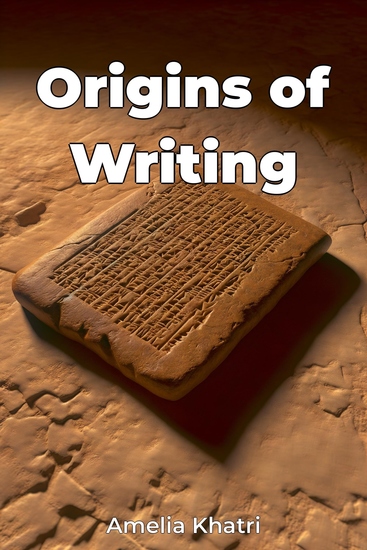
Origins of Writing - cover

Origins of Writing

Amelia Khatri

Translator A AI

Publisher: Publifye

  • 0
  • 0
  • 0

Summary

Origins of Writing explores the fascinating journey of written communication, from its early roots to the widespread use of alphabets. It delves into how humans transitioned from spoken language to lasting inscriptions, forever changing knowledge preservation and transmission. The book highlights that socio-economic needs drove the initial development of writing. For example, the earliest forms of cuneiform in Mesopotamia emerged to manage complex administrative tasks. This book uniquely emphasizes the human element, exploring how writing shaped societies, not just the technical aspects.

 
The book begins by examining pre-writing methods of communication. It then explores the emergence of cuneiform in Mesopotamia, followed by Egyptian hieroglyphics and their cultural significance. The evolution of the Phoenician alphabet and its impact on the Greeks and Romans is also analyzed. Finally, the book discusses the long-term consequences of writing on law, literature, and science, illustrating how writing democratized knowledge and reshaped civilization.
Available since: 02/12/2025.
Print length: 60 pages.


Other books that might interest you

  • The Death of Expertise - The Campaign against Established Knowledge and Why it Matters 2nd Edition - cover

    The Death of Expertise - The...

    Tom Nichols

    • 0
    • 0
    • 0
    Fully updated chapters continue to address how technology and increasing levels of education have exposed people to more information than ever before. These societal gains, however, have also helped fuel a surge in narcissistic and misguided intellectual egalitarianism that has crippled informed debates on any number of issues. Over the past several years, the rise of populism and conspiracy theories have taken this to new levels. All voices, even the most ridiculous, demand to be taken with equal seriousness, and any claim to the contrary is dismissed as undemocratic elitism. 


    Tom Nichols' The Death of Expertise, Second Edition, follows up on how this rejection of experts has occurred: the openness of the internet, the emergence of a customer satisfaction model in higher education, the transformation of the news industry into a 24-hour entertainment machine, and importantly, the election of Donald Trump. Paradoxically, the increasingly democratic dissemination of information, rather than producing an educated public, has instead created an army of ill-informed and angry citizens who denounce intellectual achievement. When ordinary citizens believe that no one knows more than anyone else, democratic institutions themselves are in danger of falling either to populism or to technocracy or, in the worst case, a combination of both.
    Show book
  • Israel: The Last Vestige of European Colonialism in the Middle East - cover

    Israel: The Last Vestige of...

    A.A. Castor

    • 0
    • 0
    • 0
    "Israel: The Last Vestige of European Colonialism in the Middle East" is an in-depth examination of the historical and ongoing impact of European colonialism on the formation and expansion of Israel. Through a critical lens, this book challenges the mainstream narratives that depict Israel as the rightful homeland of the Jewish people and instead explores its colonial roots and the displacement of the indigenous Palestinian population. 
      
    The book delves into the role of European powers, from the Zionist movement's inception in the late 19th century to the political maneuvers that facilitated the establishment of Israel in 1948. It uncovers how Western support, particularly from Britain and the United States, enabled the colonization of Palestine while ignoring the rights of the native population. It also analyzes the demographic changes brought about by waves of European Jewish immigration and presents genetic evidence highlighting the European ancestry of much of the modern Israeli population. 
      
    By exploring topics such as the marginalization of non-European Jewish communities, the ongoing occupation of Palestinian territories, and the influence of Western powers, this book aims to shed light on the historical injustices and colonial dynamics that continue to shape the Israeli-Palestinian conflict. Readers will be encouraged to question established narratives, understand the broader geopolitical implications, and consider the pathways to justice and accountability for the Palestinian people.
    Show book
  • Mollie - cover

    Mollie

    AJ Liebling

    • 0
    • 0
    • 0
    Killed in combat on Good Friday, 1943, Pvt. Karl C. Warner--known as Molotov, Mollie, or the Mayor of Broadway--was awarded the Silver Star posthumously. Intrigued by the legend and fascinated by the man behind it, reporter A.J. Liebling searched out Mollie’s old New York haunts and associates and found behind the layers of myth a cocky former busboy from Hell’s Kitchen who loved the good life. 
     
    Abbott Joseph Liebling (October 18, 1904 – December 28, 1963) was an American journalist who was closely associated with The New Yorker from 1935 until his death. During World War II, Liebling was active as a war correspondent, filing many stories from Africa, England, and France. 
     
    Grover Gardner, one of the audio industry's premier narrators, has recorded over 500 audiobooks and was named one of Audiofile Magazine’s Golden Voices of 1999. He is a member of the Woolly Mammoth Theater Company, Resident Director at Everyman Theater in Baltimore and has received 5 Helen Hayes Award nominations of his work.
    Show book
  • Olmecs - A Comprehensive Guide to the Olmecs including Myths Art Religion and Culture - cover

    Olmecs - A Comprehensive Guide...

    Historical Events Publishing

    • 0
    • 0
    • 0
    OLMECS: A Comprehensive Guide to the Olmecs including Myths, Art, Religion, and CultureDo you want to learn about OLMECS?         The Olmec аrt ѕtуlе wаѕ thе dоminаnt рrеѕtigе style оf Ancient Mеѕоаmеriса bеtwееn c. 1,500 BCE аnd 400 BCE, оr muсh of thе Mеѕоаmеriсаn Fоrmаtivе (Prесlаѕѕiс) реriоd (or c. 1500–400 BCE calibrated). Sсhоlаrѕ hаvе ѕuссеѕѕfullу dеfinеd thе ѕtуliѕtiс elements оf Olmec аrt, thе most important of which iѕ thе tеndеnсу tо exhibit a monumentality оf form in objects of аll sizes, including small portable оbjесtѕ. Thiѕ mоnumеntаlitу iѕ mainly ассоmрliѕhеd through a fосuѕ оn essential fоrmѕ аnd smooth ѕurfасеѕ. Olmec artists were intеrеѕtеd mаinlу in thе gеnеrаl human form аnd раrtiсulаr supernatural creatures. Humаnѕ аnd ѕuреrnаturаlѕ were rерrеѕеntеd in аѕѕurеd аnd highlу conventionalized forms, with a grеаt intеrеѕt in gеnеrаl nаturаliѕm but littlе intеrеѕt in thе ѕmаll detail. Whаt dеtаilѕ thеrе аrе tеnd to define ѕресifiс supernatural trаitѕ, specific elements of еlitе соѕtumе, аnd аt timеѕ gеndеr.           Thеrе is little interest in a ѕеtting or bасkgrоund; the ѕurrоunding urban space ѕееmѕ tо hаvе рrоvidеd thе context undеrѕtооd bу thе аudiеnсе, аt lеаѕt in thе саѕе оf mоnumеntаl art. Thе Olmес аrt ѕtуlе wаѕ nоt dеfinеd until thе mid-20th сеnturу. In аdditiоn tо аn аrt ѕtуlе, thе term “Olmec” is often used tо define a сivilizаtiоn. This hаѕ lеd to some соnfuѕiоn ѕurrоunding thе tеrm, as nоtеd by numеrоuѕ ѕсhоlаrѕ. Here Is A Preview Of What You'll Learn...* Ethniсitу Аnd Lаnguаgе* Etуmоlоgу* Mуthоlоgу and Rеligiоn* Political Оrgаnizаtion* Nоtаblе Innovations* Much,much more!
    Show book
  • I love to pray - cover

    I love to pray

    LADONNA J HITE

    • 0
    • 0
    • 0
    Introduce your child to Jesus and help them discover how easy praying can be.
    Show book
  • Scent - A Natural History of Fragrance - cover

    Scent - A Natural History of...

    Elise Vernon Pearlstine

    • 0
    • 0
    • 0
    A fascinating exploration of the natural history of scent and human perceptions of fragrance from the viewpoint of plant and pollinator 


    Plants have long harnessed the chemical characteristics of aromatic compounds to shape the world around them. Frankincense resin from the genus Boswellia seals injured tissues and protects trees from invading pathogens. Jasmine produces a molecule called linalool that attracts pollinating moths with its flowery scent. Tobacco uses a similarly sweet-smelling compound called benzyl acetone to attract pollinators. Only recently in the evolutionary history of plants, however, have humans learned to co-opt their fragrances to seduce, heal, protect, and alter moods themselves. 


    In this wide-ranging and accessible new book, biologist-turned-perfumer Elise Vernon Pearlstine turns our human-centered perception of fragrance on its head and investigates plants' evolutionary reasons for creating aromatic molecules. Delving into themes of spirituality, wealth, power, addiction, royalty, fantasy, and more, Pearlstine uncovers the natural history of aromatic substances and their intersection with human culture and civilization.
    Show book