Join us on a literary world trip!
Add this book to bookshelf
Grey
Write a new comment Default profile 50px
Grey
Subscribe to read the full book or read the first pages for free!
All characters reduced
Origins of the Slavs - cover

Origins of the Slavs

Amelia Khatri

Translator A AI

Publisher: Publifye

  • 0
  • 0
  • 0

Summary

"Origins of the Slavs" delves into the complex history of Slavic peoples, tracing their journey from obscure origins to distinct cultural and political entities. It investigates the contested Proto-Slavic homeland theories, analyzing archaeological and linguistic evidence to locate the area where Slavic languages and cultures emerged. Furthermore, the book meticulously reconstructs Slavic migrations across Europe, examining the driving forces behind these population shifts. Understanding this formative period offers crucial insights into modern Eastern Europe's geopolitical landscape and cultural heritage. 

 
The book challenges traditional narratives by arguing that Slavic identity wasn't static but evolved dynamically through interactions and cultural adaptations. It highlights the impact of Germanic, Iranian, and Byzantine civilizations on shaping early Slavic societies. For example, the adoption of Christianity significantly altered Slavic religious beliefs and social structures. 

 
"Origins of the Slavs" draws upon diverse evidence like archaeological finds, linguistic analysis, and historical accounts to provide a comprehensive view. Beginning with the primary sources and methodologies, the book then explores Proto-Slavic homeland theories and details migration waves. Subsequent chapters examine cultural exchanges and their transformative impact. This approach provides a nuanced perspective on the multifaceted processes that led to the formation of distinct Slavic nations, making it valuable for anyone interested in History, World History, and History World.
Available since: 02/12/2025.
Print length: 62 pages.


Other books that might interest you

  • Germany Between the World Wars: The History and Legacy of the Weimar Republic and Nazi Germany in the Interwar Period - cover

    Germany Between the World Wars:...

    Editors Charles River

    • 0
    • 0
    • 0
    The Weimar Republic has become a byword for a failed, tragic, political experiment. The official period of its existence, 1919-1933, marked the inter-war years in Germany and their related uncertainty, chaos and the state’s ultimate collapse. Historians have found the roots of Nazism embedded in the Weimar years and that in the final analysis, Weimar politicians voluntarily handed over power to the man who wrought destruction on an epic scale, Adolf Hitler. Yet the Weimar era encapsulated a number of trends and fissures within German society, as well as the international community. The Weimar Republic was a prisoner of events and in the long run had little power to shape them. Historians are fond of interpreting the past as a tension between human agency, that is to say decision-making, and structural developments that evade individual choices. Both these interpretations are crucial when examining the tumultuous years of Germany’s Weimar Republic. 
    The early 1930s were a tumultuous period for German politics, even in comparison to the ongoing transition to the modern era that caused various forms of chaos throughout the rest of the world. In the United States, reliance on the outdated gold standard and an absurdly parsimonious monetary policy helped bring about the Great Depression. Meanwhile, the Empire of Japan began its ultimately fatal adventurism with the invasion of Manchuria, alienating the rest of the world with the atrocities it committed.  
    It was in Germany, however, that the strongest seeds of future tragedy were sown. The struggling Weimar Republic had become a breeding ground for extremist politics, including two opposed and powerful authoritarian entities: the right-wing National Socialists and the left-wing KPD Communist Party. As the 1930s dawned, these two totalitarian groups held one another in a temporary stalemate, enabling the fragile ghost of democracy to continue a largely illusory survival for a few more years.
    Show book
  • Your Forces and How to Use Them - The Complete Collection: Includes All Six Volumes - cover

    Your Forces and How to Use Them...

    Prentice Mulford

    • 0
    • 0
    • 0
    Your Forces and How to Use Them, narrated in an audio edition by Uplifting4You, brings to life Prentice Mulford’s pioneering New Thought essays from the late 19th century. A key figure who helped shape concepts like the Law of Attraction, Mulford explored how our thoughts, will, and inner spiritual forces profoundly impact both our personal well-being and our external lives Amazon+12Wikipedia+12Goodreads+12. 
    This audiobook draws you into themes such as: “Where You Travel When You Sleep,” “How Thoughts Are Born,” “The Law of Success,” “The Slavery of Fear,” and even “Re‑embodiment Universal in Nature” yogebooks.com+2newthoughtwisdom.com+2. Each chapter is a gentle invitation to realize that sleep, dreams, memories, and even fear are reflections of a greater inner power—your invisible but creative thought energy. 
    Through the Uplifting4You production, these timeless essays are transformed into an immersive auditory experience. The narrator’s soothing tone and deliberate pacing invite you to listen deeply, reflect, and absorb Mulford’s insights with clarity and ease. 
    Whether you're already exploring New Thought ideas or are new to spiritual self-growth, this audiobook offers a profound bridge between Mulford’s visionary wisdom and your inner world. It’s not a self-help quick fix—but a thoughtful companion that reminds you: your own mind is a powerful, creative force.
    Show book
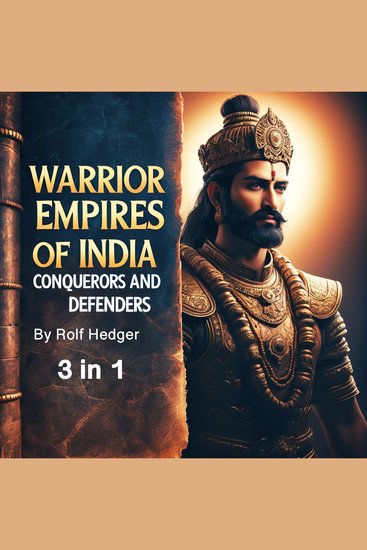
  • Warrior Empires of India - Conquerors and Defenders (3 in 1) - cover

    Warrior Empires of India -...

    Rolf Hedger

    • 0
    • 0
    • 0
    The history of India is filled with tales of powerful warrior empires that shaped the destiny of the subcontinent. Among them, the Hoysala Empire, the Rashtrakuta Empire, and the Kakatiya Dynasty stood as formidable forces in the Deccan region, each leaving behind a unique legacy of conquest, governance, and cultural patronage.  
    The Rashtrakutas, known for their military might, expanded their rule across vast territories, engaging in wars with the Pratiharas and Palas while fostering art and architecture, as seen in the magnificent Kailasanatha temple at Ellora.  
    The Hoysalas, emerging later, were fierce warriors and master builders, commissioning iconic temples such as those at Belur and Halebidu while defending their kingdom against rival invasions.  
    The Kakatiya Dynasty, renowned for its defensive strategies, constructed impressive fortifications like the Warangal Fort and resisted repeated invasions, including those from the Delhi Sultanate.  
    These warrior empires not only fought to expand and defend their territories but also enriched Indian culture, trade, and architecture, leaving an enduring impact on the history of the Deccan.
    Show book
  • Utah War The: The History of the Federal Government’s Controversial Conflict with Brigham Young and the Latter-Day Saints - cover

    Utah War The: The History of the...

    Editors Charles River

    • 0
    • 0
    • 0
    Joseph Smith’s death was one of the catalysts for the Mormons’ great migration to Utah, and today that state and the Mormons are virtually synonymous. To this day, Mormons still form a majority of the population, and members of the Church have prominent political and economic roles. Both of Utah’s U.S. Senators, Mike Lee and Mitt Romney, are Mormons, as is Governor Gary Herbert. The story of the Mormon pioneers and the trail they trod is one of the great stories of the westward expansion of the United States. Frenchman Hyppolite Taine wrote of the migration in romantic terms in the 1860s: “Since the exodus of the Israelites there is no example of so great a religious emigration executed across such great spaces in spite of such obstacles, by so great a number of men, with so much order, obedience, courage, patience, and devotion…But the mainsprings of this great will was faith. Without it men would not have done such things. These exiles thought that they were founding the city of God, the metropolis of mankind. They considered themselves the renovators of the world. Let us remember our youth, and with what force an idea...merely by the fact that it seems good and true to us hurls us forward despite natural egotism, daily weakness, habits that we have contracted, surrounding prejudices, and accumulated obstacles! We don’t know of what we are capable.” 
    The Mormon response to the federal government and the Buchanan administration in 1857 and 1858 was shaped by the faith’s experience of previous conflicts, which had included an extermination order proclaimed by the governor of Missouri against Mormons, the murder of Smith, and a massacre of Mormon men and boys. As a result, when things came to a head in Utah, the Mormons were more willing to fight.       
      
     
    Show book
  • Level Up Your Lesson Plans - Ignite the Joy of Learning with Fun and Educational Materials - cover

    Level Up Your Lesson Plans -...

    Teresa K. Kwant

    • 0
    • 0
    • 0
    Tired of spending hours on lesson plans? Discover strategies to streamline your planning process and maximize student engagement. Access exclusive templates, tools, and resources designed to help you create effective lessons that align with learning standards. Save time, reduce stress, and elevate your teaching game. In Level Up Your Lesson Plans: Ignite the Joy of Learning with Fun and Educational Materials, teacher Teresa Kwant delivers an exciting and practical instruction book for teachers interested in adding fun into their lesson plans, without sacrificing educational strategies. The book walks you through how to transform your teaching materials and lessons into interactive, collaborative, and enjoyable learning experiences for both the teacher and students. 


    Kwant draws on personal and professional experiences to give actionable steps you can implement immediately. You'll also find: 


    ● Tips for aligning your lessons with standards to make them both fun and engaging 


    ● Strategies for building your own instructional plans for daily success with student learning 


    ● Techniques to develop your own lessons plans efficiently, and with high engagement
    Show book
  • Slow Dancing with a Stranger - Lost and Found in the Age of Alzheimer's - cover

    Slow Dancing with a Stranger -...

    Anonymous

    • 0
    • 0
    • 0
    Emmy-award winning broadcast journalist and leading Alzheimer’s advocate Meryl Comer’s Slow Dancing With a Stranger is a profoundly personal, unflinching account of her husband’s battle with Alzheimer’s disease that serves as a much-needed wake-up call to better understand and address a progressive and deadly affliction. 
    When Meryl Comer’s husband Harvey Gralnick was diagnosed with early onset Alzheimer’s disease in 1996, she watched as the man who headed hematology and oncology research at the National Institutes of Health started to misplace important documents and forget clinical details that had once been cataloged encyclopedically in his mind. With harrowing honesty, she brings readers face to face with this devastating condition and its effects on its victims and those who care for them. Detailing the daily realities and overwhelming responsibilities of caregiving, Comer sheds intensive light on this national health crisis, using her personal experiences—the mistakes and the breakthroughs—to put a face to a misunderstood disease, while revealing the facts everyone needs to know. 
    Pragmatic and relentless, Meryl has dedicated herself to fighting Alzheimer’s and raising public awareness. “Nothing I do is really about me; it’s all about making sure no one ends up like me,” she writes. Deeply personal and illuminating, Slow Dancing With a Stranger offers insight and guidance for navigating Alzheimer’s challenges. It is also an urgent call to action for intensive research and a warning that we must prepare for the future, instead of being controlled by a disease and a healthcare system unable to fight it.
    Show book