Join us on a literary world trip!
Add this book to bookshelf
Grey
Write a new comment Default profile 50px
Grey
Subscribe to read the full book or read the first pages for free!
All characters reduced
Origins of Flags - cover

Origins of Flags

Amelia Khatri

Translator A AI

Publisher: Publifye

  • 0
  • 0
  • 0

Summary

Origins of Flags explores the rich history and profound meaning behind national flags, revealing how these seemingly simple designs embody cultural identity, national identity, and historical narratives. From ancient battle standards to modern emblems, flags serve as powerful symbols of unity and belonging, often reflecting the rise and fall of empires and the evolution of cultural interactions. The book delves into the symbolism of colors, shapes, and emblems, uncovering the stories woven into each design and highlighting how flags have been adopted by diverse social movements and political ideologies throughout world history.

 
The book uniquely analyzes flags as dynamic historical artifacts, going beyond mere descriptions to explore the cultural and political forces that shaped their evolution. It progresses chronologically, starting with early forms of flags in warfare and religion, then moves through the age of exploration and the rise of nation-states, finally examining contemporary flag design and its implications for global identity. By drawing on historical texts, heraldic records, and insights from political science and semiotics, Origins of Flags offers a comprehensive understanding of these potent symbols and their enduring relevance in our world.
Available since: 02/12/2025.
Print length: 55 pages.
Other books that might interest you

  • Tracks - A Journey Through Metroland - cover

    Tracks - A Journey Through...

    Kevin J. Last

    • 0
    • 0
    • 0
    Tracks: A Journey Through Metroland tells the story of Metroland and the development of suburbia that grew alongside the Metropolitan Railway. Originally the brainchild of eminent Victorians, the Metropolitan grew to become the queen of underground lines, eventually expanding to a point some fifty miles outside London. Author Kevin J. Last describes how the concept of Metroland was an aspiration for several levels of society, promising a better lifestyle well away from the deprivations of wartime. The idea that the working man could live comfortably outside the smoke in individually designed houses would mean that he could also thrive at work, largely due to the regular service offered by the new railway. This was quite exceptional in that, while nominally an underground line, most of the Met's route was above ground and, in length, went far beyond other similar lines, far out into the Buckinghamshire countryside. Not marked on any map, Metroland is as much a concept of the mind as a real place.
    Show book
  • Hypnotic Gastric Band - A Complete Guide to Stop Food Addiction Lose Weight and Eat Healthy with Rapid Weight Loss Hypnosis for Women Meditation Self Esteem Confidence & Positive Affirmations - cover

    Hypnotic Gastric Band - A...

    Wanda J. Scott

    • 0
    • 0
    • 0
    The audiobook version of Hypnotic Gastric Band, written by renowned hypnotherapist Wanda J. Scott, offers a revolutionary approach to weight loss. Through a combination of hypnosis and the concept of gastric band surgery, listeners will discover effective methods to achieve their weight loss goals. 
    This audiobook provides listeners with a range of techniques and exercises designed to help them change their relationship with food and develop healthier eating habits. By using hypnosis to simulate the experience of gastric band surgery, listeners will learn how to feel full more quickly and reduce their portion sizes. 
    Unlike other weight loss books that offer quick-fix solutions, Hypnotic Gastric Band focuses on long-term results. The audiobook encourages listeners to make sustainable lifestyle changes that will help them maintain their weight loss over time. 
    Whether you're looking to shed a few pounds or make a significant change, Hypnotic Gastric Band is the perfect tool to help you achieve your goals. With its powerful combination of hypnosis and gastric band surgery techniques, this audiobook offers a unique and effective approach to weight loss that can help you achieve the lasting results you desire.
    Show book
  • 5 Buddhist Secrets to Aging Without Regret - cover

    5 Buddhist Secrets to Aging...

    Rob Cohen

    • 0
    • 0
    • 0
    Transform the fear of aging into a profound spiritual awakening through the timeless wisdom of Buddhist practice. Instead of viewing your later years as a decline, discover a peaceful path toward dignity and inner freedom that remains unshaken by the inevitable changes of life.
     
    Navigating the complex emotions of retirement, physical changes, and shifting family dynamics requires a perspective grounded in acceptance rather than resistance. By embracing the core teachings of impermanence and non-attachment, you can release the heavy burden of clinging to fading youth and social relevance. This guide offers a reassuring companion for anyone seeking meaning beyond their career or physical strength.
     
    Explore five distinct shifts in perception that turn anxiety into liberation:
    
    Release the weight of legacy: Find tranquility by letting go of the need to be remembered.
    Reframe physical changes: Treat your body with tenderness and gratitude instead of resentment.
    Harmonize relationships: Accept the natural ebb and flow of social roles and community ties.
    Redefine beauty: Move from an attachment to youthful appearance to appreciating the weathered beauty of a life well-lived.
    Uncover the immortal self: Connect with the enduring capacity to love that transcends all personal changes.
    
     
    Walk through the twilight years with courage and compassion. This auditory journey provides the tools to loosen your grip on the external world and embrace a spacious, regret-free existence anchored in the present moment.
    Show book
  • How to Write an Excellent Personal Statement - An Illustrated Guide on Writing a University or College Admissions Essay - cover

    How to Write an Excellent...

    Quincy Washington

    • 0
    • 0
    • 0
    From the Founder of PlaceCoach — who has helped 1,000+ students secure places at Harvard, Yale, Princeton, MIT, Oxford, Cambridge, LSE, Imperial and numerous top universities around the world. 
    Get into your dream university with How to Write an Excellent Personal Statement — a step-by-step guide, where you will unlock the secrets of writing a brilliant admissions essay to impress admission tutors. 
    There is no doubt that an education at the world’s leading institutions unlocks many doors, and your personal statement will play a decisive role in securing the highly-coveted places that only the select few will achieve. Today is the day to save yourself from the pain of unrealised potential and disappointment by getting to grips with the best way to write a personal statement. 
    In How To Write An Excellent Personal Statement, Quincy Washington, an alumnus in Law from the London School of Economics and the founder of PlaceCoach — a trusted leader in university applications — guides you along each step of the writing process for your college admissions essay. You will benefit from insider knowledge and tips, as well as real-life examples from students’ applications. 
    This book focuses on personal statements, but is equally applicable to statements of purpose, common app essays, motivation letters and other application documents. 
    Take this chance to harness your full potential and secure a spot on the university course of your dreams. 
    Listen to How to Write an Excellent Personal Statement now! 
    For more information, visit us at www.placecoach.co.uk 
    Written by Quincy Washington 
    Narrated by Christian Neale
    Show book
  • Fritz Lang: The Life and Legacy of the Influential German-American Film Legend - cover

    Fritz Lang: The Life and Legacy...

    Charles River Editors

    • 0
    • 0
    • 0
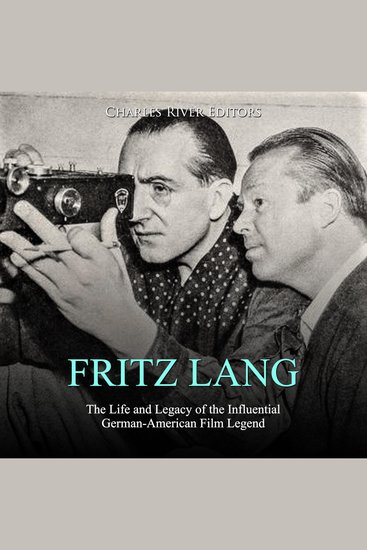
    While it’s easily forgotten today, during the early 20th century, various European countries had vibrant film industries, and even though Hollywood had already staked its claim as the forerunner of the international cinematic landscape by the 1920s, national cinemas in Sweden, Germany, and elsewhere throughout Western Europe enjoyed great power during this period. 
    During that time, Germany's most renowned film directors were pioneering the genre known as Expressionism, and within it, Fritz Lang was known as the "Master of Darkness." Together with his eventual wife, Thea von Harbou, Lang wrote a number of acclaimed movies, including Dr. Mabuse the Gambler (1922), Die Nibelungen (1924), Metropolis (1927), and Woman in the Moon (1929). 
    Eventually, a number of Europe’s biggest movie stars and directors came to Hollywood, such as Greta Garbo, Ingrid Bergman, and Alfred Hitchcock, but Lang’s course to America came under far different circumstances. As Adolf Hitler rose to power and strengthened the Nazis’ grip over Germany, the party’s coarse antisemitism took root across all segments of society. As Jews were further persecuted, German Jews from all walks of life went into exile, and the loss of so many bright minds has led historians to the conclusion that the exodus could have made the difference in World War II.  
    Compelled to leave Germany, Lang made his way to Hollywood and quickly established himself there, leading to a career spanning 20 years. Continuing with the same themes as the ones he used in Germany, Lang helped establish noir as one of the most popular film genres of the 1950s in America, with influential works like Scarlett Street, and his most famous film, The Big Heat (1953).
    Show book
  • Start of World War II The: The History of the Events that Culminated with Nazi Germany’s Invasion of Poland - cover

    Start of World War II The: The...

    Editors Charles River

    • 0
    • 0
    • 0
    "My good friends," the mustached, bony man with thick eyebrows and large, strong teeth somewhat reminiscent of those of a horse, shouted to the crowds from the second-floor window of his house at 10 Downing Street, "this is the second time in our history, that there has come back to Downing Street from Germany peace with honor. I believe it is peace for our time." The man addressing the crowd, British Prime Minister Neville Chamberlain, had just returned from the heart of Nazi Germany following negotiations with Adolf Hitler, and the crowd gathered outside the English leader's house on September 30, 1938 greeted these ringing words with grateful cheers. The piece of paper Chamberlain flourished exultantly seemed to offer permanent amity and goodwill between democratic Britain and totalitarian Germany. In it, Britain agreed to allow Hitler's Third Reich to absorb the Sudeten regions of Czechoslovakia without interference from either England or France, and since high percentages of ethnic Germans – often more than 50% locally – inhabited these regions, Hitler's demand for this territory seemed somewhat reasonable to Chamberlain and his supporters. With Germany resurgent and rearmed after the disasters inflicted on it by the Treaty of Versailles following World War I, the pact – known as the Munich Agreement – held out hope of a quick end to German ambitions and the return of stable, normal international relations across Europe. 
    Of course, the Munich agreement is now notorious because its promise proved barren within a very short period of time. Chamberlain's actions either failed to avert or actually hastened the very cataclysm he wished to avoid at all costs. The "Munich Agreement" of 1938 effectively signed away Czechoslovakia's independence to Hitler's hungry new Third Reich, and within two years, most of the world found itself plunged into a conflict which made a charnel house of Europe and left somewhere between 60-80 million people dead globally.
    Show book