Join us on a literary world trip!
Add this book to bookshelf
Grey
Write a new comment Default profile 50px
Grey
Subscribe to read the full book or read the first pages for free!
All characters reduced
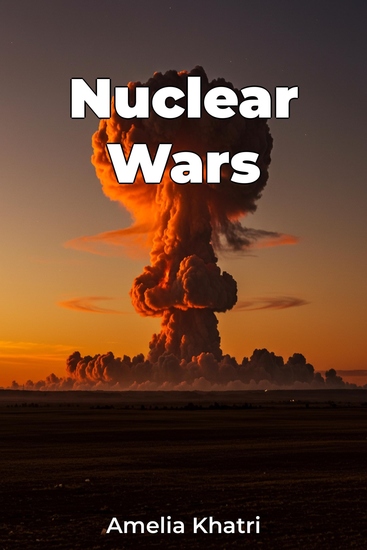
Nuclear Wars - cover

Nuclear Wars

Amelia Khatri

Translator A AI

Publisher: Publifye

  • 0
  • 0
  • 0

Summary

Nuclear Wars provides a comprehensive exploration of the persistent threat of nuclear conflict, examining its origins, consequences, and relevance in the 21st century. The book delves into the history of nuclear weapons, highlighting the precarious balance maintained during the Cold War and the ongoing risk of proliferation. One intriguing fact is the numerous near-misses that brought the world to the brink of nuclear annihilation, underscoring the importance of understanding these dynamics for global security.

 
The narrative progresses chronologically, starting with the development of atomic weapons and ending with an assessment of contemporary nuclear risks. The book analyzes the Cold War arms race, strategic doctrines, and treaties designed to limit nuclear proliferation. It also scrutinizes the political and social factors that fueled the arms race. A key insight involves the psychological impact of living under the threat of nuclear annihilation.

 
The book adopts a multidisciplinary approach, combining technical analysis with historical narrative and political commentary, thereby presenting a holistic understanding of the nuclear threat and its implications for international relations and military strategy.
Available since: 02/17/2025.
Print length: 66 pages.
Other books that might interest you

  • Have We All Gone Mad? Why groupthink is rising and how to stop it - Why groupthink is rising and how to stop it - cover

    Have We All Gone Mad? Why...

    Jerome Booth

    • 0
    • 0
    • 0
    "With refreshingly clear-sighted analysis, Jerome Booth spells out how political, financial and social groupthink has damaged Britain – and, crucially, how we can tackle it. Highly recommended." – Liam Halligan, Daily Telegraph
    "Most of the worst political decisions of recent years were made when all the mainstream politicians thought the same thing and no one challenged them. Jerome Booth wisely analyses why this situation happens so often and what can be done about it. Every politician and every decision-maker should read this book." – Lord Frost, former Cabinet Office minister
    "It is a long time since I read a book with which I agreed so comprehensively." – Lord Lilley, former Secretary of State
    ***
    We like to think of ourselves as rational, but human beings are fundamentally irrational creatures – and nowhere is that more apparent than in the fug of groupthink we see around us, from the boardroom to social media.
    Of the various forms of collective irrationality, groupthink is particularly dangerous. It involves adherence to a faulty consensus, often has a binary moral dimension (one is seen as either virtuous or evil) and is sustained through fear to challenge. Counter-intuitively, the most intelligent and erudite amongst us are particularly susceptible, and when groupthink takes hold, vigorous efforts are made to shut down debate and to bully and punish transgressors.
    As a result, toleration, liberalism, history, reason and science are under threat. Mass groupthink amongst both the elite and the masses affects millions of people. It has led to financial mismanagement leading up to the 2008 crisis and beyond; poor decision-making at the onset of Covid-19; exaggerated, unchallenged claims which have motivated nonsensical policies; and distortions in academia and journalism.
    In this remarkable and prescient book, Dr Jerome Booth investigates why some of us have abandoned reason in favour of trite memes, intolerance and hatred. Have we all gone mad? Or can we identify the patterns and causes of what is happening and try to stop it?
    Show book
  • Circus Maximus and the Colosseum The: The History of Ancient Rome’s Most Famous Sports Venues - cover

    Circus Maximus and the Colosseum...

    Editors Charles River

    • 0
    • 0
    • 0
    The ambitious and fearless emperors that built the legendary Roman Empire from scratch, the broad-shouldered and bronzed gladiators with their iconic plume helmets and glinting swords, and elaborate parties attended by toga-wearing Romans fueled by alcohol, violence, orgies, and other godless acts all paint a picture of Roman life. 
    At the Circus Maximus, the guttural cheers of the spectators reverberated across the enormous open space, but their cries could hardly be heard over the rumble of the ground. On the ellipse-shaped track, 5 charioteers would skew their bodies and steer their magnificent vehicles around the curves. Gusts of sand and dirt flew up from the whizzing wheels and encircled the pounding hooves of the stunning stallions. Distracted personnel and guards dragging their feet were considered fair game. As one chariot careened to the side, preparing to collide with another chariot, a row of guards might have to try to duck out of the way in the nick of time. Some would be trampled by hooves. Chariot races were dangerous for participants too. A charioteer could become disoriented and fail to position himself as his horses moved instinctively, sending his body catapulting forward out of the chariot. Needless to say, chariot racing in Rome was a nail-biting spectacle. 
    When the Colosseum was built in the late 1st century A.D., the Romans, a people known for their architectural acumen, managed to amaze themselves. Martial believed the Colosseum was so grand a monument that it was even greater than the other Wonders of the Ancient World, which had been written about and visited endlessly by the Romans and Greeks in antiquity. The Colosseum was a spectacular achievement in architecture, something new and innovative, and therefore an amazing “Wonder” in its own way. The Colosseum is a large stadium even by today’s standards, and its great size conveys the power of the empire as it dominates the landscape and towers over nearby buildings.
    Show book
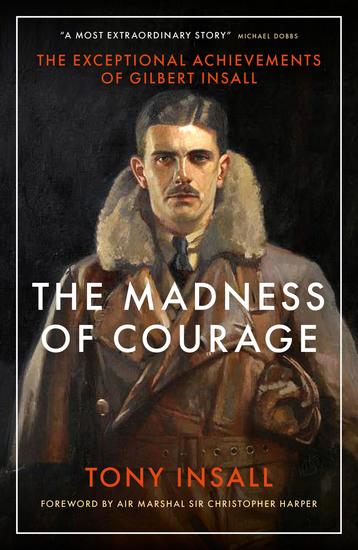
  • The Madness of Courage - The Exceptional Achievements of Gilbert Insall - cover

    The Madness of Courage - The...

    Tony Insall

    • 0
    • 0
    • 0
    Group Captain Gilbert Insall holds a unique record: he is the only person to have both won a Victoria Cross and escaped successfully from a German prisoner of war camp during the First World War. The Madness of Courage describes how, when forced down by engine damage after destroying a German fighter, Gilbert ignored intensive shelling in order to repair his aircraft and return to base. But a few weeks later, he was shot down and captured. And thus began a distinguished career in prison breaking.
    He tunnelled out of Heidelberg prison camp and later hid among boxes on a horse-drawn cart to get away from Crefeld, each time being recaptured. Then, in Ströhen, Gilbert and several companions concealed themselves in a claustrophobically small space they had excavated under the floor of the bathhouse. They remained there for seventeen hours, while a fruitless search for them was carried out, and eventually emerged and successfully reached Holland.
    Meticulously told by Gilbert's great-nephew, the critically acclaimed intelligence historian Tony Insall, The Madness of Courage is a gripping true story about a remarkable man at a time before the Geneva Convention was signed, when conditions for prisoners of war were often appalling and the British War Office did little to help prisoners escape. Instead, Gilbert's family, assisted by French intelligence, gave him the support he needed to break out of captivity in an extraordinary feat of bravery, resilience and ingenuity.
    Show book
  • The Phantom Rickshaw - cover

    The Phantom Rickshaw

    Rudyard Kipling

    • 0
    • 0
    • 0
    After an affair with a Mrs. Agnes Keith-Wessington in Simla, the narrator, Jack, repudiates her and eventually becomes engaged to Miss Kitty Mannering. Yet Mrs. Wessington continually reappears in Jack's life, begging him to reconsider, insisting that it was all just a mistake. But Jack wants nothing to do with her and continues to spurn her. Eventually Mrs. Wessington dies, much to Jack's relief. However, some time thereafter he sees her old rickshaw and assumes that someone has bought it.
    Show book
  • Peaky Blinders: The Legacy - The Real Story of Britain's Most Notorious 1920s Gangs - cover

    Peaky Blinders: The Legacy - The...

    Carl Chinn

    • 0
    • 0
    • 0
    From the Sunday Times bestselling author, Carl Chinn.The Peaky Blinders as we know them, thanks to the hit TV series, are infused with drama and dread. Fashionably dressed, the charismatic but deeply flawed Shelby family have become cult anti-heroes.Well-known social historian, broadcaster, and author Carl Chinn revealed the true story of the notorious gang in his bestselling Peaky Blinders: The Real Story. In this follow-up audiobook, he explores the legacy they created in Birmingham and beyond. What happened to them and their gangland rivals?In Peaky Blinders: The Legacy we revisit the world of Billy Kimber's Peaky Blinders, exploring their legacy throughout the 1920s and '30s, and how their burgeoning empires spread across the UK. Delve into the street wars across the country, the impact of the declaration of war on gangs by the home secretary after The Racecourse War in 1921, and how black-market bookmaking gave way to new and daring opportunities for the likes of Sabini, Alfie Solomon, and some new faces in the murky gangland underworld. Drawing on Carl's inimitable research, interviews, and original sources, find out just what happened to this incredible cast of characters, revealing the true legacy of the Peaky Blinders.
    Show book
  • The Colonial Wars 1689-1762 - cover

    The Colonial Wars 1689-1762

    Howard H. Peckham

    • 0
    • 0
    • 0
    Although the colonial wars consisted of almost continuous raids and skirmishes between the English and French colonists and their Indian allies and enemies, they can be separated into four major conflicts, corresponding to four European wars of which they were, in varying degrees, a part: King William’s War (1689-97) (War of the League of Augsburg); Queen Anne’s War (1702-13) (War of the Spanish Succession); King George’s War (1744-48) (War of the Austrian Succession); and The French and Indian War (1755-62) (Seven Years’ War).
     
    Howard Peckham chronicles the events of these wars, summarizing the struggle for empire in America among France, England, and Spain. He indicates how the colonists applied the experience they gained from fighting Indians to their engagements with European powers. And what they learned from the colonial wars they translated into a political philosophy that led to independence and self-government.
     
    The ready involvement of the colonies in European ambitions, the success and failure of co-operation between colony and mother country, the efforts of the English colonies together, and the growing differences between them and Britain give the narrative continuity and rising excitement.
    Show book