Join us on a literary world trip!
Add this book to bookshelf
Grey
Write a new comment Default profile 50px
Grey
Subscribe to read the full book or read the first pages for free!
All characters reduced
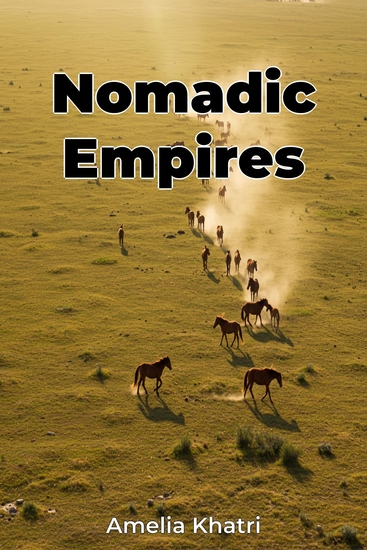
Nomadic Empires - cover

Nomadic Empires

Amelia Khatri

Translator A AI

Publisher: Publifye

  • 0
  • 0
  • 0

Summary

Nomadic Empires explores the significant role of nomadic societies, such as the Mongols, Huns, and Scythians, in shaping world history. Often viewed as mere raiders, these horseback-riding cultures profoundly influenced civilizations across Eurasia. The book examines their sophisticated military and social structures, highlighting that their impact extended beyond conquest to include trade, cultural exchange, and political innovation.

 
For instance, the Mongols created the largest contiguous land empire, demonstrating remarkable organizational skills and military prowess. The book's approach examines the ecological and technological advantages of nomadic life, like the domestication of the horse, and how these societies were organized politically and militarily. It then investigates the long-term consequences of nomadic expansion, including technological diffusion and cultural blending.

 
By analyzing diverse nomadic groups, Nomadic Empires argues that these societies were not just destructive forces but key agents of historical change. Beginning with an introduction to nomadism and steppe ecology, the book progresses chronologically through case studies of key nomadic groups. From the Scythians, admired for their horsemanship, to the Huns, whose migrations impacted the Roman Empire, each chapter delves into the group's origins, social structure, and interactions with sedentary societies.

 
Ultimately, the book provides a fresh perspective on world history by highlighting the central role of nomadic empires in shaping the Eurasian landscape.
Available since: 03/29/2025.
Print length: 58 pages.
Other books that might interest you

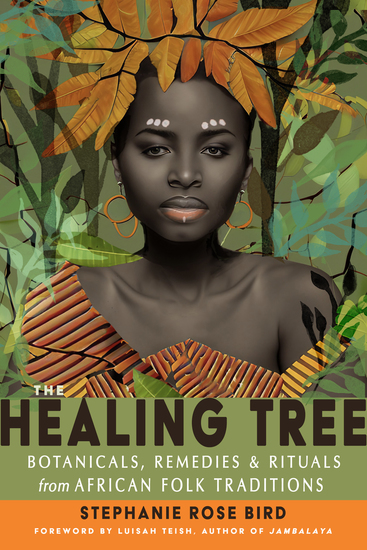
  • The Healing Tree - Botanicals Remedies and Rituals from African Folk Traditions - cover

    The Healing Tree - Botanicals...

    Stephanie Rose Bird

    • 1
    • 0
    • 0
    “A beautiful blend of folklore, botanical science, acquired wisdom, and spiritual guidance.” —from the foreword by Luisah Teish   “If you want to learn about the reciprocal spiritual connection between humans and trees, you’re going to love this beautiful book.” —Tess Whitehurst, author of The Magic of Trees   Reclaiming traditional botanical and herbal practices has never been more important than it is today. So much of our future depends on our ability to use ancient earth knowledge. In this crucially important book, author Stephanie Rose Bird recounts the story of the sacred wood: how to live in it, learn from it, and derive spiritual enrichment from it, as well as how to preserve and protect it. The Healing Tree offers functional, accessible recipes, remedies, and rituals derived from a variety of African and African American traditions to serve mind, body, soul, and spirit.The Healing Tree celebrates the forest: its powers, spirits, magic, medicine, and mysteries. Bird shares how trees have provided her with personal healing, then allows us to share in that process for our own benefit. Bird’s book follows her own personal journey, but Africa is always her touchstone—the persistent and tenacious ancestral mother wisdom and spiritual foundation that refuses to fade away. The Healing Tree preserves this knowledge, presenting it as relevant and viable and demonstrating in intimate detail how vestiges of that knowledge took root in the Western Hemisphere, in African American culture, and more broadly in American culture in general.   Previously published as A Healing Grove, this updated edition includes a new preface by the author and a source guide for the botanicals discussed within.
    Show book
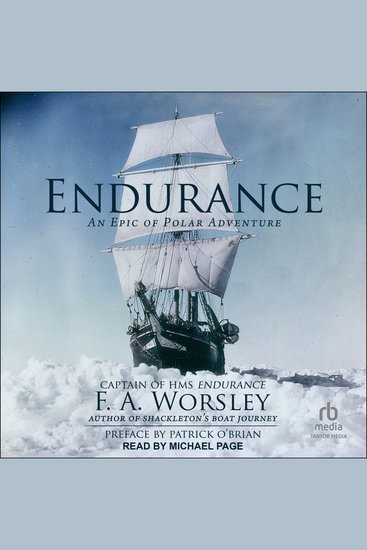
  • Endurance - An Epic of Polar Adventure - cover

    Endurance - An Epic of Polar...

    F.A. Worsley, Patrick O’Brian

    • 0
    • 0
    • 0
    The legendary tale of Ernest Shackleton's grueling Antarctic expedition, recounted in riveting first-person detail by the captain of HMS Endurance. 


    "You seriously mean to tell me that the ship is doomed?" asked Frank Worsley, commander of the Endurance, stuck impassably in Antarctic ice packs. "What the ice gets," replied Sir Ernest Shackleton, the expedition's unflappable leader, "the ice keeps." It did not, however, get the ship's twenty-five crew members, all of whom survived an eight-hundred-mile voyage across sea, land, and ice to South Georgia, the nearest inhabited island. 


    First published in 1931, Endurance tells the full story of that doomed 1914-1916 expedition and incredible rescue, as well as relating Worsley's further adventures fighting U-boats in the Great War, sailing the equally treacherous waters of the Arctic, and making one final (and successful) assault on the South Pole with Shackleton. It is a tale of unrelenting high adventure and a tribute to one of the most inspiring and courageous leaders of men in the history of exploration.
    Show book
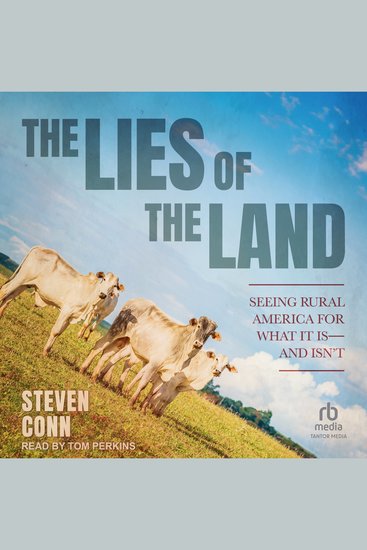
  • The Lies of the Land - Seeing Rural America for What It Is―and Isn’t - cover

    The Lies of the Land - Seeing...

    Steven Conn

    • 0
    • 0
    • 0
    A "piercing, unsentimental" (New Yorker) history that boldly challenges the idea of a rural American crisis. 


    It seems everyone has an opinion about rural America. Is it gripped in a tragic decline? Or is it on the cusp of a glorious revival? Is it the key to understanding America today? Steven Conn argues that we're missing the real question: Is rural America even a thing? No, says Conn, who believes we see only what we want to see in the lands beyond the suburbs—fantasies about moral (or backward) communities, simpler (or repressive) living, and what it means to be authentically (or wrongheadedly) American. If we want to build a better future, Conn argues, we must accept that these visions don't exist and never did. 


    In The Lies of the Land, Conn shows that rural America—so often characterized as in crisis or in danger of being left behind—has actually been at the center of modern American history, shaped by the same forces as everywhere else in the country: militarization, industrialization, corporatization, and suburbanization. Examining each of these forces in turn, Conn invites us to dispense with the lies and half-truths we've believed about rural America and to pursue better solutions to the very real challenges shared all across our nation.
    Show book
  • End your fear of flying self hypnosis - A guided meditation - DST Hypno with Stu Newman - cover

    End your fear of flying self...

    Stuart Newman

    • 0
    • 0
    • 0
    Are you afraid of flying?  
    Does the thought of getting on a plane fill you with dread?  
    End your fear today with DST Hypno and Stu Newman.  
    With years of experience in hypnosis, Stu Newman is an expert in helping people overcome their fears.  
    The self-hypnosis program offered by DST Hypno can help to reduce stress and anxiety associated with flying, allowing you to enjoy your time away without any fear or worry.  
    Plus, the program is easy to use and affordable - so why not give it a try today?  
    Don't let fear control your life - take back control now!
    Show book
  • The Invisible Coup - How American Sovereignty Was Sold and Mapping the The Ruling Class and Adversaries Engineering America’s Migration Crisis - cover

    The Invisible Coup - How...

    Patterson Stanley

    • 0
    • 0
    • 0
    Every day, ICE arrests hundreds of illegal immigrants with criminal records—murderers, rapists, gang members who didn't just arrive, they were sent here. While Americans debate what happens after immigrants arrive, almost no one asks the critical question: Who is sending them, and why?
     
    The invisible coup is happening in plain sight. Over 10 million border encounters occurred between 2021 and 2024. Chinese nationals crossing illegally increased 7,300% in three years. Fentanyl killed 74,000 Americans in 2023. Your tax dollars fund NGOs facilitating the illegal immigration that federal law prohibits. This isn't incompetence—it's coordinated transfer of sovereignty so systematic that even victims can't name it.
     
    This explosive investigation reveals who profits from border chaos: Politicians accepting millions from industries dependent on cheap labor. Corporate CEOs suppressing American wages while lobbying for open borders. NGO executives building billion-dollar empires on government contracts. Mexican cartels earning $13 billion annually from human smuggling. Chinese intelligence positioning military-age males throughout America without vetting. Foreign governments weaponizing migration against U.S. interests.
     
    Discover how politicians rotate between government and lucrative advocacy roles, profiting from the sovereignty they sell. Learn which corporations fund immigration expansion while their workers face wage suppression. See tax documents proving NGOs receive billions in taxpayer funds while advocating against enforcement. Understand how census manipulation redistributes congressional power based on non-citizen populations. Read documented evidence of coordination between elites, NGOs, cartels, and foreign adversaries—each pursuing different goals but achieving the same result: America's borders erased.
    Show book
  • Thou Art Alive! - Shakespeare Cue-scripts and the Secrets They Tell - cover

    Thou Art Alive! - Shakespeare...

    Eliza Langland

    • 0
    • 0
    • 0
    Written in two parts in an accessible, engaging, conversational style, this book is more than a ‘how-to’ primer on the cue-script method, or how Shakespeare and his actors staged his plays with minimal to no full company rehearsal.  In Part 2, it expands upon how the author (professional actor, director and academic researcher) has used and still uses the approach in the course of her work who says, "I hope it will become as clear to the listener and reader, as it did to me, just how authoritative the text of the First Folio (1623) really is and why the cue-script method is an extraordinary resource of still, largely, untapped potential." 
     
    For those listeners who may be unfamiliar with cue-scripts, and to bring the text to life, through performance, this edition has been specially rewritten, updated and adapted for audio from the first edition published in print and e-book format in 2017. The word on the page being, of course, vital to the process, the audiobook comes with a free, downloadable pdf and the updated version is also be available in print and as an e-book."  
     
    As for the choice of title? Ben Johnson said it: “Thou art alive while thy book doth live.” Thy book being of course The first Folio (1623).  
     
    The modest number of personal but ground-breaking insights that it has been possible to include in this slim volume is suggestive of many more to come. To anyone who finds this book useful, may you feel inspired to verify, refine and expand upon this work and, in turn, share your findings with you own audience, readers, students and colleagues.
    Show book