

Join us on a literary world trip!
Add this book to bookshelf
Grey
Write a new comment Default profile 50px
Grey
Subscribe to read the full book or read the first pages for free!
All characters reduced
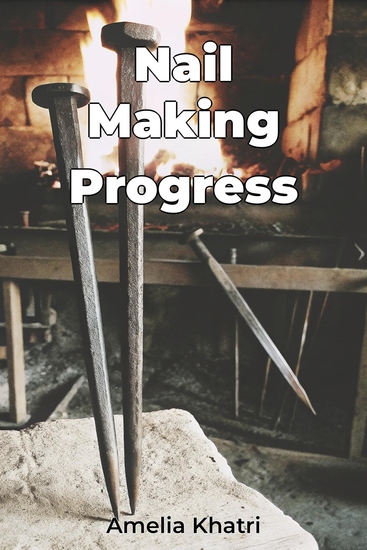
Nail Making Progress - cover

Nail Making Progress

Amelia Khatri

Translator A AI

Publisher: Publifye

  • 0
  • 0
  • 0

Summary

Nail Making Progress explores the fascinating history of nail production, demonstrating how this humble fastener mirrors broader trends in industrial development and technological innovation. From Roman blacksmiths meticulously hand-forging each nail to the advent of automated manufacturing, the book traces the evolution of nail production techniques. Interestingly, nail design has been influenced by material science, enhancing both durability and application. 

 
The book progresses chronologically, starting with ancient hand-forging methods and moving through the mechanization of the Industrial Revolution to modern automated processes. It highlights the impact of these advancements on labor practices and economic structures. For example, the introduction of water-powered machinery drastically increased nail production during the Industrial Revolution. 

 
The narrative emphasizes how nail manufacturing serves as a microcosm of overall industrial advancement, reflecting changes in technology and manufacturing efficiency. This unique approach provides readers with a comprehensive and accessible account of nail-making evolution. By examining patent records, historical accounts, and archaeological findings, Nail Making Progress synthesizes information from diverse fields. The book connects nail production history to economic history and material science, making it valuable for historians of technology, students of economic history, and anyone interested in manufacturing processes.
Available since: 02/13/2025.
Print length: 67 pages.

Other books that might interest you

  • Rudolph Ganz Patriotism and Standardization of The Star-Spangled Banner 1907-1958 - cover

    Rudolph Ganz Patriotism and...

    Iain Quinn

    • 0
    • 0
    • 0
    This book examines the succession of events toward the potential standardization of the music for “The Star-Spangled Banner” from an initial letter to President Roosevelt in 1907 to the 1958 congressional hearings on the National Anthem, and the later work of the Swiss-Born American pianist, Rudolph Ganz. These events took place across five decades when a culture of public patriotism was especially pronounced for immigrant musicians.
    Show book
  • Proof: Does God Exist? - cover

    Proof: Does God Exist?

    Philip Gardiner

    • 0
    • 0
    • 0
    "What with all the fuss over Jesus and Mary because of Dan Brown and the growing numbers who are suddenly taking religion seriously again it is good timing to see a balanced viewpoint arrive on the scene. Gardiner recently threw me off balance with The Serpent Grail and I have just finished Gnosis too, but this was just what I was looking for.
    
    It's simple, but concise and leads you through a process that you would go through yourself if you had time. I really enjoyed his light humour and easy-to-read style so yes, I recommend it. The Rosicrucian."
    Show book
  • Belonging - A History of Indian South Africans - cover

    Belonging - A History of Indian...

    Ashwin Desai, Goolam Vahed

    • 0
    • 0
    • 0
    What does it mean to belong? 
    Across oceans and centuries, this sweeping narrative shuttles between the corridors of the Colonial Office in London, the contested streets of Durban, and the changing power dynamics within the British Raj.  
    The first boatload of indentured Indians arrived in Natal in 1860. Thousands were to follow. In haunting detail, the book captures the plight of these labourers as well as the vicious onslaught faced by the merchant class for daring to outpace their colonial rivals. At its core are the untold struggles of Indian South Africans as they confront the ever-present threat of repatriation.  
    Sensitive to shifting political terrains, the book weaves together seismic events – the independence of India, the coming of apartheid and the threat once more of mass expulsions – with the texture of everyday life. The granting of citizenship in 1961 is accompanied by mass relocations as the Group Areas Act rips communities from their roots. Yet, out of this despair, barren townships on the edges of cities are turned into places of hope.  
    In the final chapters, the fall of apartheid offers a moment of transcendence. Yet it also asks: what does it mean, at last, to belong? It is a fascinating story of the global and the local, of resistance and collaboration, and undefeated optimism. This is a book for anyone who has ever sought a place to call home.
    Show book
  • Liberation of Western Europe in World War II The: The History of the Western Allies’ Campaigns on the Continent - cover

    Liberation of Western Europe in...

    Editors Charles River

    • 0
    • 0
    • 0
    During World War II, the free world literally hung in the balance, with the Axis and Allies engaging in warfare on an unprecedented scale. Although Hitler’s Nazi Germany had overrun much of the European continent by 1940, the Allies began to reverse the momentum in 1942. By the end of 1943, with Allied forces firmly established in Italy and the Soviets on the verge of turning the tide in Russia, the British and Americans began to plot the invasion that would liberate Europe from the Nazis.  
    	During the first half of 1944, the Americans and British commenced a massive buildup of men and resources in the United Kingdom, while Allied Supreme Commander Dwight D. Eisenhower and military brass planned the details of an enormous and complex amphibious invasion of Europe. Though the Allies used misinformation to try deceiving the Germans, the most obvious place for an invasion was just across the narrow English Channel, and the Germans had built coastal fortifications throughout France to protect against just such an invasion. 
    The invasion across the Channel came in the early morning hours of June 6, 1944. That day, forever known as D-Day, the Allies commenced Operation Overlord by staging the largest and most complex amphibious invasion in human history. After the successful amphibious invasion on D-Day in June 1944, the Allies began racing east toward Germany and liberating France along the way. The Allies had landed along a 50 mile stretch of French coast, and despite suffering 8,000 casualties on D-Day, over 100,000 still began the march across the western portion of the continent.  
    After resisting the German attack, the Allied armies began advancing, and with that, the race to Berlin was truly on. While much has been written of the Battle of the Bulge, Okinawa, Midway, Stalingrad, and many other conflicts of the Second World War, the Battle for Berlin has remained in the shadows for many historians. 
    Show book
  • Means and Ends - The Revolutionary Practice of Anarchism in Europe and the United States - cover

    Means and Ends - The...

    Zoe Baker

    • 0
    • 0
    • 0
    An expansive and accessible account of anarchism as a theory of practice. 


    Means and Ends is a new overview of the revolutionary strategy of anarchism in Europe and the United States between 1868 and 1939. Zoe Baker clearly and accessibly explains the ideas that historical anarchists developed in order to change the world. This includes their views on direct action, revolution, organization, state socialism, reforms, and trade unions. Throughout, she demonstrates that the reasons anarchists gave for supporting or opposing particular strategies were grounded in a theoretical framework—a theory of practice—which maintained that, as people engage in activity, they simultaneously change the world and themselves. This theoretical framework was the foundation for the anarchist commitment to the unity of means and ends: the means that revolutionaries propose to achieve social change have to involve forms of activity which transform people into individuals who are capable of, and driven to, both overthrow capitalism and the state and build a free society. The consistent heart of anarchism was the idea that anarchist ends can only be achieved through anarchist means. Cutting through misconceptions and historical inaccuracies, Baker draws upon a vast assortment of examples to show how this simple premise underpinned anarchist attempts to put theory into action.
    Show book
  • Our Tortured Souls - The 29th Infantry Division in the Rhineland November–December 1944 - cover

    Our Tortured Souls - The 29th...

    Joseph Balkoski

    • 0
    • 0
    • 0
    The acclaimed WWII historian continues his in-depth chronicle of the 29th Infantry Division as it made its brutal push into Germany. By November of 1944, the U.S. 29th Infantry Division had stormed Omaha Beach on D-Day and embarked on an epic and arduous path toward Allied victory. In Our Tortured Souls, acclaimed military historian Joseph Balkoski picks up the story of the 29th on the eve of the all-out offensive intended to carry the Allies to the Rhine River by Christmas and end the war soon afterward.  The plan for the 29th seemed simple enough. As part of General William Simpson’s Ninth Army, the division was to drive ten miles eastward, breaking through several German strongpoints, crossing the Roer, and seizing Jülich, beyond which lay the Rhine and Germany’s heartland.   The offensive encountered problems from the very beginning, on November 16th, when it took days to crack the German’s first line of defense. By the time the offensive was halted on the banks of the Roer three weeks later, the 29th Infantry Division had suffered 2,600 casualties and fallen short of its objectives. Balkoski reconstructs this tragic chapter in the division’s history with his trademark combination of meticulous research and vivid st
    Show book
