Join us on a literary world trip!
Add this book to bookshelf
Grey
Write a new comment Default profile 50px
Grey
Subscribe to read the full book or read the first pages for free!
All characters reduced
Myths of Creation - cover

Myths of Creation

Amelia Khatri

Translator A AI

Publisher: Publifye

  • 0
  • 0
  • 0

Summary

Myths of Creation explores the diverse creation narratives found across various religions and cultures, revealing humanity's timeless quest to understand our origins and purpose. This book examines how different societies have used these myths to shape their values, beliefs, and understanding of the world. Creation myths address fundamental questions about human existence, such as our relationship with nature and the cosmos.

 
The book analyzes major creation stories from ancient Mesopotamia, Egypt, Greece, Abrahamic religions, Hinduism, and indigenous cultures, highlighting common motifs like chaos and order, the role of divine beings, and the creation of humans. By understanding the symbolic depth of these myths, readers can gain a deeper appreciation of human history and the diverse ways we make sense of our existence.

 
The book's approach involves scrutinizing the historical and cultural settings in which these myths arose. Beginning with an introduction to creation myths and their significance, the book progresses through specific mythological traditions, culminating in a comparative analysis. This approach fosters intercultural dialogue and a deeper appreciation of human diversity by recognizing our shared humanity in these age-old stories.

 
Ultimately, Myths of Creation presents creation myths as sophisticated expressions of cultural identity and philosophical inquiry.
Available since: 02/14/2025.
Print length: 57 pages.
Other books that might interest you

  • Sumerian Gods and Heroes - Exploring the Birth of Mythology - cover

    Sumerian Gods and Heroes -...

    Odessa Nightshade

    • 0
    • 0
    • 0
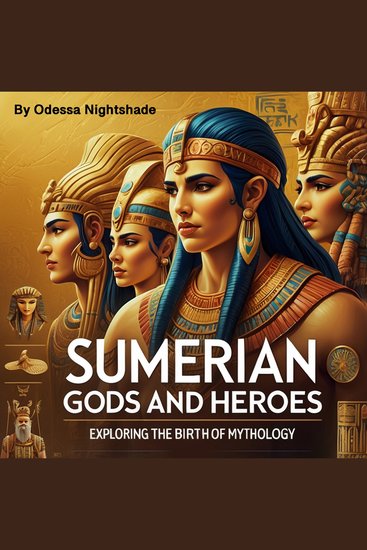
    The mythology of the Sumerians stands as one of the earliest recorded religious traditions, shaping the beliefs of later civilizations in Mesopotamia and beyond. As one of the first urban societies, the Sumerians established a complex pantheon of gods and heroes that explained the forces of nature, human existence, and the divine order of the universe. Their myths, inscribed on clay tablets in cuneiform script, offer a glimpse into a world where deities governed every aspect of life, from the rising sun to the floods of the Tigris and Euphrates rivers. These stories, rich with symbolism and allegory, not only influenced later cultures but also laid the foundation for many of the myths and legends still told today.  
    Sumerian civilization thrived in southern Mesopotamia, in what is now modern-day Iraq, around 3100 BCE. The Sumerians built city-states such as Uruk, Ur, and Nippur, each with its own patron deity. Religion was deeply intertwined with governance, as rulers were seen as intermediaries between the gods and the people. The belief that divine favor determined a city’s prosperity reinforced the importance of rituals, offerings, and temple constructions, particularly the iconic ziggurats that served as sacred centers of worship. The Sumerian gods were not distant, benevolent figures but rather powerful beings with human emotions and rivalries, shaping the world through both harmony and conflict.  
    The primary sources of Sumerian mythology come from cuneiform texts, including the Enuma Elish, various temple hymns, and the Epic of Gilgamesh. These texts preserve tales of creation, divine wars, and the struggles of mortal heroes. The myths of Anu, Enlil, and Enki explain the structure of the cosmos and the forces that govern it, while legends of Inanna and Dumuzi reveal the themes of love, fertility, and the cycle of life and death.
    Show book
  • Songhai Empire - The Largest Empire in African History - cover

    Songhai Empire - The Largest...

    Rolf Hedger

    • 0
    • 0
    • 0
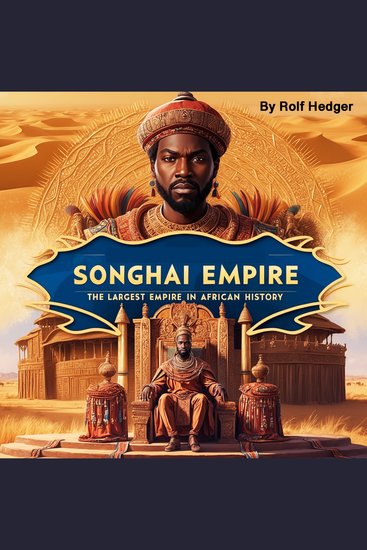
    The Songhai people trace their origins to the fertile banks of the Niger River, an area that has supported human settlement and civilization for thousands of years. Their early history is closely tied to the region of Gao, which would later become the heart of one of Africa’s most powerful empires. The Niger River provided the necessary resources for agriculture, fishing, and trade, enabling the growth of organized communities that would form the foundation of Songhai society. 
    The earliest known inhabitants of the region were the proto-Songhai, who are believed to have settled along the Niger River as early as the first millennium CE. These people were primarily farmers, herders, and fishermen, utilizing the rich floodplains of the river to cultivate crops and sustain livestock. Over time, they developed a distinct cultural identity, characterized by their language, traditions, and spiritual beliefs. Their society was structured around small communities led by local chieftains, who governed based on kinship ties and communal customs. 
    Gao, the most significant early settlement of the Songhai people, emerged as a crucial trading hub by the eighth century. Arab and Berber merchants, who traveled along the trans-Saharan trade routes, recognized its strategic importance as a commercial center. The exchange of goods such as gold, salt, ivory, and kola nuts attracted traders from North Africa and beyond, integrating Gao into the wider economic networks of the region. As commerce flourished, the settlement expanded, and its rulers gained influence by controlling trade and forming alliances with neighboring peoples.
    Show book
  • Synchronicity - An Acausal Connecting Principle (From Vol 8 of the Collected Works of C G Jung) - cover

    Synchronicity - An Acausal...

    Anonymous

    • 0
    • 0
    • 0
    This audiobook narrated by John Telfer introduces listeners to Jung's groundbreaking ideas about synchronicity
    
    C. G. Jung was intrigued from early in his career with coincidences, especially those surprising juxtapositions that scientific rationality could not adequately explain. He discussed these ideas with Albert Einstein before World War I but first used the term "synchronicity" in a 1930 lecture, in reference to the unusual psychological insights generated from consulting the I Ching. A long correspondence and friendship with the Nobel Prize–winning physicist Wolfgang Pauli stimulated a final, mature statement of Jung's thinking on synchronicity, originally published in 1952 and reproduced here. Together with a wealth of historical and contemporary material, this essay describes an astrological experiment Jung conducted to test his theory. Synchronicity reveals the full extent of Jung's research into a wide range of psychic phenomena.
    Show book
  • Unlocking Your Potential: The True Power of Emotional Intelligence Mastery - Improve Relationships Boost Self-awareness and Lead with Empathy - cover

    Unlocking Your Potential: The...

    Ethan Matthews

    • 0
    • 0
    • 0
    "Unlocking Your Potential: The True Power of Emotional Intelligence Mastery: Improve Relationships, Boost Self-awareness, and Lead with Empathy" is a revolutionary manual created to assist readers in realizing the complete potential of their emotional intelligence. This book gives you the skills and knowledge you need to improve your relationships, develop self-awareness, and lead with empathy in a world where emotional intelligence is becoming more and more important for both personal and professional success. 
    This thorough manual deconstructs emotional intelligence, emphasizing self-awareness, self-control, empathy, and social skills. Readers will gain knowledge on how to recognize emotional cues, control their feelings, and react coolly in challenging circumstances. In addition to emphasizing the value of empathy in interpersonal interactions and leadership roles, the book provides helpful advice on how to build strong connections with others. 
    A different facet of emotional intelligence—like controlling your emotions or fostering stronger relationships—is covered in each chapter. This book gives you a methodical approach to change the way you interact with the outside world, whether your goals are to become a better communicator, handle conflict, or build enduring connections. 
    "Unlocking Your Potential" provides insightful lessons for anybody looking to increase their emotional intelligence, with an emphasis on practical strategies and real-world applications. This book will provide you with a road map to emotional mastery, regardless of whether you're a professional trying to improve your leadership abilities or an individual trying to strengthen your personal connections.
    Show book
  • The World Minute at Waterloo - cover

    The World Minute at Waterloo

    Stefan Zweig

    • 0
    • 0
    • 0
    The Battle of Waterloo on June 18, 1815 was Napoleon Bonaparte's last battle. It took place around 15 km south of Brussels near the village of Waterloo, then part of the Kingdom of the United Netherlands and now in Belgium. The defeat of the French led by Napoleon against the Allied troops under the English General Wellington and the Prussian Field Marshal Blücher ended Napoleon's rule of the Hundred Days and led to the end of the French Empire with his final abdication on June 22, 1815. After this second total military defeat in a short period of time, tightened peace terms were imposed on France in the Second Peace of Paris. Napoleon himself was taken as a prisoner of war by the British to the Atlantic island of St. Helena, where he died in exile on May 5, 1821. The idiom "to experience one's Waterloo" as a synonym for a total defeat has its origin in this battle.
    Show book
  • China - Fragile Superpower - cover

    China - Fragile Superpower

    Susan L. Shirk

    • 0
    • 0
    • 0
    Susan L. Shirk, a former Deputy Assistant Secretary of State responsible for China, knows many of today's Chinese rulers personally and has studied them for three decades. She offers invaluable insight into how they think—and what they fear. In this revealing book, you will see the world through the eyes of men like President Hu Jintao and former President Jiang Zemin. We discover a fragile communist regime desperate to survive in a society turned upside down by miraculous economic growth and a stunning new openness to the greater world. Theirs is a regime afraid of its own citizens, and this fear motivates many of their decisions when dealing with the US and other foreign nations. In particular, the fervent nationalism of the Chinese people, combined with their passionate resentment of Japan, and attachment to Taiwan, have made relations with these two regions a minefield. It is here, Shirk concludes, in the tangled interactions between Japan, Taiwan, China, and the United States, that the greatest danger lies. 


    Shirk argues that rising powers such as China tend to provoke wars in large part because other countries mishandle them. Unless we understand China's brittle internal politics and the fears that motivate its leaders, we face the very real possibility of avoidable conflict with China.
    Show book