¡Acompáñanos a viajar por el mundo de los libros!
Añadir este libro a la estantería
Grey
Escribe un nuevo comentario Default profile 50px
Grey
Suscríbete para leer el libro completo o lee las primeras páginas gratis.
All characters reduced
Mexico's Aztec Echoes - cover

Mexico's Aztec Echoes

Amelia Khatri

Editorial: Publifye

  • 0
  • 0
  • 0

Sinopsis

"Mexico's Aztec Echoes" presents a fascinating exploration of how ancient Mesoamerican civilizations, particularly the Aztec Empire, continue to shape modern Mexican identity. Through a carefully structured analysis spanning five centuries, the book challenges the traditional view of Mexican history as a clear break between pre-and post-colonial periods, instead revealing a complex tapestry of cultural synthesis and transformation.

 
The narrative unfolds across three major sections, beginning with an examination of pre-Columbian societies' sophisticated political and religious systems, supported by archaeological evidence and Spanish accounts. The book reveals how the Aztecs developed advanced systems of agriculture, architecture, and governance that would later influence colonial Mexico. The second section delves into the colonial period's intricate social hierarchies, while the final part explores how independent Mexico has incorporated and reinterpreted its indigenous heritage.

 
What sets this work apart is its interdisciplinary approach, combining archaeological data, colonial documents, and modern anthropological studies to demonstrate how ancient social structures continue to influence contemporary Mexican institutions. Through engaging case studies and accessible narrative techniques, the book illuminates the persistent echoes of pre-Columbian civilization in modern Mexican society, from political institutions to cultural practices. This comprehensive analysis helps readers understand how ancient civilizations can shape modern national identity through centuries of cultural adaptation and synthesis.
Disponible desde: 08/01/2025.
Longitud de impresión: 97 páginas.


Otros libros que te pueden interesar

  • Why Intelligent People Do Stupid Things - The Paradox of Smart Decision-Making - cover

    Why Intelligent People Do Stupid...

    John Harpoon

    • 0
    • 0
    • 0
    Intelligence is often seen as the key to making sound decisions, yet many highly intelligent individuals find themselves making choices that defy logic and reason. This paradox is at the heart of why even the smartest people can sometimes act in ways that are seemingly irrational. Despite possessing vast knowledge, sharp problem-solving skills, and an ability to think critically, intelligent people often fall victim to cognitive biases, emotional triggers, and societal pressures that lead them to make poor decisions. Understanding why this happens requires an exploration into the intricate relationship between intelligence and decision-making. 
      
    At the core of this paradox lies the idea that rationality and intelligence do not always go hand in hand. While intelligence may increase the ability to process information and analyze complex scenarios, it does not always shield individuals from the cognitive biases that distort perception and judgement. In fact, many intelligent individuals are even more susceptible to these biases because they rely heavily on their analytical skills, assuming that their logic will always lead them to the right conclusion. However, this overreliance can blind them to the emotional and social factors that influence decision-making, causing them to overlook key details or make choices based on faulty assumptions. 
      
    Furthermore, decision-making is not solely a rational process; emotions play a crucial role in guiding our actions, and they can often override logic. Intelligent individuals are not immune to emotional influences such as stress, fear, or the desire for instant gratification. These emotions can cloud judgement, leading to impulsive decisions or the failure to consider long-term consequences. This is particularly true in high-pressure situations where the stakes are high, and the need to make quick decisions can push even the most intelligent person into making mistakes.
    Ver libro
  • The Cost of "Non-Maghreb" - Unpacking the Political and Economic Costs of Disunion and Divisions - cover

    The Cost of "Non-Maghreb" -...

    Aldo Liga

    • 0
    • 0
    • 0
    Over the last decades, rivalries, bilateral disagreements, and distrust between Maghreb states have taken a toll on common political and security challenges, like the Western Sahara issue, the Libyan conflict, the destabilisation in the Sahel region and transnational clandestine flows. Moreover, the Maghreb is one of the least economically integrated regions in the world, and this leads to the region's loss in growth, and the disheartening record of missed opportunities for stability and prosperity. This is the cost of the "non-Maghreb".
    This Report aims to unpack the political and economic costs of the "non-Maghreb", understand its historical genesis and geopolitical implications and, more broadly, what the future might hold for individual countries and the Maghreb as a divided, fractious but potentially coherent whole.
    Ver libro
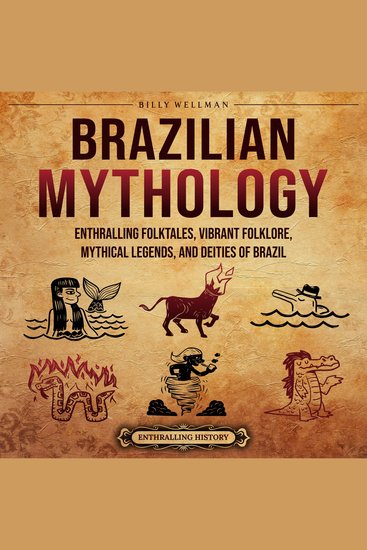
  • Brazilian Mythology: Enthralling Folktales Vibrant Folklore Mythical Legends and Deities of Brazil - cover

    Brazilian Mythology: Enthralling...

    Billy Wellman

    • 0
    • 0
    • 0
    Brazilian Mythology: A Journey Through Legends and Mystical Creatures 
    Step into the magical world of Brazilian mythology, where ancient tales come alive. This audiobook takes you on a fascinating adventure into the myths and legends shaped by the many people who have called Brazil home. From enchanted jungles to mysterious sea creatures, these stories continue to influence Brazil’s vibrant culture today. 
    What You’ll Discover:How Brazil’s landscapes shaped its myths: Learn how the vast Amazon, rugged mountains, and endless coastline gave birth to different legends across the country.Creation stories from indigenous tribes: Uncover the ancient tales of how the world began.Amazon rainforest creatures: Meet mystical beings like Iara, a river spirit who lures men with her beauty.A blend of cultures: See how indigenous, African, and European traditions came together to create Brazil’s unique mythology and powerful deities.Mythical sea creatures: Discover Brazil’s coastline myths, including tales of creatures like the Boto Cor-de-Rosa, the pink dolphin who turns into a handsome man.Monsters that prowl the forests: Learn about the Brazilian werewolf and how it differs from the European version.Famous Brazilian folklore characters: Get to know beloved figures like Saci-Pererê, the one-legged trickster with a mischievous smile. 
    You can finally explore Brazil’s mythical beings, heroic figures, and sacred traditions in an easy-to-read, engaging way. This audiobook is perfect for anyone curious about the deep connection between mythology, culture, and history in Brazil. 
    So, what are you waiting for? Scroll up and click the “add to cart” button to embark on a mythical journey today!
    Ver libro
  • Awkward - The Science of Why We're Socially Awkward and Why That's Awesome - cover

    Awkward - The Science of Why...

    Anónimo

    • 0
    • 0
    • 0
    In the vein of Quiet and The Geeks Shall Inherit the Earth comes this illuminating look at what it means to be awkward—and how the same traits that make us socially anxious and cause embarrassing faux pas also provide the seeds for extraordinary success. 
    As humans, we all need to belong. While modern social life can make even the best of us feel gawky, for roughly one in five of us, navigating its challenges is consistently overwhelming—an ongoing maze without an exit. Often unable to grasp social cues or master the skills and grace necessary for smooth interaction, we feel out of sync with those around us. Though individuals may recognize their awkward disposition, they rarely understand why they are like this—which makes it hard for them to know how to adjust their behavior. 
    Psychologist and interpersonal relationship expert Ty Tashiro knows what it’s like to be awkward. Growing up, he could do math in his head and memorize the earned run averages of every National League starting pitcher. But he couldn’t pour liquids without spilling and habitually forgot to bring his glove to Little League games. In Awkward, he unpacks decades of research into human intelligence, neuroscience, personality, and sociology to help us better understand this widely shared trait. He explores its nature vs. nurture origins, considers how the awkward view the world, and delivers a welcome counterintuitive message: the same characteristics that make people socially clumsy can be harnessed to produce remarkable achievements.  
    Interweaving the latest research with personal tales and real world examples, Awkward offers reassurance and provides valuable insights into how we can embrace our personal quirks and unique talents to harness our awesome potential—and more comfortably navigate our complex world.
    Ver libro
  • The Children We Left Behind - How Western Culture Rationalizes Family Separation & Ignores The Pain Of Child Neglect - cover

    The Children We Left Behind -...

    Adam B. Coleman

    • 0
    • 0
    • 0
    Nearly every major social problem in the West can be traced back to our declining appreciation for the nuclear family structure and our failure to plan for families properly. Our culture has shifted from prioritizing sacrifice for the benefit of innocent children to catering to the fleeting desires of the adults who bring them into the world. 
    As a result, family separation has become commonplace, and what we consider normal is often rationalized, even when it harms our children. The culture of radical individualism among adults has left children to bear the consequences of their parents' choices. 
    I was once that child who was left behind, neglected by his father, and witnessed his mother shoulder the load for our survival. My father's choice to abandon me physically and emotionally contributed to my decades of struggle with depression, low self-esteem, and suicidal ideation. 
    Unfortunately, my experience of homelessness, mental hospital incarceration, and perpetual internal strife is no longer rare. However, our stories are often ignored, and we avoid holding accountable the parents who have failed us. 
    If we are to change our culture's trajectory, we must sacrifice our pride and prioritize the needs of our children over our own selfish desires. Our children must come first, or they will come last-there is no middle ground.
    Ver libro
  • Earwitness - A Search for Sonic Understanding in Stories - cover

    Earwitness - A Search for Sonic...

    Ed Garland

    • 0
    • 0
    • 0
    In his twenties, Ed Garland came close to suicide but later discovered reading to help him cope with hearing loss and tinnitus. In this unique blend of memoir and literary criticism, right at the cutting edge of research drawing on both the literary and the medical worlds, the author reveals his own journey – through music then fiction – towards an understanding of sonic loss and, ultimately, towards healing. A genre-busting mix of literary criticism, sound studies and memoir, the essays explore what fictional sonic experiences can tell us about sound in everyday life. Written with humorous honesty about the ups and downs – mostly downs – of a young man's mental health, this is a thoughtful and original exploration of recovey, and of literature's ability to challenge preconceptions.
    The English-language fiction classics of Wales explored include the work of Margiad Evans, Bernice Rubens, and Deborah Kay Davies. The international titles are by Annie Proulx and Samuel Beckett. Earwitness amplifies the rich connections between literature, auditory perception and mental wellbeing.
    Ver libro